
Prosecutors say two 77-year-old in-laws lay in wait and took turns shooting a New York Times engineer during his supervised visit with his kids at a California park.
Story Snapshot
- Alameda County prosecutors charged the in-laws with first-degree murder and a lying-in-wait enhancement.
- Prosecutors say surveillance video shows both in-laws shooting the victim during a scheduled visit.
- A defense attorney says there was no plan and claims the pair feared for their grandchildren’s safety.
- The case spotlights risks around supervised child visits and how self-defense claims work under California law.
What Prosecutors Allege Happened at the Park
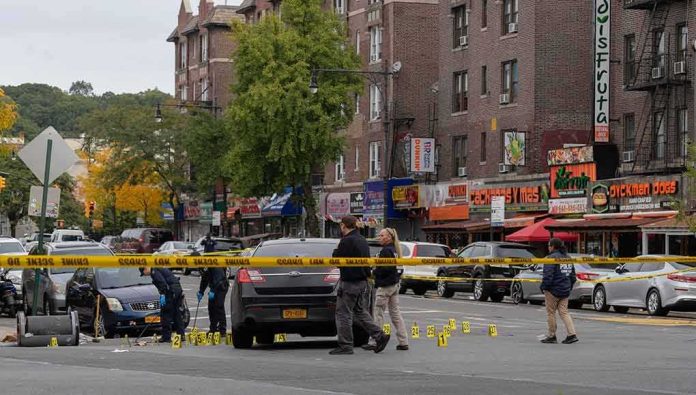
On September 26, 2026, police found Jonathan McKinsey shot multiple times in a parking lot at Dublin Sports Grounds in Alameda County. He died at the scene. Prosecutors charged McKinsey’s in-laws, Shili Chen and Shouyong Zhang, both 77, with first-degree murder. They also added personal use of a firearm causing death and a lying-in-wait enhancement. Officials say the shooting took place during McKinsey’s scheduled supervised visit with his children at the public park.
Prosecutors told reporters that surveillance video recovered by investigators shows both defendants shooting McKinsey. A local station reported prosecutors’ claim that the pair arrived during the visit and “took turns” firing. In a later interview, prosecutors say Zhang admitted he shot McKinsey. Police also reported finding a second gun in the vehicle linked to the crime, matching the two-shooter theory described by prosecutors.
The Charges and What “Lying in Wait” Signals
The Alameda County District Attorney’s Office charged Chen and Zhang on September 30 with first-degree murder, firearm-use causing death, and lying in wait. The lying-in-wait allegation signals a claim of ambush or surprise attack. It can increase penalties if proved. Prosecutors say the pair positioned themselves at a place and time they knew McKinsey would be present for a court-ordered visit. That theory, if upheld in court, supports premeditation and a coordinated plan.
These are allegations at this stage. The public has not seen the full surveillance video, the interview transcript, or forensic lab reports. That limits independent review. Prosecutors often summarize evidence early to explain charges, but jurors will later weigh the full record. For now, the official case relies on what investigators say the video shows and what they report Zhang said after his arrest.
The Defense Says Fear, Not Planning, Drove Events
Defense attorney Curtis Briggs says there was no plan to kill. He says Chen and Zhang feared McKinsey, worried about the grandchildren, and carried guns because of earlier threats. Briggs says the couple bought firearms in March 2026 for protection, not for an ambush. He also claims witnesses can back up threats he says McKinsey made against Chen’s life. The pair pleaded not guilty and plan to contest the state’s timeline and intent claims.
Self-defense and defense of others have clear limits in California. The California Supreme Court held that a person must actually and reasonably fear imminent serious harm to justify killing. Claims based on general fear, past threats, or anger are not enough on their own. Jurors hear pattern instructions, like the justifiable homicide standard, that explain how to test those claims against the facts in evidence.
Why a “Supervised Visit” Did Not Prevent Violence
Family courts use supervised visits when they see conflict or safety risks. Supervision is meant to reduce danger, not erase it. Safety depends on where visits happen, who supervises, and how exchanges occur. Research and court guidance warn that transitions, like drop-offs and pick-ups, carry extra risk. Public places can deter harm, but they cannot stop a determined attacker. This case shows how danger can surface even with supervision in place.
Shili Chen and Shouyong Zhang, both 77, pleaded not guilty to first-degree murder for allegedly shooting and killing their son-in-law, Jonathan McKinsey, during a supervised visit with his three children at a Dublin park. https://t.co/0EkdBGmZUj
— KTVU (@KTVU) October 20, 2026
The public wants systems that take threats seriously and protect children and caregivers. That means better planning for high-risk exchanges, trained supervisors, secure sites, and fast action on red flags. It also means transparency from officials. Sealed filings and selective leaks erode trust. When people only hear fragments, they assume the worst about everyone involved, including the courts and prosecutors.
What to Watch Next in the Case
Key questions will shape the case from here. First, what exactly does the video show, frame by frame? Second, what did Zhang say in his interview, and under what conditions? Third, do lab tests link the bullets to the guns tied to each defendant? Fourth, what do custody and police records say about past threats or abuse? Answers to these questions will drive whether jurors see planning, panic, or something in between.
People across the political spectrum see a system that reacts after tragedy, not before. Parents and grandparents want safe family time without fearing an ambush. Taxpayers want courts and police to manage known risks. This case is about one deadly moment, but it also highlights a wider failure: when warnings pile up, our institutions still struggle to prevent the worst from happening.
Sources:
nypost.com, usatoday.com, ktvu.com, thehill.com, abcnews.com, marca.com, en.wikipedia.org, sandiegouniontribune.com, kron4.com