
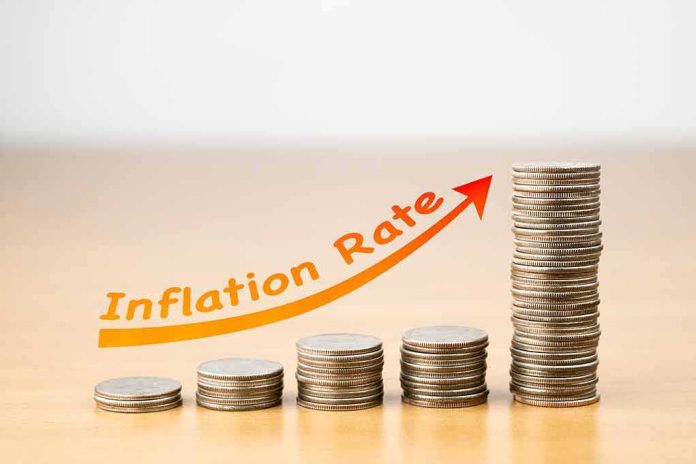
Official inflation accelerated again in September as energy costs jumped, piling new pressure on families and politicians alike.
Story Snapshot
- Consumer prices rose 0.6 percent in September, faster than August’s pace.
- Annual inflation measured 3.7 percent, above the Federal Reserve’s target.
- Gasoline costs surged and drove more than half of the monthly price increase.
- The spike lands weeks before midterm elections focused on affordability.
What the new inflation report actually shows
The Bureau of Labor Statistics reported that the Consumer Price Index rose 0.6 percent in September, after a 0.4 percent rise in August. That single month gain lifted the annual rate to 3.7 percent. Reporters who reviewed the details said gasoline prices jumped and made up more than half of the monthly increase. The core index, which strips out food and energy, ran cooler. But voters do not buy “core” gasoline. They pay the price posted on the corner sign.
Coverage tied the surge in energy costs to the war with Iran and to trade policies that raise import prices. The New York Times said energy prices shot higher this year because of the war with Iran. Analysts also flagged strong year-over-year gains for gasoline and fuel oil, squeezing drivers and households that heat with oil. These moves hit rural commuters, small firms with delivery fleets, and cold-weather regions first and hardest.
Why energy shocks cut so deep for households and politics
Gasoline spikes act like a tax on mobility. Families drive to work, school, and stores. When fuel jumps, budgets bend fast. A large body of election research finds that oil-price increases often hurt the ruling party’s chances near an election. The fall calendar compounds that risk as heating bills come due. September’s inflation print arrived weeks before the midterms, and major outlets called it a warning shot for President Trump and congressional Republicans. Affordability is the headline issue for many swing voters.
Energy-led price jumps can also blur the line between a one-time level shock and ongoing inflation. If the war or supply routes keep oil high, the strain lingers. If the shock fades, inflation can cool even if the price level stays above last year. That nuance matters for policy but offers little comfort at the pump. People judge by cash flow. Higher weekly fuel and grocery bills crowd out savings and repairs, and push up credit card balances.
Competing stories: temporary shock or broader policy problem?
Trump advisers argue that the latest surge is a temporary energy shock and that broader inflation has eased from what they call a Biden-era peak. Kevin Hassett said the report held “a bunch of good news,” pointing to softer underlying trends and calling the jump in energy temporary. President Trump has also linked higher prices to the Iran conflict and predicted a sharp fall once the war ends. Supporters frame this as wartime pressure, not a failure of the current economic plan.
Other coverage stresses the facts on the ground: monthly inflation sped up, headline inflation ran at 3.7 percent, and energy led the increase. Reporters highlighted steep annual gains for gasoline and fuel oil, which feed public anger and weigh on consumer confidence. Some analysts also point to tariffs as another source of upward pressure on goods prices, which can compound fuel shocks for households. Voters facing stacked costs tend to blame the people in charge, regardless of the cause chain.
What we know, what we do not, and why it matters now
The official data tell us prices rose 0.6 percent in September and that energy did much of the lifting. They do not tell us how much of that rise came from the war, from tariffs, from supply issues, or from demand. They also do not settle whether the surge will fade on its own. Those gaps matter for policy. But for families, the result is the same this month: tighter budgets, delayed plans, and a growing sense that Washington is not solving basic problems.
Americans on the right see energy policy and overseas conflict as elite choices that raise their costs. Americans on the left see a system that protects the powerful while everyday people pay more. Both groups see a government that talks past them. September’s numbers will fuel that view. When leaders ask for patience, citizens ask for results they can feel. Until fuel and food settle, the trust gap will widen, and the bill will keep arriving at the pump.
Sources:
theamericanconservative.com, usnews.com, nytimes.com, cnn.com, bls.gov, ca.finance.yahoo.com, crooksandliars.com