
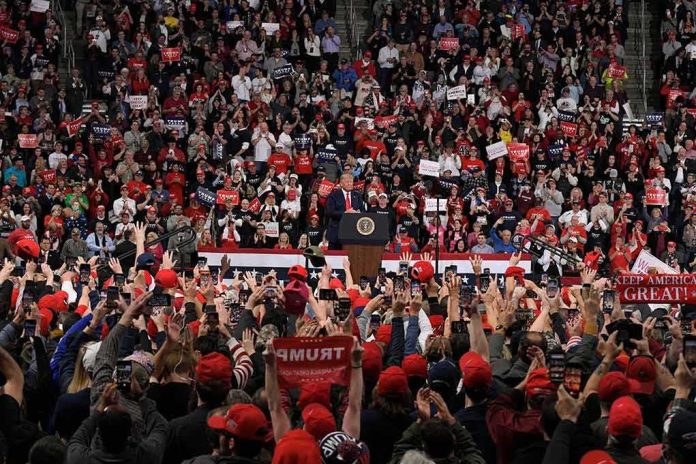
President Trump headlined a Kentucky midterm rally to boost GOP candidates, marking his 13th rally in a month as Election Day nears.
Story Snapshot
- Trump spoke at Truist Arena in Highland Heights to support Kentucky Republicans.
- Senate candidate Andy Barr promoted Trump’s visit; House candidate Ed Gallrein was tied to the event.
- The rally targeted a safely Republican area while aiming to fire up turnout.
- Some schedule details differed across listings, but the date and venue matched.
What Happened in Highland Heights
On October 17, President Trump appeared at Truist Arena on Northern Kentucky University’s campus for a Republican midterm rally. The Republican Party’s official event page listed the Highland Heights rally with remarks at 2 p.m. The Courier Journal reported the same date, venue, and speaking plan, with doors in the morning and an afternoon program. Local television coverage framed the stop as an effort to energize Kentucky Republican voters in the final stretch before the midterms.
The rally’s program centered on support for named Republican candidates. Coverage tied the event to Senate candidate Andy Barr and Kentucky’s 4th District candidate Ed Gallrein. Barr’s campaign promoted Trump’s appearance in advance, signaling alignment and urgency. Earlier in the cycle, Trump had already visited the district to back Gallrein before the May primary, showing a repeat investment in the area’s ground game and media reach before the general election.
Who Was In, Who Was Out
Named Republicans were featured or expected at the rally, led by Andy Barr and Ed Gallrein. Reports also noted that not every targeted candidate planned to attend. Ralph Alvarado, the Republican nominee in Kentucky’s 6th Congressional District, was reported as absent. That detail underscored a common campaign reality: even within the same party, calendars, strategy, or local dynamics can shape who stands on the same stage on any given weekend.
Governor Andy Beshear offered a competing read on the visit, telling reporters he was not worried and arguing that a Trump rally showed Republicans were struggling. Republican organizers cast the appearance differently, describing it as a turnout push in a friendly region. Both messages fit the season: Democrats aim to project confidence, while Republicans seek to lock in votes. The Courier Journal characterized the Senate and relevant House contests as solidly Republican that year.
Why Kentucky, and Why Now
The stop fit a broader pattern in modern politics. Presidents travel to lift allies, fill local news cycles, build contact lists, and raise money. Research on rallies suggests they can spark short bursts in enthusiasm and small bumps in support and donations, often fading within about a week. That makes timing key. Late-season rallies aim to turn energy into early voting, door knocks, small-dollar gifts, and Election Day turnout when it counts most.
US President #DonaldTrump has said that the ongoing war with Iran could end very soon, claiming that an end to hostilities would lead to a sharp decline in energy prices for American consumers.
Addressing supporters at a campaign rally in Kentucky, Trump linked the conflict in… pic.twitter.com/axD4Ts7EPF
— All India Radio News (@airnewsalerts) October 18, 2026
The Kentucky venue choice also tracked with the “shore up the base” playbook. Campaigns often bank votes in favorable areas, then redeploy staff or money to closer races elsewhere. The Courier Journal noted that Kentucky was not central to Senate control that year. Even so, a president’s visit can firm up local operations, give candidates valuable footage, and keep volunteers active. That can matter if national winds shift late and every safe seat must still perform.
Details We Know—and What We Do Not
Key facts line up across sources: the date, the place, the goal, and the candidates tied to the rally. Some schedule details differed. The official listing and local reports varied on door times and program starts, though all pointed to the same afternoon speech window. Reports did not provide verified attendance counts or evidence that the rally moved polls or fundraising. Those measurements often arrive later through filings and surveys, if they are measurable at all.
For readers across the spectrum, the takeaways are straightforward. Trump’s team is pressing an aggressive travel pace to energize Republicans. Kentucky Republicans welcomed the help, while Democrats brushed it off. The rally likely helped data collection, volunteer sign-ups, and local media reach, even if the final vote impact is hard to prove. In a season when trust in Washington is low, both parties still lean on a classic tool: show up, rally your people, and try to turn energy into votes.
Sources:
barrforsenate.com, cincinnati.com, events.gop.com, courier-journal.com, wcpo.com, kentuckynewera.com