

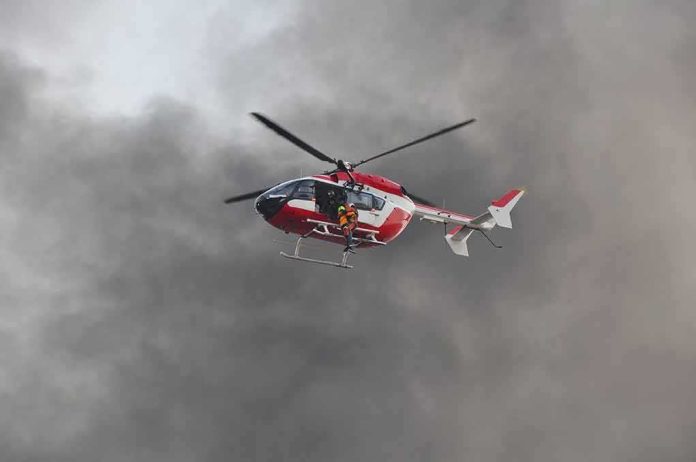
Rescuers in Nepal have begun clearing a blocked tunnel as they race to reach hundreds of hydropower workers trapped by deadly floods.
Story Snapshot
- Officials say hundreds remain trapped across multiple hydropower tunnels.
- Nepali Army teams opened one tunnel entrance and started debris removal.
- More than 10,000 troops and foreign experts joined the rescue push.
- At least 350 people were pulled alive from one tunnel earlier in the week.
Rescue Leaders Target Blocked Tunnels After Deadly Floods
Nepal’s government said rescue operations are underway at five hydropower projects after powerful floods blocked access to multiple tunnels. Commanders said the main goal is to open the tunnels and reach workers inside before conditions worsen. Officials reported hundreds are still unaccounted for across at least eleven project sites struck by the disaster, and they warned access roads and bridges remain damaged. Authorities described a fast-moving operation built around heavy equipment, night lighting, and round-the-clock crews.
Military engineers reported a key step forward at one site. Crews reached a tunnel entrance and started clearing debris that had sealed it. Teams are using controlled blasts, excavators, and pumps to move mud and water and to stabilize walls weakened by flood pressure. Commanders said every hour matters as oxygen, food, and clean water may be limited underground. They added that shifting rock and fresh runoff still pose risks for both the trapped workers and the responders.
Scale Of The Effort And Help From Neighboring Countries
The national disaster agency said more than 10,000 Nepali troops have been deployed to the rescue zone. Helicopters have airlifted heavy gear to remote valleys where roads were washed out. Specialists from China and India are on site to advise and assist with tunneling, drilling, and search operations. The joint push aims to open safe passages, restore power to key pumps, and improve communications that were cut when the floods tore through the mountain corridors.
Officials said the priority is to reach the largest concentrations of workers first. Reuters reported authorities are focusing on reaching as many as 933 workers believed trapped across eleven hydropower projects, while ministry leaders also cited more than 100 people still stuck in specific tunnels. Some figures vary by site and time because rosters, travel, and shift changes were disrupted by the floods and outages. Rescuers are consolidating lists as access improves.
Confirmed Rescues And Why Tunnel Disasters Can Turn Fast
Local media and officials reported successful extractions even as other sites remain cut off. Earlier this week, Nepali Army teams and local responders brought 350 workers and residents out alive from a tunnel at the Upper Trishuli Hydropower Project. That rescue showed both the danger and the potential for life-saving gains when a blocked passage can be opened and drainage restored. Crews say they are repeating those steps where terrain and weather allow.
Rescue crews and foreign specialists are racing to find scores of workers feared trapped alive inside hydropower tunnels in Nepal, after thick mud buried the facilities during last week’s devastating flash floods. Here’s what we know so far. https://t.co/hLq3Qu7Wid
— CNN International (@cnni) August 31, 2026
Hydropower tunnel work in the Himalayas is high risk even in normal times. Steep slopes, weak rock, and narrow passages mean a single flood or landslide can trap large groups with little warning. Regional studies have linked repeated disasters to unstable geology and extreme rain. These hazards explain why officials emphasize controlled blasting, careful shoring, and water removal before sending in larger teams. Those methods can slow progress but help keep both workers and rescuers alive.
Why This Matters Beyond Nepal
Mountain power projects help keep lights on across South Asia. But they also sit on the front line of rising weather extremes and growing infrastructure strain. The Nepal rescues highlight a truth many Americans feel at home: big systems often run hot until a crisis hits, then ordinary people pay the price. When plans, rosters, and safety checks fail, it is workers underground and families waiting outside who carry the burden, not far-off managers or international partners.
Clear records, honest counts, and fast logistics save lives in disasters like this. That means accurate worker lists, working radios, backup power for pumps, and pre-staged gear. It also means cross-border help that arrives with tools, not red tape. As Nepal’s teams press deeper into the tunnels, the test is simple and urgent: open safe passages, account for every person, and learn the right lessons so the next storm does not turn another worksite into a trap.
Sources:
kathmandupost.com, bbc.com, aninews.in