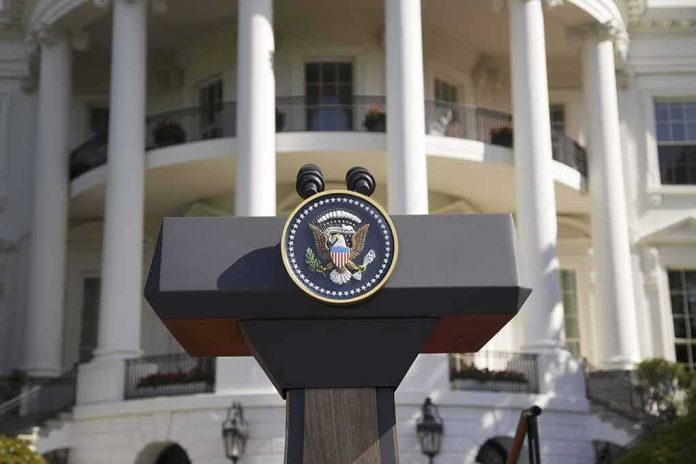
Abelardo de la Espriella was sworn in as Colombia’s president in Cali, breaking a long tradition and signaling a sharp political turn.
Quick Take
- De la Espriella took the oath of office on August 7, 2026, in Cali, not Bogotá.
- The ceremony marked the first presidential inauguration in Colombia’s modern history held outside the capital.
- He won a close June runoff and began a four-year term.
- Security was tight, and the move to Cali was meant to send a message on armed groups.
Inauguration in Cali Ends a Capital Tradition
Abelardo de la Espriella was sworn in on Friday as Colombia’s new president during a ceremony at the Arena USC in Cali. Reports said the event formally opened his four-year term and marked the first presidential inauguration in Colombia’s modern history held outside Bogotá. The location mattered as much as the ceremony itself. It turned a routine transfer of power into a highly symbolic break with the country’s political habits.
News coverage said the change in venue was meant to send a message of strength in a volatile region. Cali lies in Colombia’s southwest, where armed groups have long operated and where the government has faced deep security problems. The shift away from the capital also underscored the new president’s effort to present himself as a leader outside old political centers. That choice gave the day a sharper edge than a standard inauguration.
A Close Election Set the Stage
De la Espriella came to office after winning a close June runoff, according to Reuters and other outlets. Reporting before the inauguration described him as a hard-right or conservative lawyer who campaigned on tough security, lower spending, and support for oil and gas. Those promises helped define the election and the transition that followed. They also explain why his rise drew strong reactions across Colombia’s political divide.
Several reports said the inauguration came after years of political tension and a sharp shift in national direction. The ceremony closed the first left-led government in recent Colombian history, according to AFP. That fact alone helps explain the symbolism around the day. For supporters, it marked a reset. For critics, it raised fears about a deeper break with established institutions and social priorities.
Security, Symbolism, and the Message Ahead
The inauguration unfolded under heavy security, with foreign leaders and senior officials in attendance. Reuters described the event as the first time the ceremony took place in a city other than Bogotá. Xinhua said the gathering included Spain’s King Felipe VI and the presidents of Argentina, Ecuador, and Chile. Those details show that the event was not only domestic. It also carried clear regional and diplomatic weight.
De la Espriella’s oath language also reflected the ceremony’s formal tone. AFP’s video transcript records him promising to honor Colombia’s constitution and laws. That pledge will now be judged against his campaign promises and early moves in office. For many Colombians, the deeper issue is familiar across the political spectrum: whether another new administration can actually solve security and economic problems that have outlasted several governments.
Sources:
youtube.com, en.wikipedia.org, latimes.com, reuters.com, english.news.cn, cnnespanol.cnn.com, trtworld.com, thecitypaperbogota.com