
Ukrainian President Volodymyr Zelensky has issued an ominous warning to foreign leaders considering attendance at Russia’s Victory Day parade in Moscow, escalating tensions as the conflict enters a dangerous new phase where even diplomatic protocol becomes a potential flashpoint.
Story Snapshot
- Zelensky advised foreign officials against attending Russia’s May 9 Victory Day parade, stating “we don’t recommend it” in his May 7 evening address
- Russia threatened a “massive missile strike” on Kyiv if the parade is disrupted, while Ukraine boasts of 2,000-kilometer deep strike capabilities
- Moscow scaled back celebrations in over 20 cities due to Ukrainian strike fears, with no foreign invitations extended for 2026
- The exchange follows a failed ceasefire proposal and Ukraine’s claim of 1,820 Russian violations in a single morning
Zelensky’s Warning Amid Failed Ceasefire
President Zelensky delivered his advisory during his May 7 evening address, specifically targeting Russia-friendly countries that had inquired through Ukrainian channels about parade attendance. His statement came after Russia declared a “Victory Day truce” on May 6, which Ukraine claimed Russia violated 1,820 times by 10 a.m. local time that same day. Zelensky framed the warning as exposing Moscow’s insincerity, arguing Russia sought only a temporary pause to safely conduct its parade before resuming attacks. Slovak Prime Minister Robert Fico, who attended the 2025 parade, confirmed he would skip the 2026 event and potentially relay messages between Zelensky and Putin instead.
Russia’s Scaled-Back Parade and Explicit Threats
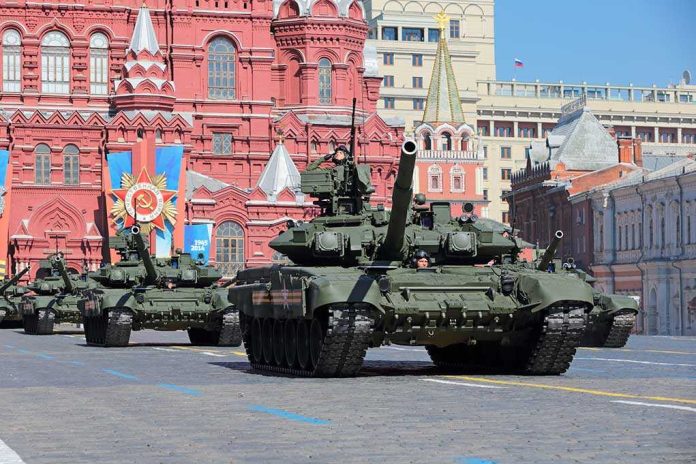
Russia’s 2026 Victory Day celebration marks a significant departure from previous years, with no foreign invitations extended and over 20 cities canceling military hardware displays due to Ukrainian strike capabilities. Kremlin aide Yuri Ushakov confirmed the decision to avoid inviting foreign leaders, citing complications from the ongoing conflict. The Russian Defense Ministry and Foreign Ministry spokesperson Maria Zakharova issued explicit threats of “adequate response” and promised to “resolutely suppress” any armed threats to the Red Square parade. Russia revoked foreign journalist accreditations and warned of massive retaliation strikes on Kyiv if Ukraine disrupts the commemorations, demonstrating the heightened security concerns surrounding what was once Moscow’s premier display of military power.
Symbolic Warfare and Diplomatic Isolation
The confrontation over Victory Day attendance reveals how deeply the war has penetrated even ceremonial aspects of international relations. Russia’s May 9 parade traditionally commemorates the 1945 Soviet victory over Nazi Germany, an event Putin has used since 2022 to justify his “denazification” narrative in Ukraine. The absence of foreign guests in 2026 represents a stark erosion of Russia’s symbolic soft power compared to pre-war years when leaders from China, India, and other nations attended. Ukraine has mocked the scaled-back celebrations while publicizing strikes on Russian territory including Perm and Chelyabinsk, demonstrating capabilities that forced Moscow’s defensive posture. This psychological warfare extends beyond battlefields, targeting Russia’s international prestige and exposing the isolation resulting from Putin’s invasion.
Escalation Risks and Government Dysfunction
The May 9 timeframe presents heightened risks of escalation, with both sides issuing threats that could spiral into wider conflict. Foreign leaders from Belarus, Malaysia, Laos, and breakaway regions like Abkhazia and South Ossetia face a difficult choice between maintaining ties with Moscow and avoiding Western isolation or Ukrainian reprisal. The failure of ceasefire proposals and the transformation of Victory Day into a potential military flashpoint illustrates how entrenched positions prevent diplomatic solutions. For Americans watching from afar, this spectacle of mutual threats over a parade reveals the dysfunction that characterizes much of international governance today. Both Ukrainian and Russian leadership prioritize symbolic victories and propaganda over genuine efforts to end a conflict that continues devastating civilian populations while draining resources that could address pressing domestic needs in their respective countries.
Sources:
Zelensky warns Russia’s allies against attending WWII parade in Moscow – South China Morning Post
Zelensky urges foreign officials to skip Moscow’s Victory Day celebrations – Meduza