After years of watching schools downgrade standards in the name of “inclusion,” the Presidential Fitness Test is back—and it’s mandatory again.
Quick Take
- President Trump signed a July 31, 2025 executive order reestablishing the Presidential Fitness Test as a mandatory assessment for schoolchildren.
- The order revives the President’s Council on Sports, Fitness, and Nutrition and puts HHS in the lead, working with the Education Department.
- The rollout began with the September 2025 school year, using familiar events like the mile run, push-ups, sit-ups, and sit-and-reach.
- Supporters say measurable standards can push healthier habits; critics warn about anxiety, equity gaps, and disability accommodations.
What Trump’s executive order actually did—and why it matters
President Donald Trump signed an executive order on July 31, 2025, reestablishing the Presidential Fitness Test and rebuilding the President’s Council on Sports, Fitness, and Nutrition as the administration’s central vehicle for a renewed youth fitness push. The order places the Department of Health and Human Services in charge, coordinating with the Department of Education, and frames declining health and physical fitness as a national problem worth treating like a serious policy priority.
For many parents, the significance is less about nostalgia and more about whether Washington is finally willing to say out loud that outcomes matter. A mandatory assessment is a clear departure from the recent tendency to avoid performance measures that might make some students uncomfortable. The administration’s approach emphasizes rewards for excellence through “Presidential challenges” and school-based programs, signaling a return to merit-based recognition in physical education.
How schools are implementing the test in 2025–2026
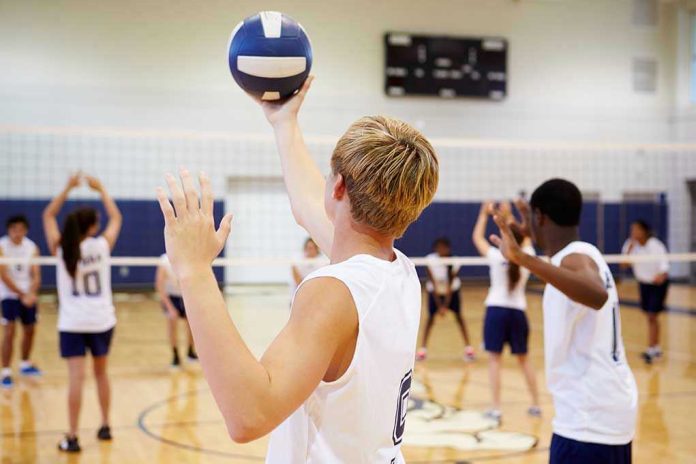
Implementation began as students returned for the September 2025 school year, and early descriptions of the test match the classic components many Americans remember: a one-mile run for cardiovascular endurance, push-ups for upper-body strength, sit-ups for core strength, and a sit-and-reach for flexibility. Multiple accounts also describe “updated criteria” and improved assessment protocols, but publicly available reporting has not consistently detailed the exact new scoring standards.
That lack of uniform detail matters because schools need predictable rules to administer a national test fairly. Districts also face practical burdens that rarely show up in political talking points: training staff, standardizing measurement methods, allocating gym and field time, and building systems to record results. As with many federal initiatives, the order establishes the direction while leaving real-world execution to a patchwork of local capacity, budgets, and scheduling constraints.
The political fight: standards versus feelings, again
The test’s 2012 elimination under the Obama-era approach reflected a different philosophy: participation and personal growth over performance metrics, with supporters arguing that competitive testing can stigmatize less-fit children and discourage lifelong activity. Trump’s restoration is a clear reversal of that worldview, and it lands in a familiar cultural conflict that many voters—left and right—are tired of: whether institutions should prioritize measurable excellence or manage emotional fallout.
Conservatives frustrated by “woke” culture in schools are likely to see the policy as a basic course correction: kids should move more, screen less, and schools shouldn’t treat standards as a form of harm. Liberals and some education and child-development voices argue that performance-based testing can amplify anxiety and self-esteem issues, especially for children already struggling with weight, confidence, or social pressure. The research available so far confirms the debate exists, but not which side will be validated by results.
What’s still unknown: results, equity, funding, and accommodations
As of May 2026, the program has been in schools for roughly eight months, but comprehensive outcome data is not yet available in the referenced materials. That leaves a key question unanswered: will testing drive sustained fitness improvements, or will it become a short-term “train for the test” exercise? Reporting also highlights equity concerns, since access to safe spaces for exercise and quality PE resources can vary widely by ZIP code.
BREAKING: President Trump announces the return of the Presidential Fitness Test for grade schoolers, slamming the Obama administration for phasing out the tradition:
"We're bringing it back.
"We had the Obama administration, which phased out this wonderful tradition of physical… pic.twitter.com/mORbfkkcpc
— Fox News (@FoxNews) May 5, 2026
Several other implementation details remain unclear in the accessible documentation, including funding specifics and standardized accommodation protocols for students with disabilities. Those gaps matter because a mandatory federal assessment raises legitimate questions about how uniform the rules really are, and whether the administrative state can execute consistently without creating paperwork headaches for districts. For families who already believe government is failing basic competence tests, the execution will matter as much as the intent.
Sources:
https://www.endocrinologyadvisor.com/news/presidential-fitness-test-returns-to-us-schools/
https://odphp.health.gov/pcsfn/programs-awards/presidential-youth-fitness-program