In a country where many feel the system is rigged, the Supreme Court just told millions of families that their American-born children are still citizens — no matter what Washington politicians tried to do about it.
Story Snapshot
- Supreme Court strikes down Trump’s executive order that tried to limit birthright citizenship for children of noncitizen parents.
- Chief Justice Roberts says the 14th Amendment’s promise of citizenship to people born in the United States is “unequivocal.”
- Conservative justices split, with a strong three-justice dissent and Justice Kavanaugh calling the order illegal but hinting Congress could change the law.
- Advocates and everyday Americans celebrate outside the Court, seeing the ruling as a rare win over a federal government they view as out of touch.
What Trump’s Order Tried To Do
On January 20, 2025, President Donald Trump signed Executive Order 14160, “Protecting the Meaning and Value of American Citizenship.” The order told federal agencies to stop treating some babies born in the United States as citizens if their mother was here illegally or only on a temporary visa and their father was not a citizen or permanent resident. These rules would only have applied to children born 30 days after the order, starting in February 2025. In plain terms, the order tried to carve out two groups of American-born children and say, “You were born here, but you do not count as citizens.
The administration defended this move by reinterpreting the 14th Amendment phrase “subject to the jurisdiction thereof.” It argued that parents who are undocumented or here only on short-term visas are not fully under United States jurisdiction, so their children do not qualify for automatic citizenship. This theory broke with more than a century of case law and practice, including the landmark 1898 case United States v. Wong Kim Ark, which said children born here to noncitizen, resident parents are citizens. Yet Trump’s team claimed courts and scholars had read the Amendment wrong for generations and that a president could fix it with a pen.
How The Courts Responded And What The Supreme Court Held
Federal courts moved fast to block the order. Judges in New Hampshire, Washington, and Maryland issued nationwide preliminary injunctions, saying the policy clearly violated the plain text of the 14th Amendment and long-standing Supreme Court precedent. Advocacy groups explained to families that, so long as these injunctions stood, the government could not enforce the order and could not strip babies of citizenship. For more than a year, the policy never took effect in practice, even as it fueled fear among immigrant communities and anger among citizens who saw it as one more sign the federal government plays games with basic rights.
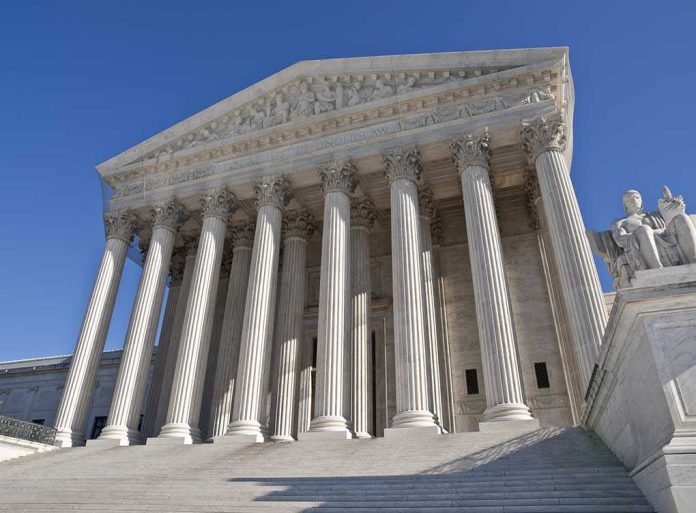
The Supreme Court finally took the case, Trump v. Barbara, and on June 30, 2026, ruled 6–3 against the administration. Chief Justice John Roberts wrote that the 14th Amendment’s language is “unequivocal” and that, under its settled meaning, almost everyone born on United States soil is a citizen. The majority reaffirmed Wong Kim Ark and the long tradition that children born here—regardless of their parents’ status—are “subject to the jurisdiction” because they live under United States law. In simple terms, the Court said, “Presidents cannot erase citizenship rights that the Constitution already guarantees.”
The Conservative Split And The Door Congress Could Still Open
The three dissenting justices — Clarence Thomas, Samuel Alito, and Neil Gorsuch — sided with Trump’s order and argued the 14th Amendment allows narrower citizenship rules. Their view leaned on the idea that allegiance and lawful domicile matter and that undocumented parents fall outside full jurisdiction. While they lost, their opinion gives legal cover to politicians who want to revisit birthright citizenship again. Justice Brett Kavanaugh took a middle road. He agreed the executive order broke existing federal law, so it could not stand, but wrote separately that the Constitution itself might allow Congress to legislate exceptions. His concurrence tells future lawmakers: “If you want to change this, do it by statute, not by presidential decree.” For Americans who already feel both parties exploit hot-button issues instead of fixing them, that warning may sound like another invitation to more political theater.
This ruling also exposed how much power fights now center on the courts instead of voters. Republicans still control both houses of Congress and the White House, yet a majority of justices — including some appointed by Trump — refused to let the executive branch redraw the basic rules of belonging. That may comfort people on the left who worry about “America First” policies targeting immigrants. It may worry people on the right who see courts as part of the “deep state” blocking elected leaders. But for many ordinary citizens, the bigger takeaway is that no single politician can decide that some babies born here are less American than others.
Why Advocates Are Cheering — And Why Distrust Of Washington Still Grows
Civil rights groups, immigration advocates, and many local leaders quickly hailed the decision as a defense of the Reconstruction-era promise that former enslaved people and their children would be full citizens. They point out that taking away birthright citizenship would not just hit undocumented families; it would also throw whole communities into chaos, forcing millions to prove status with new paperwork because birth certificates would no longer be enough. Outside the Supreme Court, crowds celebrated and chanted “If you are born, you are a citizen,” turning the ruling into a symbol of resistance to what they see as a government willing to gamble with basic identity for political gain.
The Supreme Court just blocked Trump's order to end birthright citizenship in a 6-3 ruling, calling it unlawful under the 14th Amendment. His third major SCOTUS loss in months.#SupremeCourt #Trump #BirthrightCitizenship #14thAmendment #USPolitics pic.twitter.com/DTThZ08sJg
— LibertyUSA (@ADireitaVerdade) July 1, 2026
At the same time, the case deepens a shared feeling on both the right and the left that Washington is failing ordinary people. For conservatives who worry about illegal immigration, border chaos, and elites who ignore their concerns, the ruling may feel like another example of courts blocking tough action without offering real solutions. For liberals who fear growing inequality, racial bias, and harsh enforcement by Immigration and Customs Enforcement (ICE), Trump’s order looked like a step toward a two-tier society where some babies are American and others are disposable. The Supreme Court’s decision stops that immediate threat, but it does not fix the deeper problems or the sense that the “system” is broken. Congress still has the power to try to change the rules, and powerful interests on both sides are already talking about the next move. For now, one simple promise remains: if you are born in the United States, the Constitution still says you belong here as a citizen.
Sources:
reason.com, en.wikipedia.org, nbcnews.com, supremecourt.gov, bbc.com, naacpldf.org, americanimmigrationcouncil.org, whitehouse.gov, oyez.org, legalytics.substack.com, theusconstitution.org, ballotpedia.org, lwv.org, aclumaine.org, asianlawcaucus.org, aila.org, brennancenter.org, aclu.org