
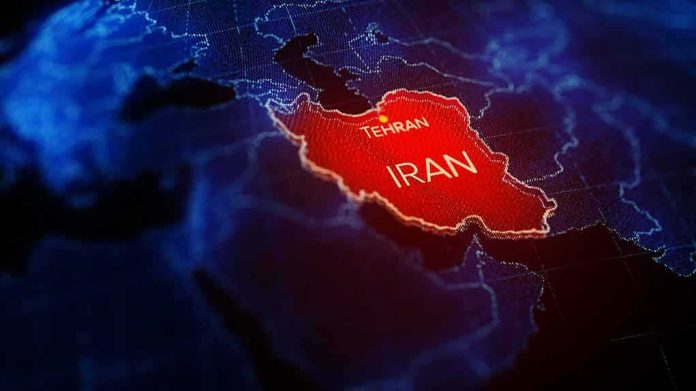
America’s top spies are now hunting a hidden Iranian leader whose next move could drag ordinary families even deeper into another endless war.
Story Snapshot
- Iran’s new supreme leader, Mojtaba Khamenei, vanished from public view after his father was killed in a U.S.-Israeli strike.
- Reports say the Central Intelligence Agency (CIA) and Israel’s Mossad are tracking every signal they can find to locate him.
- The U.S. government has posted a multi‑million‑dollar reward for tips on his whereabouts, treating him as a top target.
- His secrecy raises hard questions about who is really in charge in Tehran — and how far Washington and Jerusalem will go.
The war that made Mojtaba Iran’s hidden ruler
On February 28, 2026, Israeli airstrikes, backed by U.S. intelligence, killed Iran’s longtime supreme leader Ali Khamenei and several top aides in Tehran. Within days, Iran’s Assembly of Experts, a body of senior Shia clerics, named his son **Mojtaba Khamenei** as the new supreme leader. That decision kept power inside the same ruling family even as the country reeled from the shock of losing its most important figure in a foreign attack.
Since taking the role in March, Mojtaba has rarely been seen in public. He has issued written messages and statements that repeat his father’s hard line against the United States and Israel, including vows of revenge for the killing. At the same time, reports say he was wounded in the initial strike and may now live under extreme security, deep underground or constantly moved between safe houses to avoid another assassination attempt.
How CIA and Mossad are trying to find him
U.S. and Israeli intelligence agencies are now locked in a quiet race to confirm Mojtaba’s location, health, and control over Iran’s war machine. According to media reports citing American officials, the Central Intelligence Agency (CIA) is examining every new photo and written message that appears on Mojtaba’s channels to see if they are recent or recycled from older files. Analysts study tiny details — lighting, clothes, background — to judge whether he is truly active today or being propped up through carefully managed images.
Reports say Mossad and other services are watching signals from inside Iran, trying to match convoy movements, energy use, and secure communications with possible hiding places. Some coverage even suggests that old videos could be edited with artificial intelligence to hide his true condition, making it harder to know if he is injured, fully in command, or sidelined by others. At the same time, U.S. and Israeli officials admit they have “no proof” that Mojtaba is the one giving orders, which they call a “big red flag.”
Rewards, threats, and psychological warfare
The U.S. government has gone beyond normal spying and publicly offered up to **$10 million** for information on Mojtaba and several other senior Iranian figures. This kind of reward turns the hunt into a global man‑tracking effort, inviting rivals, insiders, and even criminals to sell tips. Iran has answered with angry statements and warnings that any attempt to kill Mojtaba again will bring “severe retaliation,” raising the stakes for everyone in the region.
Iranian officials insist Mojtaba is “safe and sound,” in “perfect health,” and in full control from his office in Tehran. But they still avoid live video appearances, feeding doubts abroad and at home. Some reports, quoting regional sources, claim he may have sought medical help or shelter in Russia, though Moscow and Tehran deny it. This back‑and‑forth is classic psychological warfare: each side uses partial facts, silence, and staged messages to scare the other and reassure its own people.
What this means for Americans watching from home
For many Americans, this hunt for a foreign religious leader feels like more proof that distant power struggles keep dragging the United States into dangerous fights while everyday problems at home go unsolved. Intelligence stories of hacked cameras, secret bunkers, and multimillion‑dollar bounties show how much money and focus goes into battles between elites far from Main Street. People on the right and the left see the same pattern: trillions for foreign wars, but slow action on wages, health costs, and broken borders.
Conservatives angry about globalist policies and endless foreign entanglements see another shadow conflict that could spark higher energy prices, new migrant waves, and maybe direct attacks. Liberals worried about growing inequality and civilian casualties see a secretive campaign that could kill more people without public debate or clear limits. In both cases, the feeling is that decisions are being made by a small circle of leaders, spies, and defense contractors — not by citizens who bear the cost.
A deep state struggle that crosses borders
The Mojtaba mystery also speaks to a broader fear about “deep state” power worldwide. Inside Iran, a small group around the Islamic Revolutionary Guard Corps shields a leader that most citizens never see, while demanding loyalty and sacrifice. Inside the United States and Israel, intelligence agencies and military planners quietly shape events that could trigger war, often based on secret information the public cannot check. Each side claims to defend its people, but both keep key details hidden.
When the CIA and Mossad chase Mojtaba through data trails and satellite images, they are not just tracking one man. They are testing how far modern states will go to control outcomes through technology, secrecy, and targeted killing. For many Americans already skeptical of Washington and its permanent security class, this feels like one more sign that the real game is played by elites on all sides while regular families are left to deal with the fallout — higher prices, unstable markets, and the risk that another foreign crisis becomes the next forever war.
Sources:
feedpress.me, youtube.com, dw.com, en.wikipedia.org, nbcnews.com, cbsnews.com, france24.com, english.elpais.com, cnn.com, ynetnews.com, jpost.com, reddit.com, timesofindia.indiatimes.com