
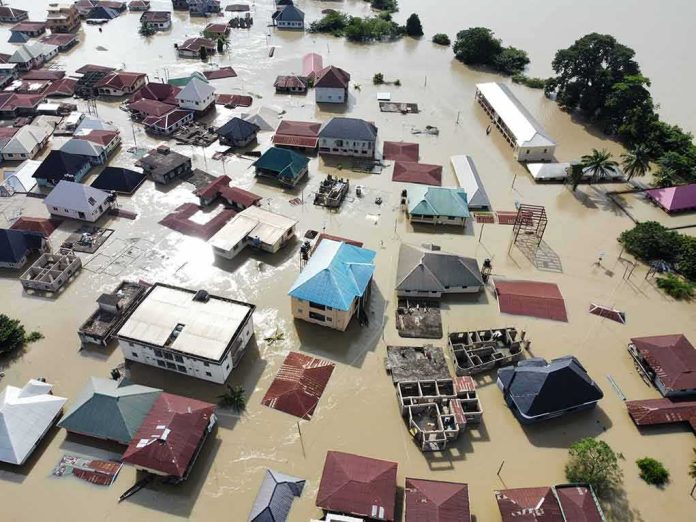
As floodwaters tore through Accra and left dozens dead and thousands homeless, they also exposed how years of weak planning, corruption, and failed warning systems turned heavy rain into a man‑made disaster.
Story Snapshot
- Heavy rains triggered deadly floods in Accra, but research and officials say human decisions made them far worse.
- Illegal buildings on waterways, choked drains, and weak enforcement of land rules have grown for years without real fixes.
- Ghana’s early warning and flood committees lagged or failed, echoing wider fears about unaccountable, slow governments.
- Experts call for strict land use enforcement, transparent audits, and real early warning systems before the next storm hits.
How Heavy Rains Turned Into a Man-Made Disaster
Ghana’s capital, Accra, was hit by torrential rain that quickly flooded streets, homes, and markets, killing at least a dozen people and leaving tens of thousands displaced. Rescue teams and reporters at the scene described gutters packed with trash and concrete, and houses sitting directly in natural water paths. A major urban study on Accra’s floods backs this picture, tying flood risk to three linked causes: intense rainfall, uncontrolled urban growth, and poor management of surface water.
Researchers who tracked floods and rainfall over several years found little proof that more rain alone explains why flooding keeps getting worse. In one key year, 2017, rain totals went down but flood incidents went up. That finding points away from nature and toward people. The same research team concluded that poor and uncoordinated land use planning is the main driver of Accra’s floods, not climate change, and warned that ignoring this fact will allow future floods to keep claiming lives.
Illegal Building, Choked Drains, and Weak Enforcement
Studies of Accra’s informal neighborhoods show that many homes and shops have been built directly in floodplains and along drainage channels, often without permits or basic engineering. These settlements sit on once-green land and wetlands that used to absorb and carry water away, but now act like walls, forcing water into crowded streets and rooms. Poor garbage collection and routine dumping of waste into drains mean that storm gutters clog fast, so even moderate rain can overflow in minutes.
Officials interviewed from Accra’s local government and environmental agencies admitted that weak enforcement of building and land rules is a central part of the problem. One expert on local governance broke down the blame this way: about 30% on local authorities, 40% on political interference, and the rest on residents who ignore the law. He also noted that some chiefs and local power brokers sell off protected land, while some assembly officers take payments to overlook illegal construction, feeding a cycle where laws exist on paper but not in practice.
Failure of Early Warning and Disaster Response
Ghana’s recent floods do not only reveal broken drains and bad building choices; they also show how weak early warning and disaster planning can cost lives. National and city plans describe flood early warning systems, like the Garrett Project for Accra, that should alert people to move before water rises. Yet during this latest disaster, no timely public warnings went out, even though officials had called the system “fully operational,” raising sharp questions about whether funds were mismanaged or systems neglected.
A national flood contingency plan, backed by the United Nations Development Programme, already warns that Ghana’s early warning systems are often slow and that disaster preparedness is ineffective. It links frequent flood losses to rapid urbanization, poor drainage, bad waste management, and weak institutions that cannot keep up with fast growth. That is exactly what residents described: some said relief was late or too small, and opposition lawmakers demanded proof of what the Presidential Flood Committee has done in fifteen months beyond collecting budgets and holding meetings.
Shared Lessons for a World Losing Trust in Government
Urban flood research across Ghana paints a clear picture: human choices and governance failures turn heavy rain into mass suffering. Rapid growth, short‑sighted planning, and building in unsafe, low‑lying areas have spread across Accra, while drains stay undersized or never built. Vegetation loss and concrete everywhere push more water into narrow channels, which then clog with trash because waste systems are weak. Together, these choices create a city where even one bad storm can shut down whole neighborhoods and push families into sudden homelessness.
For readers in the United States who feel their own leaders ignore basic infrastructure while arguing over culture wars, Ghana’s tragedy feels familiar. Experts there now call for simple but serious steps: strict land use enforcement with real penalties, transparent audits of flood funds and committees, investment in drains and green space, and early warning systems that actually send alerts when danger builds. Whether in Accra or in American cities, the core message is the same: when government looks away from its duties and lets rules be bent by money and politics, ordinary people pay the price when the waters rise.
Sources:
bbc.com, tandfonline.com, instagram.com, facebook.com, modernghana.com