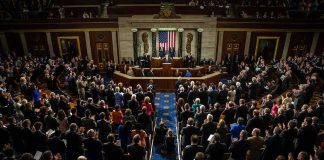

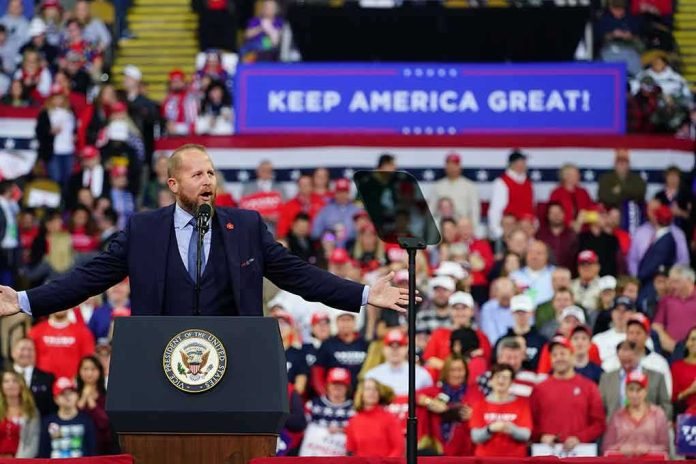
Democrats captured both chambers of Congress and flipped Texas statewide, abruptly reshaping power in Washington and beyond.
Story Highlights
- Democrats won control of the House and Senate, ending Republican control of Congress.
- Democrat James Talarico defeated Ken Paxton in Texas, flipping a Senate seat with a double-digit margin.
- Texas saw a broader Democratic sweep across top statewide offices, signaling a historic shift.
- Democratic leaders floated a fast-start agenda but face Senate filibuster hurdles and internal choices.
What Changed On Election Night
NBC projected that Democrats would take control of both the House and the Senate in January, after key wins in battleground districts and states. That shift hands Democrats the gavels for committees, investigations, and legislative drafting. It also ends unified Republican control of Congress during President Trump’s second term. Control of the calendar and subpoena power now moves to Democratic chairs. That change alone alters which issues get hearings, votes, and media attention.
Texas delivered the shock of the night. NBC and NPR reported that Democrat James Talarico defeated Trump-aligned Attorney General Ken Paxton for a United States Senate seat. NPR cited an Associated Press call and reported a 55.1 percent to 43.0 percent margin, or 5,445,121 votes to 4,249,752. The victory ended a decades-long drought for Democrats in Texas Senate contests. It also showed that a message focused on economic inequality and corruption could break through in a red-leaning state.
Texas As A Symbol Of A Larger Wave
Local coverage described a historic Democratic sweep across Texas statewide offices, including the governorship, lieutenant governorship, attorney generalship, and the railroad commission. That map-wide shift created a vivid symbol of political change. For many voters who feel shut out by elites on both coasts, seeing long-standing Texas power centers change hands signals a demand for basic competence, fairness, and accountability. It also raises expectations that new leaders will deliver on pocketbook issues quickly.
Democratic leaders pointed to a short-term governing plan. Reported priorities included restoring expired health care subsidies, reversing recent Medicaid cuts, revisiting tariff policy, and ending the war in Iran. Those items aim at lowering costs and reducing global risk exposure for American families. The plan also answers concerns shared by conservatives and liberals about rising prices, health care gaps, and endless conflict. Voters across the spectrum have asked for relief on bills, safer borders, and less chaos abroad.
The Limits Of Power In A Filibuster Senate
Control of Congress does not erase Senate rules. Many major bills still need sixty votes to clear a filibuster. That threshold gives Republicans leverage to slow, narrow, or block Democratic bills. The math means Democrats must choose between bipartisan deals, narrower budget paths, or a focus on oversight. Political science research calls this a normal feature of divided incentives, where rules and veto points blunt even large waves. That reality will test claims of a broad mandate.
Midterm patterns also urge caution. Scholars find that presidents’ parties often lose seats as voters seek balance, turnout drops, or frustrations rise. This “midterm law” helps explain shifts without proving a new long-term realignment. The Democratic wins may reflect a pushback against rising costs, ethics fights, and governance concerns, more than a single ideological endorsement. That said, outperforming the usual midterm penalty, especially in Texas, suggests something larger than a routine swing.
What Both Sides Will Watch Next
House and Senate Democrats now decide how to spend scarce floor time. They can launch investigations into ethics and executive actions, push cost-of-living bills, or try both. Aggressive oversight may satisfy voters who think Washington protects insiders. Policy bills may deliver concrete help on insurance premiums, drug prices, or tariffs. Doing both risks gridlock if the agenda splinters. Leaders will also weigh how hard to press the administration for documents when the Department of Justice may resist.
For conservatives, the worry is that new majorities will expand government and stall energy projects that lower prices. For liberals, the fear is that rules and lobbyists will gut reforms before they reach families. For many Americans of all stripes, the deeper concern endures: a system that serves the well-connected first. The Texas flip and congressional shift show voters can still upend the script. The next test is simple and hard: can Washington deliver results people feel in their daily lives?
Sources:
theatlantic.com, nbcnews.com, nbcconnecticut.com, nbcdfw.com, npr.org, nbcmiami.com, crateandbarrel.com