
A business jet plunged almost straight down near Mar-a-Lago after a mayday call about icing and an “overspeed,” killing nine and raising urgent questions about safety and accountability.
Story Snapshot
- Investigators say the Learjet 60 lost radar and radio contact before crashing near homes in Palm Beach County.
- Pilots reported icing, turbulence, extreme descent rates, and an “overspeed” before impact.
- The National Transportation Safety Board (NTSB) is probing possible in-flight breakup, but no cause is set.
- Dash-cam video shows a near-vertical descent and a fireball at a neighborhood intersection.
What investigators have confirmed so far
The National Transportation Safety Board (NTSB) opened a major investigation into the crash of a 2004 Learjet 60, tail number N722BD, that went down in Palm Beach County. The accident is logged as ERA27MA026. The jet departed Austin-Bergstrom International Airport bound for North Eleuthera Airport in the Bahamas before it disappeared from radar and radio contact. The crash killed all nine people on board, according to multiple aviation outlets that summarized early findings from officials.
Air traffic control recordings described a fast-moving emergency in rough weather. The crew reported icing and moderate turbulence and asked to climb to 37,000 feet. Soon after, controllers noted descent rates of 10,000 feet per minute and then 20,000 feet per minute. The crew also reported an “overspeed condition,” which means the aircraft exceeded a design speed. These details frame a severe loss of control in the final minutes of flight.
What happened in the final moments on the ground
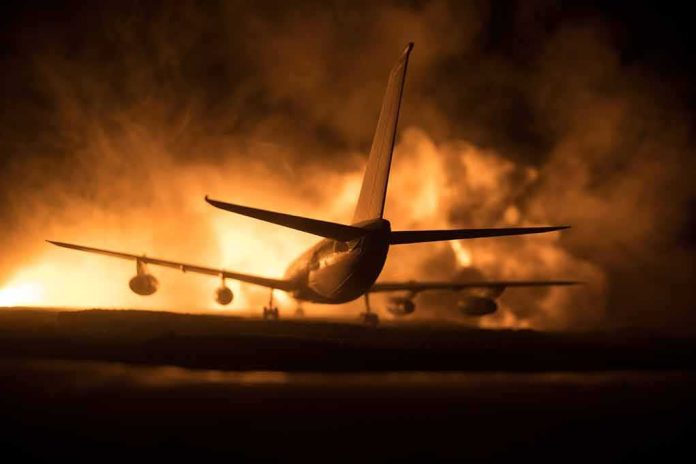
Dash-camera video captured the jet’s near-vertical descent and a fireball at impact. The aircraft struck a residential area near Military Trail and 10th Avenue North and left a deep crater, according to local reporting summaries. The scene showed widespread debris and burn damage. People nearby described a sudden roar and then a blast. These consistent visual accounts match the fast descent noted by air traffic control and help define the crash footprint for mapping and recovery.
National Transportation Safety Board member Tom Chapman said investigators had “some evidence” that parts of the aircraft may have separated before impact. He stressed that the team had not confirmed a pre-impact breakup and would test that idea against wreckage, recorded data, and lab analysis. That careful wording matters. It signals a lead to test, not a firm answer. The Board’s process weighs many causes before it names a probable cause.
How the investigation will proceed and why it takes time
The National Transportation Safety Board leads civil aviation crash probes to find facts, determine probable cause, and issue safety steps. The agency typically needs 12 to 24 months to finish a complex case. Investigators gather radar data, air traffic recordings, weather reports, maintenance logs, and pilot records. They also examine the wreckage and, when possible, read cockpit voice and flight data recorders. The NTSB does not set a cause while on scene and releases findings in stages.
The Learjet case includes several technical lanes. Weather analysis will map icing, turbulence, and precipitation along the route. Engineering teams will check wings, control surfaces, engines, and anti-ice systems for evidence of damage before impact. Metallurgists will study fractures to see if they came from in-flight loads or from the crash itself. Human-factors experts will review crew training, workload, and health. Each lane can support or rule out a theory as facts harden.
Why this matters beyond one tragic crash
The crash drew fast attention because it happened near Mar-a-Lago, but the core story is safety, not politics. When a jet falls from the sky over a neighborhood, every family sees the risk. People on the right and left share a basic demand here: tell the truth about what failed and fix it. The National Transportation Safety Board exists for that mission and has the legal duty to call out system gaps, whether in training, maintenance, gear, or rules.
Early headlines can race ahead of the facts. Reports of icing, extreme descent rates, and a possible breakup are important clues but not the end of the story. Investigators will test whether ice changed the wing’s lift, whether a system fault drove the overspeed, or whether pilot actions fit normal checklists under stress. A final report will connect the chain. Until then, the known facts already argue for vigilance in weather planning, equipment health, and flight discipline.
Sources:
youtube.com, my.ntsb.gov, ainonline.com, avweb.com, aerospaceglobalnews.com, merca20.com, atsb.gov.au, data.ntsb.gov