

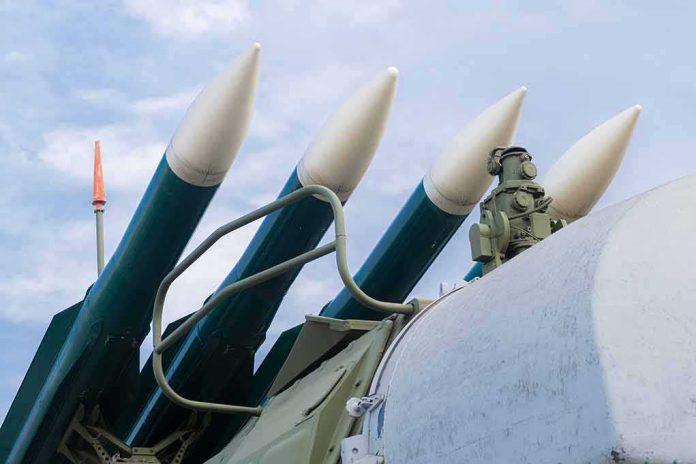
Washington approved a $2.1 billion package for 500 Patriot interceptors to Ukraine, but deliveries could take years, widening the gap between promises and protection on the ground.
Story Snapshot
- The State Department approved a possible sale of 500 PAC-3 missiles to Ukraine.
- The estimated value is $2.1 billion, with Lockheed Martin as the main contractor.
- Allies and EU-backed funds, not U.S. taxpayer money, are slated to finance the deal.
- Delivery timelines are unclear and could stretch well into the 2030s, reports say.
What The U.S. Approved And Why It Matters
The U.S. Department of State approved a possible Foreign Military Sale to Ukraine for 500 Patriot Advanced Capability 3 Missile Segment Enhancement interceptors. The package includes spare parts and support. The total estimated value is $2.1 billion. Lockheed Martin is named as the prime contractor. The State Department said the sale would boost Ukraine’s integrated air and missile defense and support stability in Europe. The approval follows Ukraine’s push to refill interceptor stocks for existing Patriot systems.
The government also described how to pay for it. The announcement said Canada, Germany, and Norway would fund the deal through a program called JUMPSTART, together with Ukrainian national funds backed by a European Union loan. The U.S. stated that no American taxpayer funds are part of this package. The plan aims to keep Ukraine’s defenses supplied without new U.S. spending, while still strengthening a key partner country during an ongoing war.
The Catch: Approval Is Not Delivery
The approval is a legal green light, not a shipment notice. Foreign Military Sales move through steps that can take time, including congressional review, a final offer, contracting, and then production. The State Department did not list a delivery schedule. Reporting based on people briefed on the decision said the missiles are not yet built and may not arrive for several years, possibly into the 2030s. That means immediate relief for Ukraine’s interceptor shortage is unlikely.
This timing gap is part of a wider, well-known pattern. In major arms transfers, “approved,” “contracted,” and “delivered” are different stages. Under the Arms Export Control Act, Congress is notified and given a set review period before the executive branch can finish a large sale. A Government Accountability Office review has documented months-long processing timelines even before production begins. These steps protect oversight, but they also slow delivery during wartime demand.
Operational Impact Versus Public Expectations
Ukraine needs interceptors now to defend cities, power grids, and critical sites. The 500 missiles, when delivered, would help replenish stocks and extend Patriot coverage against aircraft and missiles. But the State Department release did not include a model of how many batteries, launchers, crews, or spares Ukraine will have to use the full lot at once. Without a timeline, it is hard to measure how quickly this sale will change conditions on the ground.
US approves $2.1 billion Patriot missile sale to Ukraine
More: https://t.co/o1RfvFs8Jp— West Wire (@WestWireNews) November 2, 2026
Public focus has zeroed in on the long wait for deliveries. Multiple outlets stressed that the missiles will not arrive soon. That framing risks turning a large package into a symbol of delay, not deterrence. At the same time, the allied funding plan spreads financial risk and could face changes if contributors adjust their budgets. Supporters argue the sale still matters because it sustains Ukraine’s long-term air defense and signals ongoing Western backing despite production limits.
How This Fits The Bigger Picture
The sale reflects a tradeoff common in national security: building future capacity versus meeting today’s needs. The government prioritized a long-term pipeline of high-end interceptors rather than a quick surge that the system cannot deliver. That choice aligns with the United States goal to strengthen Ukraine’s integrated air and missile defense over time. It also shows how defense industry output, oversight rules, and allied financing shape what support looks like in practice, not just in speeches.
Sources:
militarytimes.com, bbc.com, state.gov, thedefensepost.com, yahoo.com, nbcnews.com, us.cnn.com, cbsnews.com, gao.gov, congress.gov