After 47 years, the United States removed Syria from the terror-sponsor list, unlocking investment and redrawing risks in the Middle East.
Story Snapshot
- President Trump notified Congress on July 8, 2026, starting a 45-day review.
- Secretary of State Marco Rubio finalized the rescission after the review expired.
- The move aims to ease investment limits and reopen economic ties with Syria.
- Bipartisan lawmakers urged delisting, while experts still flag terrorism and foreign-fighter risks.
What Changed And When The Decision Became Final
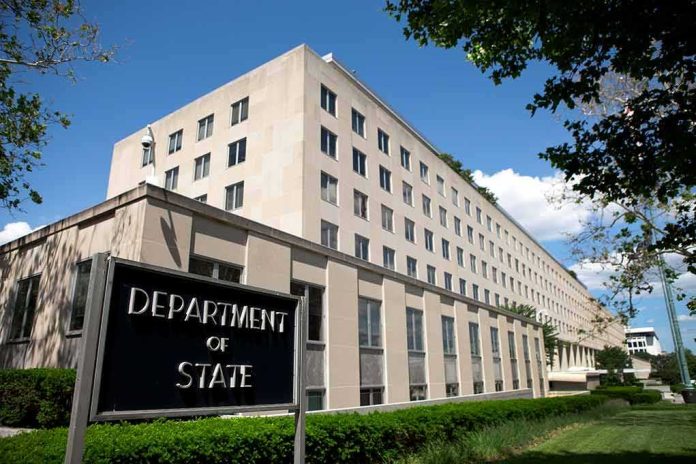
President Trump sent Congress formal notice on July 8, 2026, to rescind Syria’s State Sponsor of Terrorism label, which triggered a required 45-day review clock. The process followed statutory steps that make delisting rare and deliberate in United States law. After the clock ran out without a congressional block, Secretary of State Marco Rubio issued the formal rescission. The State Department said the action was complete at the end of the waiting period and took legal effect.
The administration framed the decision as part of a shift following the fall of Bashar al-Assad and the rise of a transitional government led by Ahmed al-Sharaa, signaling a new phase of engagement with Damascus. The State Department said the step would advance United States national security and regional stability. Officials also linked it to opening channels for economic recovery inside Syria and allowing outside capital to reenter lawful trade and reconstruction projects.
Economic Door Now Ajar, But How Wide It Swings Is Unclear
The rescission removes a central barrier that discouraged banks, insurers, and investors from touching Syrian deals, even when other sanctions did not apply. Reporting described reduced limits on investment and financing, which may help Syria rebuild basic services and infrastructure if risk controls are met. Actual results will take time to measure. Public claims so far describe expected benefits and not yet proved outcomes, including correspondent banking, reconstruction funds, and private lending flows.
Congressional involvement preceded the final move. A bipartisan letter from Senate and House leaders urged Secretary Rubio to remove Syria from the list, reflecting support across party lines for recognizing changes in Damascus and testing economic reentry with safeguards. That support coexisted with caution. Congressional researchers and some lawmakers pressed for benchmarks to ensure Syria tackles terrorism, protects minorities, and addresses foreign fighters, especially in ways that do not threaten neighbors like Israel.
Security Concerns That Still Shadow The Policy Shift
Al Jazeera reported that former United States officials warned about foreign fighters within Syrian units and urged proof of better governance and economic management to maintain American support. Those concerns echo older public records about Syria’s history with groups on terrorism lists, which shaped its original 1979 designation and decades of distrust. The current public record does not include a declassified threat review that shows how those risks have changed in detail.
Syria is no longer on the United States’ list of State Sponsors of Terrorism, ending a designation that had remained in place since 1979 and removing what Washington says were major obstacles to private investment in the country. US Secretary of State Marco Rubio formally… pic.twitter.com/whoR2FVML1
— The Statesman (@TheStatesmanLtd) August 25, 2026
The State Department’s public statement does not include the full legal memo or intelligence annex explaining why Syria no longer meets each statutory test for the terrorism label. Reuters and other outlets documented the timeline and stated goals, but they did not publish the underlying notice or factor-by-factor findings. That gap fuels a broader American worry shared by left and right: big decisions often land without the transparency that earns trust, especially when money and geopolitics mix.
Why This Matters For Ordinary Americans
Energy prices, migration shocks, and defense costs all tie back to Middle East stability. If delisting reduces violence and helps Syria rebuild, Americans may see steadier energy markets and fewer crises abroad. If the gamble backfires, risks could grow. The rarity of such delistings shows how serious the step is and why openness matters. Clear public benchmarks, audits on terror finance, and tracked economic results would help prove this move serves United States security and not only elite interests.
Sources:
newarab.com, aljazeera.com, reuters.com, foreign.senate.gov, ntd.com, time.com, congress.gov, thehill.com