
NYPD video shows armed federal agents closing in as a father drives off with his 5-year-old in the back seat, and officials say he rammed two government cars before they opened fire.
Story Highlights
- NYPD released video shows agents approaching with guns drawn as the Honda pulls away.
- Homeland Security leaders say the driver struck two government vehicles and headed toward agents.
- Body-camera footage shows the injured driver, damaged glass, and a rushed hospital transport.
- Videos do not show the actual shooting or provide audio, leaving key seconds unclear.
What The New Videos Show And What They Don’t
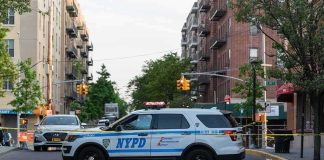
NYPD surveillance clips show federal officers moving toward a parked Honda CR-V with guns drawn on October 9, 2026. The vehicle reverses, then pulls away, and appears to clip another car as it exits the frame. The public video has no audio and does not capture the gunfire itself. That gap leaves open questions about commands, the timing of shots, and whether the car was moving toward agents when rounds were fired.
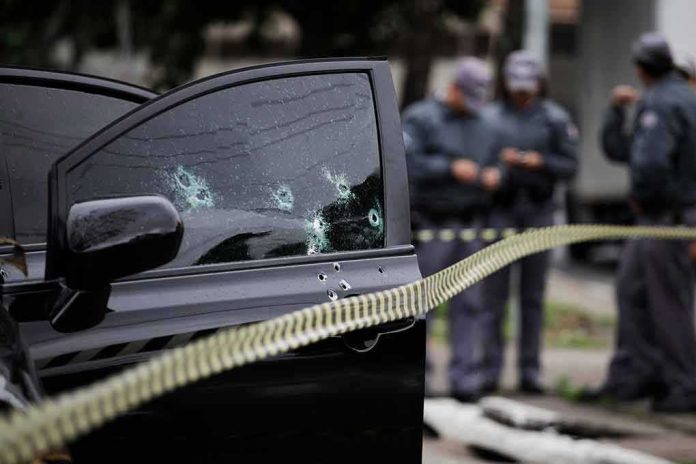
Separate NYPD body-camera footage begins after the shooting. It shows the driver, identified in reports as Oscar Belgal, on the pavement receiving medical attention, officers with long guns nearby, and transport to a hospital. Police leaders described ballistic damage to the Honda’s windshield and a shattered rear window, consistent with gunfire and a violent clash. The clips also show a damaged federal vehicle panel that supports claims of a collision but do not map out the exact impact sequence.
Federal Account Versus Unresolved Evidence Gaps
Senior officials at the Department of Homeland Security and Immigration and Customs Enforcement state that Belgal refused orders, rammed two government vehicles, and accelerated toward agents before they fired. Their statements frame the car as a lethal threat. However, the public record so far relies on their descriptions for those key details. The released videos are compelling but stop short of proving how, when, and where the alleged impacts and the shots happened.
The legal test centers on whether agents faced an imminent threat at the exact moment they fired. Department of Justice policy bars shooting to simply stop a moving car. It allows deadly force only when a vehicle threatens death or serious injury and no reasonable alternative exists, such as stepping out of its path. That is why the missing audio, shooter locations, and precise timing matter so much to the final judgment.
Public Safety Concerns And Calls For Full Transparency
Local leaders raised sharp concerns about the risk to families on a crowded street. Critics noted reports that at least one agent fired several rounds while a 5-year-old sat in the back seat. They argue that even if a driver tried to flee, gunfire in that setting endangered the child and bystanders. The debate echoes a larger pattern in vehicle-related shootings, where motion, intent, and officer placement are hard to reconstruct without full footage and forensics.
"The shooting prompted Mamdani’s knee-jerk incendiary response, as well as 'mostly peaceful' protests. The reality is they’re mostly peaceful if you’re not in law enforcement."
↓
Paging Mamdani: NYPD Releases Video of ICE Suspect Fleeing Agents https://t.co/lNiSW4fmxy— Dogs Chained And Throttled On X (@baileyjer) October 10, 2026
Across the spectrum, people want answers before politics hardens the narrative. The next steps are straightforward: release all relevant body-camera videos from federal agents, provide unedited city surveillance from every angle, and publish a clear timeline with radio traffic and reports. A crash and ballistic review could confirm impact points, shot directions, and agent positions. Full transparency would test official claims and help restore trust in institutions that many citizens believe too often protect their own.
Sources:
redstate.com, edition.cnn.com, wftv.com, nytimes.com