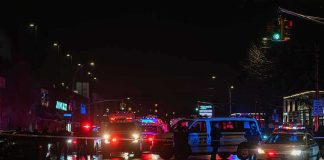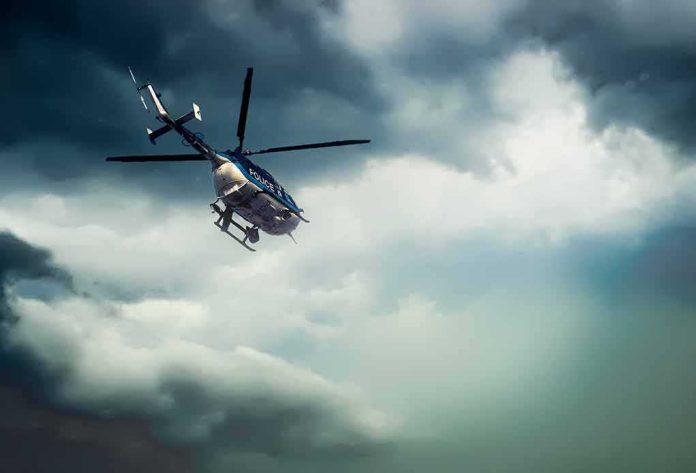
A small plane slammed into a hovering state police helicopter near Carlisle’s runway, killing the pilot and injuring two troopers, as investigators now work to learn why.
Story Snapshot
- Federal officials confirmed a Cessna 150 and Bell 407 collided near Carlisle Regional Airport.
- The airplane’s pilot died; two Pennsylvania State Police aviators were injured.
- Investigators from the Federal Aviation Administration and National Transportation Safety Board are leading the probe.
- The crash happened near a non-towered airport, where see-and-avoid is critical for safety.
What investigators confirmed about the crash
The Federal Aviation Administration (FAA) said a Cessna 150 airplane and a Bell 407 helicopter collided in midair near Carlisle, Pennsylvania, around 7:50 p.m. on Wednesday, Aug. 19. Pennsylvania officials said the small airplane’s pilot died, and two Pennsylvania State Police aviators in the helicopter were injured and hospitalized. The FAA said it is working with the National Transportation Safety Board (NTSB) to investigate the cause, which has not yet been determined.
Pennsylvania leaders visited the injured troopers and briefed the public on the response and investigation steps, underscoring that federal investigators will determine what happened and why. Early reports from local officials and outlets described the helicopter as conducting a training mission at the time of the collision, which occurred in the airport environment. Officials have not assigned fault. The NTSB will analyze flight paths, radio calls, and wreckage to build a clear sequence of events before issuing findings.
Why the Carlisle setting matters for safety
Many midair collisions occur in the airport pattern at low altitude, where pilots depend on visual scanning and shared radio calls rather than a control tower. Federal training material says most midair crashes happen near non-towered fields, often below 1,000 feet, and are linked to a failure to “see and avoid” other aircraft. Past NTSB cases show factors can include pattern entry, traffic alerts, and cockpit workload, which is why investigators study each link before naming a probable cause.
Prior NTSB investigations at non-towered airports have found that traffic-pattern geometry, straight-in approaches, and missed radio calls can increase risk when several aircraft converge. Some reports cite pilot lookout failures and poor coordination on the common frequency as key contributors, while stressing that responsibility to avoid other aircraft remains with pilots even when receiving advisories. Carlisle’s non-towered status makes disciplined pattern work and radio use especially important for safety.
What comes next in the federal probe
The NTSB will collect witness statements, examine aircraft damage, and review any flight data or cockpit recordings if available. Investigators will also analyze airfield traffic, reported radio calls, visibility, and training procedures to understand how two aircraft came together near the runway. That process often takes months, and the final report will point to a chain of causes and contributing factors, not just a single error, drawing on established safety methods.
One killed and two troopers were injured following a violent midair collision on the runway approach at Carlisle Airport.
Details: https://t.co/2U39tVUe4Q pic.twitter.com/lM8X5Rnbvn
— KHON2 News (@KHONnews) August 21, 2026
For families and neighbors, the focus now is care for the injured and respect for the pilot who died. For pilots and local airports, this crash is another warning that the basics still matter: eyes outside, clear calls, standard pattern entries, and patience when traffic builds. Federal agencies will brief the public when they have verified facts. Until then, officials say the priority is a thorough, fact-based investigation that can prevent a repeat.
Sources:
independent.co.uk, 6abc.com, youtube.com, instagram.com