
A speeding SUV jumped a North Hollywood sidewalk and plowed into pedestrians, killing at least three people, according to Los Angeles police.
Story Snapshot
- Los Angeles police said an SUV barreled onto a sidewalk in North Hollywood, killing at least three.
- The crash happened near a busy intersection in daylight, drawing a large emergency response.
- Authorities are reviewing video and physical evidence to piece together the sequence.
- The event highlights long-running safety gaps on urban streets and sidewalk protections.
Police Account And What Happened
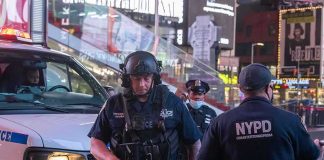
Los Angeles Police Department (LAPD) officers said an SUV left the roadway in North Hollywood and struck people on a sidewalk, killing at least three. The crash occurred in daytime near a well-traveled intersection, where traffic and foot traffic are usually heavy. Officers secured the scene and began collecting witness statements. Detectives said they are reviewing nearby cameras and vehicle damage to confirm speed, direction, and impact points. Officials did not immediately release the driver’s identity or a possible cause.
First responders arrived within minutes and treated multiple victims. Paramedics transported survivors to area hospitals. Investigators marked skid patterns, debris, and the final rest position of the SUV. Those details help show how fast the vehicle was moving and when it left the roadway. Police also checked for signs of impairment and mechanical failure. The agency said more information would come after next-of-kin notifications and a fuller review of gathered evidence.
Location, Timing, And Early Evidence Steps
Officers described the crash as occurring along a corridor that mixes homes, shops, and services, where sidewalks carry steady foot traffic. Daytime light and local security cameras increase the chance that video captured the run-up to impact. Detectives typically request nearby footage from homes and businesses and match it to 911 call times and dispatch logs. That process helps them build a precise timeline. Investigators also examine the vehicle’s onboard systems for speed, braking, and steering data, when available.
Police often compare witness accounts against physical markers, such as broken glass, bent signs, or damaged street furniture. Those clues can show whether the SUV mounted the curb before or after any attempted evasive action. Tire marks can reveal hard braking or swerving. Damage to the front, hood, and undercarriage can signal impact angles and speed. If the driver reports a sudden medical issue or a vehicle fault, detectives typically seek medical records and mechanical inspections to confirm or rule out those claims.
Why Sidewalk Crashes Keep Happening
Urban streets mix heavy vehicles, tight lanes, and people on foot near driveways and intersections. When a driver loses control, fixed objects like poles, trees, or planters can either stop a vehicle or cause worse injuries, depending on placement and speed. National roadway-departure research shows that leaving the roadway and striking fixed objects leads to a large share of severe crashes, and trees or utility poles make up a significant portion of those fixed-object impacts. While this case involves pedestrians, the core risk is similar.
Researchers with the Federal Highway Administration have found that about 56 percent of fatal crashes involve roadway departures, and roughly 40 percent of those involve fixed objects; trees or utility poles account for about 63 percent of those objects. These figures describe general crash patterns, not this exact event. Still, they point to a recurring truth: when a vehicle leaves its lane, people outside the vehicle are exposed. Barriers, narrower turning speeds, and traffic calming can reduce the odds of a deadly path onto a sidewalk.
Accountability, Transparency, And Next Steps
LAPD will decide on charges after it reviews speed, impairment, distraction, and mechanical causes. Prosecutors often weigh driver conduct, camera evidence, and expert reconstructions. Families and neighbors will seek clear answers on why a vehicle could reach people on a sidewalk in broad daylight. City leaders may also face calls to assess curbside protections, signals, and speed limits along the corridor. An honest, timely release of facts can help the community understand what failed and what can change.
On November 7, 2026, at 7:35 a.m., #teamHCSO deputies responded to a gas station on North Dale Mabry Highway after a 911 caller reported two unresponsive people inside a U-Haul van. As deputies approached, the van began rolling forward, with two children unsecured in the back.… pic.twitter.com/o8TpR1wsGr
— HCSO (@HCSOSheriff) November 9, 2026
For many readers, this crash cuts to a shared concern: basic public safety. People on the left and right agree that a system that cannot keep walkers safe is not working well. They want steady enforcement of unsafe driving, thoughtful street design, and fair, open investigations. Those are not partisan ideas. They are the groundwork of trust. Clear reporting on the driver’s actions, the road design, and any city maintenance issues will show where responsibility lies and how to prevent the next tragedy.