

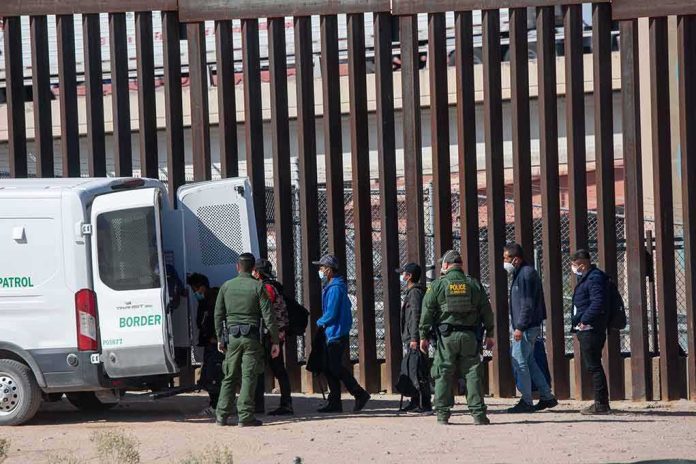
U.S. Immigration and Customs Enforcement reported a record 50,925 arrests in August, topping July’s high and signaling a major escalation in interior enforcement.
Story Snapshot
- Homeland Security says August arrests hit 50,925, a new monthly record.
- July’s prior record was 50,208, marking two straight months above 50,000.
- Targeted operations in several regions helped drive the surge.
- Rising totals sharpen debates over who is being arrested and why.
Record Month Confirmed by Homeland Security
The Department of Homeland Security said U.S. Immigration and Customs Enforcement arrested 50,925 people in August 2026, the highest monthly total on record. Officials said the figure surpasses the July benchmark of 50,208, making August the second straight month above 50,000 arrests. The announcement framed the number as a sign of stronger interior enforcement under current policy. The agency did not release full demographic tables with the topline figure. The record reflects arrests across multiple regions nationwide.
Independent coverage from major outlets also reported about 50,000 arrests in August, citing a senior Department of Homeland Security official. Those reports aligned with the government’s stated trend but rounded the total. The broad agreement on scale supports the core fact of a record-setting month. Media accounts emphasized that the surge continued July’s record pace rather than a one-off spike. That consistency suggests a sustained strategy rather than a brief sweep.
What Drove the Surge in Arrests
Homeland Security highlighted named operations as part of the August push, including efforts branded under its “Making America Safe Again” releases. Those efforts ranged from regional actions to weeklong targeted arrests. Local reporting also captured video of a two-week sweep in the Washington region that led to 1,328 arrests. Together, these accounts show that planned enforcement campaigns, not only routine encounters, contributed to the August total. The agency described the operations as nationwide in scope.
Analysts note that Immigration and Customs Enforcement arrest totals can shift based on tactics, priorities, and data rules. Changes in who gets targeted, such as people with final removal orders or worksite actions, can raise the count even without more agents. Government Accountability Office reviews also show method choices can affect comparisons over time. That context helps explain how totals rose sharply from June to July, then to a higher peak in August. The current data, however, confirm the headline numbers.
How This Fits the Bigger Policy Fight
Supporters of tougher enforcement say the surge shows the government can restore order and security. They point to recent operations and arrest records as proof of follow-through. Critics ask who is being arrested and what crimes, if any, those people have on their records. Recent reporting found many arrests involve people without criminal convictions, which shifts the debate from public safety to broader immigration control. That mix shapes how communities feel the impact on families and workplaces.
ICE Sets Record with Over 50,000 Arrests in August.
ICE achieved its highest-ever monthly arrest total in August, targeting thousands of illegal immigrants, including many with serious criminal convictions.
PULSE POINTS
❓ WHAT HAPPENED: Immigration and Customs Enforcement… pic.twitter.com/lZAdmEcuqH
— The National Pulse (@TheNatPulse) September 2, 2026
The split reflects a deeper frustration shared across the political spectrum. Many Americans see rising numbers and still doubt that Washington is managing the system fairly or well. Some believe leaders chase headlines instead of fixing the courts, visas, and border processes that feed the cycle. Others worry that fast-moving operations can sweep up people who pose no threat. The common thread is a sense that the system remains reactive, not steady, and that basic accountability is still lacking.
What to Watch Next
September data will test whether August marked a peak or the start of a higher plateau. Detailed breakdowns, if released, would clarify how many arrests involved final removal orders, recent border crossers, or people with criminal convictions. That detail would also show how much targeted operations, jail transfers, and worksite actions drove the totals. Clearer public data could reduce confusion and help voters judge the trade-offs between speed, fairness, and safety in enforcement.
Sources:
washingtontimes.com, kfiam640.iheart.com, dhs.gov, yahoo.com, ipm.org, dcnewsnow.com