

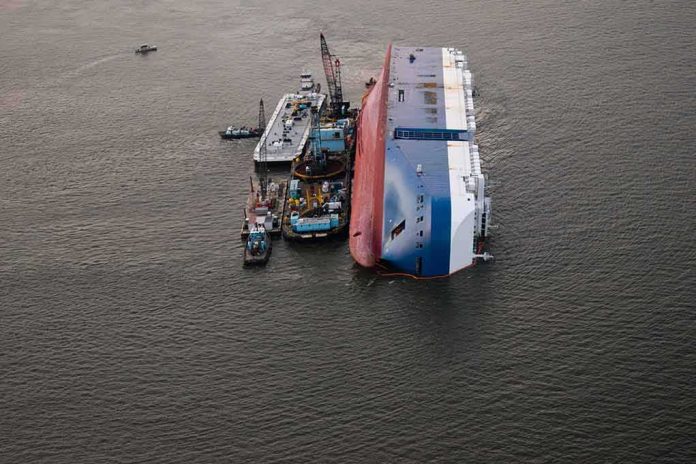
A packed ferry with about 267 people aboard capsized off northern Cyprus near Kyrenia, triggering a massive rescue that saved most but left dozens unaccounted for.
Story Snapshot
- Officials said 237 people were rescued after the ferry overturned near Kyrenia.
- Reports counted at least six to seven dead, with around two dozen still missing.
- Rescuers used coast guard boats, helicopters, and civilian vessels in rough seas.
- Early reports said the ship took on water before capsizing about four nautical miles out.
What Happened Off Kyrenia’s Coast
Authorities in northern Cyprus reported that a passenger ferry carrying roughly 260 to 270 people capsized off the coast near Kyrenia on August 30. Leaders said rescue teams pulled 237 people from the water, while others remained missing as the search continued. News outlets reported at least six to seven confirmed deaths. The ferry was on a route toward southern Turkey when it overturned in the early evening, drawing a large emergency response from nearby vessels and aircraft.
Officials described the rescue as fast and coordinated. Coast guard units, helicopters, and civilian boats rushed to the scene, where survivors clung to the hull and floated in life jackets. Health officials said hospitals prepared to treat the injured and receive those pulled from the sea. Local leaders urged the public to avoid spreading false claims while responders worked to account for everyone who had been aboard the vessel during the crossing.
What Authorities Say About Cause And Location
The transport minister for northern Cyprus said the ferry began taking on water before it rolled over. He placed the incident about four nautical miles off Kyrenia, a busy port for routes to Turkey. Multiple reports named the vessel as a passenger ferry or catamaran on the Kyrenia-to-mainland run. Media accounts differ on the exact ship name and destination, listing Tasucu or Mersin in southern Turkey. Officials have not yet released a cause, and investigations are underway.
Reporters on the scene described a rapid turn from trouble to disaster. Survivors said many passengers jumped into the sea as the deck flooded. Photos and video showed people on the overturned hull and rescue boats hauling them aboard. As night fell, search teams used flares and spotlights to sweep the area for those still missing. Leaders said the operation would continue through the night and into the next day as weather allowed.
Why Early Numbers Differ And Why It Matters
Early disaster numbers often change, and this case fits that pattern. Newsrooms cited totals ranging from about 260 to 279 people aboard, with deaths reported between six and seven. Differences can come from unclear passenger manifests, confusion between passenger and crew counts, and the speed of updates from multiple agencies. Such gaps usually close as officials verify lists, review radio logs, and confirm identities from hospitals and rescue centers.
Maritime investigators often look at several risk factors in ferry capsizes. These include loading errors, stability problems, missed maintenance, bad weather calls, and how fast distress alerts went out. Past probes into deadly ferry accidents found that small failures can stack up into a tipping point. Formal reports, once complete, can lead to safety fixes, tighter inspections, and clearer rules for operators and ports to prevent repeats.
The Human Stakes And The Public Interest
Families now wait for word as crews search a wide patch of sea. Every minute matters in cold water and fading light. For people across the political map, this is where systems must work: safety checks before departure, clear emergency plans on board, and honest, quick updates from leaders. When those basics fail, regular people pay the price while officials trade statements. Rescue first, answers next, and then real fixes that hold across borders.
🇨🇾 FERRY CAPSIZES OFF NORTHERN CYPRUS, 8 dead and 18 missing
The vessel was carrying 259 passengers and 8 crew members when officials say it was struck by two waves and began taking on water. Most of those aboard were rescued before the ferry eventually sank.
Helicopters and… pic.twitter.com/nDpTwy9GQI
— Mario Nawfal (@MarioNawfal) August 31, 2026
People on the left and right share the same core ask here: competence. They expect ships to be sound, crews to be trained, and agencies to act without spin. They want facts faster than rumors, and they want lessons that stick. That means verified manifests, open logs, and a public report on cause and response. The goal is simple and old-fashioned: protect life at sea, and tell the truth about what went wrong so it does not happen again.
Sources:
youtube.com, aljazeera.com, lemonde.fr, reuters.com, cbc.ca, krone.at