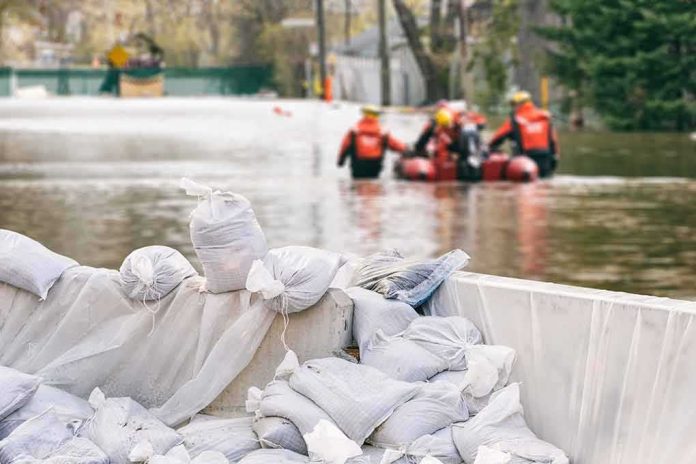
Nepal’s government says flash floods killed hundreds and left many more missing, as rescue and relief surge across the Bhote Koshi River region.
Story Snapshot
- Nepal confirms severe floods with heavy loss of life and major infrastructure damage.
- Search, rescue, and medical aid are fully mobilized nationwide, officials say.
- Authorities recovered hundreds of bodies while many locals and tourists remain unaccounted for.
- United Nations released emergency funds and deployed support for lifesaving aid.
Government Confirms Scale of Devastation and Mobilizes Response
Nepal’s Ministry of Foreign Affairs reported that severe flash floods struck the Bhote Koshi River area on August 26, 2026. Officials described heavy loss of life, mass displacement, and damage to homes, roads, bridges, hydropower facilities, and other vital assets. The government said security forces, disaster teams, local authorities, and health services were fully activated for search, rescue, evacuation, and emergency care. These steps reflect an all-hands response to protect survivors and restore access in hard-hit valleys.
The ministry said teams were accounting for the dead and missing amid debris and swift water. Officials reported that 538 bodies had been recovered from river areas. Many people, including local residents and visiting travelers, remained unaccounted for. The government also tracked foreign nationals. Out of 632 people from 33 countries, 122 had been found, while 511 were still listed as missing under that roster at the time of the update, which underscored the disaster’s global reach.
Search Operations Resume After Weather Delays; Costs Mount
Authorities resumed search and rescue after a short weather-related pause, according to wire reports. Crews pressed on across remote zones where roads were blocked and riverbanks were unstable. Officials continued to search for nearly 3,000 missing people as counts shifted with new reports and recoveries. The finance minister told reporters that early rebuilding needs could reach between four billion and five billion dollars, signaling a long, expensive path to restore core services and transport links.
United Nations leaders announced support to back Nepal’s lifesaving work. The United Nations relief chief said two million dollars from the Central Emergency Response Fund would help deliver emergency medical care, shelter, and clean water. United Nations teams and supplies were being mobilized to reinforce local responders in the coming days. Humanitarian reporting cited thousands rescued and warned that the scale of need remained high as responders spread out across damaged terrain.
Why Figures Differ and What It Means for Families and Aid
Rapid disasters often produce shifting death and missing totals as agencies confirm identities, clear debris, and reopen roads. Different sources use different cutoffs, regions, and categories, which can make numbers look far apart when they are time-bound snapshots. Nepal’s official update listed hundreds dead and a separate foreign-national roster still under review. International reports cited larger totals as searches widened. Those differences reflect a moving picture, not a dispute over whether the floods were severe.
SEVERE destruction in aftermath of Nepal flash flood
Death toll reaches 903, 4200 missing, hundreds stuck inside hydropower tunnels — BBC pic.twitter.com/qjIMlverY7
— RT Intl (@RT_on_X) August 31, 2026
For families, the priority is speed and clarity. Search teams need safe access, working communications, and clear lists to match reports and remains. For aid groups, reliable maps of damage to roads, bridges, and hydropower matter, because they guide where to send fuel, food, and medical kits. For donors, transparent costs and a plan to rebuild are key. Early estimates help governments and charities plan shipments, but those plans will change as engineers inspect each site.
Sources:
en.wikipedia.org, reuters.com, aljazeera.com, news.un.org