
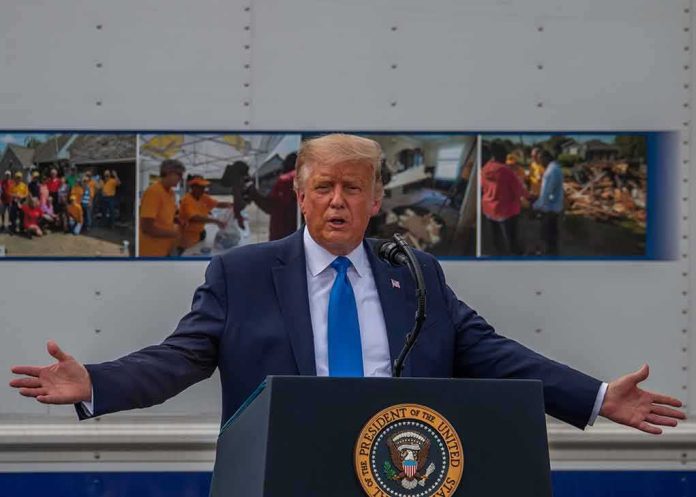
President Trump canceled planned strikes on Iran after saying a broad, near-final agreement had been approved and was days from signing, even as Tehran publicly denied any final deal.
Story Snapshot
- Trump said a U.S.-Iran agreement was approved at high levels and only paperwork remained.
- Iran’s Foreign Ministry said nothing was finalized and called reports speculative.
- Trump tied canceled strikes and reopening the Strait of Hormuz to the deal’s signing.
- Lawmakers in both parties voiced skepticism and asked for details.
What President Trump Announced And Why It Mattered
On June 11, President Trump said he called off new strikes on Iran because negotiations had reached approved final points. He said the agreement was “subject to finalization of documents” and that a signing time and place would be announced soon. He also claimed many regional governments backed the arrangement. He linked the end of strikes and a coming ceasefire extension to this deal. He said the Strait of Hormuz would reopen once the deal was signed.
Trump’s message suggested a major shift from active conflict to a political framework. He presented the pause in military action as leverage to close talks. He described a regional consensus that included Israel and key Arab states, which, if accurate, would reduce the risk of a wider war. He also said a naval blockade would remain until the paperwork was done, showing pressure would stay on until signatures were in place.
How Iran Responded And What Remains Unclear
Iran’s Foreign Ministry pushed back the same day. A spokesperson said reports of an agreement were speculative and that “nothing has been finalized”. Iranian media and officials echoed that Tehran had not approved any memorandum with the United States. Some Iranian statements allowed that large parts of a text were drafted, but they stressed that final approval had not happened and that Iran’s decision makers would review every detail first.
That gap exposes the core uncertainty. There was no public release of a signed document, annexes, or enforcement terms. Reporting referred to a framework or memorandum, not a full treaty. Key issues appeared unsettled, such as sanctions relief, frozen funds, and steps on Iran’s nuclear program. In fast-moving conflicts, leaders often claim breakthroughs before details are locked. That makes transparency and published terms vital to build trust across political lines.
Why Congress And The Public Are Skeptical
Members of Congress in both parties asked for more information and questioned whether the plan was realistic. Lawmakers said they needed to see the agreement’s details before judging its impact on future nuclear talks or regional security. Doubts also came from pro-Israel advocates and within Israel, who warned that an incomplete framework might not hold or might reward bad behavior without clear limits or penalties.
BREAKING | TRUMP REPORTEDLY CALLS OFF PLANNED HOUTHI STRIKES AS DIPLOMACY CONTINUES
President Trump reportedly called off planned U.S. airstrikes against the Houthis at the last minute, despite repeated appeals from Saudi Crown Prince Mohammed bin Salman, according to reports.… pic.twitter.com/u1uuh6lgIo
— CSB News USA (@csbnewsus) September 21, 2026
These concerns reflect a deeper frustration felt by many Americans. People on the right and left worry that leaders make big claims while hiding the fine print. They fear deals that shift headlines but do not solve core problems like energy costs, security, and accountability. A verifiable text, clear timelines, and public enforcement steps would address some of that concern. Without them, many will see mixed messages, not a mandate backed by facts.
What To Watch Next: Proof, Process, And Practical Effects
First, watch for any official release of a draft or signed text. A posted memorandum, even a short one, would answer who promised what and when. Second, look for steps that show the deal is real, like orders easing the blockade, guidance on sanctions waivers, or navigation notices for shipping. Third, track whether Iran’s top bodies publicly ratify terms. Matching actions on both sides are the clearest sign that words have become policy.
Sources:
bbc.com, bloomberg.com, nbcnews.com, nytimes.com, npr.org, reuters.com