
A courtroom allegation that a Trump-aligned operative took roughly $500,000 tied to Qatar has collided with firm denials, leaving a high-stakes credibility test that highlights how money and influence now blur the lines in American politics.
Story Snapshot
- A lawsuit filing alleged Alex Bruesewitz received about $500,000 from people tied to Qatar.
- Major outlets reported the claim, while noting it lacked documents in public records.
- Bruesewitz, Alex deGrasse, and Qatar’s embassy all issued denials of the core charge.
- The fight spotlights weak disclosure rules and the narrow scope of foreign-agent law.
What triggered the dispute and what the filing says
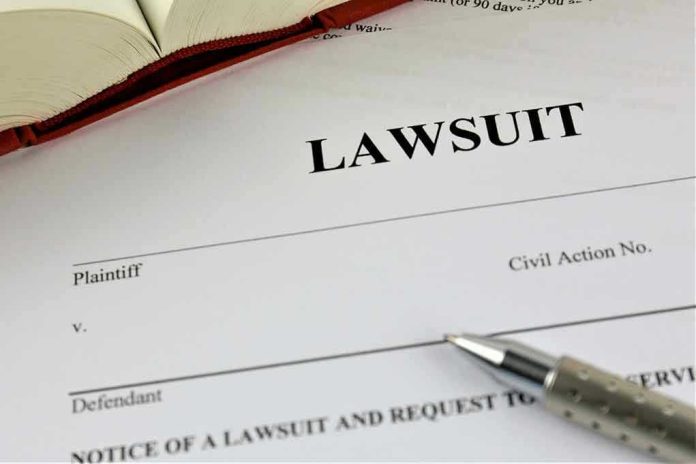
In November 2026, a court filing in a business dispute alleged that political operative Alex Bruesewitz received about $500,000 from people “associated with Qatar.” The claim appeared in a response by Derek Utley amid litigation involving their former firm, X Strategies. The filing suggested possible foreign agent questions but offered no public exhibits proving payments, such as invoices or bank records. The New York Times and other outlets reported the allegation and its specifics, including the rough amount and foreign nexus.
Reporters tied the allegation to an “undisclosed” business or consulting deal and flagged foreign-agent law concerns in broad terms. The wording matters because it refers to individuals linked to Qatar, not the State of Qatar itself. That leaves many open questions. Who paid? When? For what work? Was any political activity involved? Without such proof in public filings, the claim remains an allegation, not a verified fact. That gap shapes how both sides frame the story.
Denials from Bruesewitz, an ally, and Qatar’s embassy
Alex Bruesewitz flatly denied receiving money from Qatar and said he never took funds from foreign governments or companies. He also threatened defamation action against those repeating the charge and said he refused a speaking fee for a Doha event. Political consultant Alex deGrasse publicly called the claim false and defamatory, and reports say he signed an affidavit stating a key conversation alleged by Utley never happened. The Qatari Embassy in Washington also issued an official denial.
These denials do not by themselves prove the allegation is false. But they raise the bar for evidence. If payment occurred, records should exist. If they do not surface, the allegation will likely remain stalled. Critics on the left and right see a pattern here: big claims land with splashy headlines, then fade when documents do not appear. That cycle fuels wider distrust of media, political influencers, and the legal fights that so often drive news in Washington.
Why foreign-agent law and disclosure rules are central
The Foreign Agents Registration Act (FARA) requires people who act as agents of foreign principals, and engage in covered political activities, to register with the United States government. But the law is technical and narrow. Not every contact, contract, or payment triggers registration. The Congressional Research Service explains that the duty turns on specific definitions and activities, not general foreign ties. Recent cases show stepped-up interest, yet enforcement remains selective and complex.
Even when FARA does not apply, the public still expects sunlight. Political work funded by foreign interests, or even rumored to be, can damage trust. Researchers note that the monetization of political influence online blurs the line between ads, paid advocacy, and personal speech. Clearer labeling and stronger transparency rules could help voters see who is paying for what message, and why it is being pushed at a given moment.
How partisan warfare and business feuds distort facts
This allegation came through a hostile business lawsuit, not a regulator’s finding or a criminal charge. That origin invites claims of motive and payback. Opponents point to the lack of attached proof and the “information and belief” phrasing in the filing to call the story thin. Supporters say discovery could surface records later. Meanwhile, media coverage highlights the clash among Trump-aligned figures, which can drown out the real question: are there documents, or not?
Painting Omeed Malik as a Qatari source of funding is another op being pushed around so everything can be blamed on Trump's family.
And it's being pushed by the same group of people who are sharing Ballard's statements and questioning their followers about why there is an "op on… https://t.co/RYhXdvAoxo pic.twitter.com/3TMVQzc9Xj
— Evi (@evikokalari) November 10, 2026
For readers across the spectrum, this is the core civic ask: demand evidence before judgment. If there were about $500,000 in payments, there should be a paper trail. If no records exist, the claim should be treated as unproven. The deeper issue is bigger than any one aide. The system tolerates murky funding, weak disclosure, and a news cycle driven by lawsuits and social posts. That is how trust breaks, and how elites on all sides keep the public in the dark.
Sources:
zerohedge.com, fox11online.com, thedailybeast.com, disputeindex.com, ms.now, pmc.ncbi.nlm.nih.gov, congress.gov, cov.com, ceeddw.org