

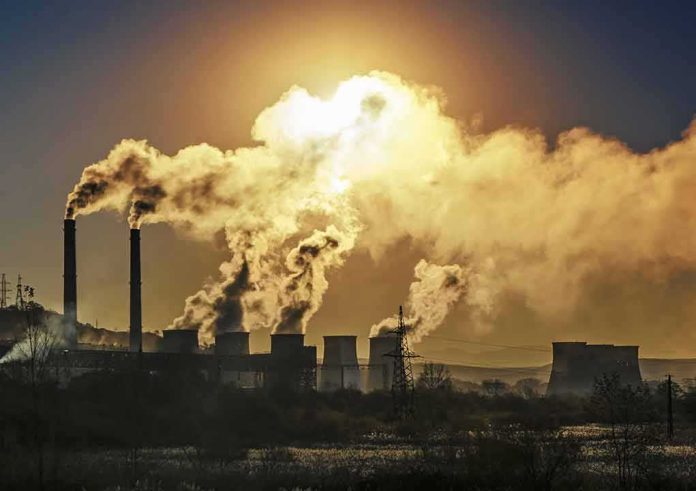
A rare global dip in fossil-fuel carbon emissions is now expected for 2026, driven mostly by a war-fueled oil shock rather than a lasting energy shift.
Story Snapshot
- Global fossil-fuel CO2 emissions are projected to fall about 0.4% in 2026.
- Researchers tie the drop mainly to oil demand hit by the Iran conflict’s energy shock.
- Coal emissions are set to rise slightly, offsetting part of the oil decline.
- Scientists warn this is likely temporary and not proof of a clean-energy peak.
What the 2026 projection actually says
An international research team behind the Global Carbon Budget projects fossil-fuel carbon dioxide emissions of about 38.2 billion tonnes in 2026, down 0.4% from 2025’s level near 38.4 billion tonnes. The team includes more than 140 researchers from universities and institutes in Europe and beyond, lending weight to the estimate. The analysis separates fossil-fuel emissions from other sources. When land-use change is added, total carbon dioxide may still rise slightly in 2026, so the decline is not economy-wide.
The projection highlights a 1.9% drop in emissions from oil as the largest driver of the decline, while coal emissions are expected to rise by about 0.6%. That split matters. It suggests the fall is not broad-based across all fossil fuels. Natural gas sits in between, with smaller changes. The numbers point to a targeted shock in oil use rather than a deep shift away from fossil energy across the board, at least in this single year.
Why the Iran energy shock matters
The researchers link the oil decline to supply and shipping disruptions tied to the Iran conflict, which tightened supply and raised prices. Higher prices and risk premiums tend to curb oil demand. The paper in Nature Climate Change states the fall is probably a short-term response to this shock, not a clean break from fossil fuels. That framing is important for readers who may see a dip and assume a policy win. The signal here looks more like crisis economics than structural change.
Some expansion of wind and solar power also helps hold fossil demand down, but scientists say this growth is not yet fast enough to lock in a durable global decline on its own. This is the tough middle ground. Many citizens see elites praise big targets while basic costs stay high. The data show clean power is growing, yet oil and coal still set the pace when wars or shortages hit. Real progress needs steady build-out that can ride out shocks without switching back to dirtier fuels.
How this fits past crisis-driven dips
History shows emissions often fall during major disruptions and then rebound when conditions normalize. The 2008–2009 crisis caused a sharp drop and a quick snapback the next year. Researchers flag the same risk now: if oil flows stabilize and prices ease, demand can return, and emissions can rise again. This pattern explains why the team is careful not to call 2026 a peak. One noisy year does not confirm a lasting turn in the global trend.
Global fossil-fuel CO₂ emissions are projected to fall by just 0.4% in 2026.
A small decline is welcome, but scientists warn it isn’t enough to stop dangerous warming.#GlobalWarming #ClimateChange #Enviro
— TheEarth (@NoPLANETBtoday) November 10, 2026
The study also reports a wide uncertainty range, from a 1.5% decline to a 0.6% increase, which means final data could show flat or slightly rising fossil-fuel emissions. That does not void the estimate; it shows how sensitive the outlook is to fast-moving energy events. For families and businesses, the takeaway is simple. Wars and supply risks push energy costs up, and consumption down, but not in a stable or fair way. Durable cuts come from reliable, affordable alternatives.
Why this matters for everyday Americans
People across left and right worry that leaders talk big while basics like fuel, bills, and jobs feel fragile. This finding backs that concern. A global emissions dip in 2026 comes less from smart planning and more from conflict and higher prices. That is not a victory ordinary people can bank on. A stronger path would speed clean power, protect grid reliability, and keep costs in check, so we cut emissions without forcing sacrifice when the next crisis hits.
Sources:
newscientist.com, reuters.com, bloomberg.com, gmanetwork.com, news.exeter.ac.uk, cicero.oslo.no, lemonde.fr