

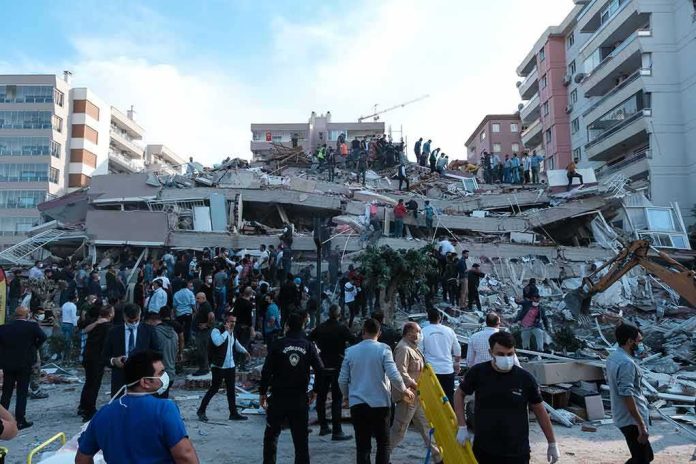
Panama declared a nationwide state of emergency after two powerful earthquakes, measured at magnitude 7.7 and 6.6, struck hours apart and damaged hundreds of buildings.
Story Highlights
- Two major quakes hit Panama the same afternoon, with severe shaking near the epicenters.
- Officials reported injuries and evacuations, and ordered a state of emergency to coordinate aid.
- United States Geological Survey data puts the events at 7.7 and 6.6 magnitudes with strong intensities.
- Some reports list slightly different magnitudes, which can reflect later revisions.
What Happened: Two Strong Quakes, Same Day
The United States Geological Survey reported a magnitude 7.7 earthquake near Pitaloza Arriba at 12:56 p.m. local time on October 9, 2026, followed about three hours later by a magnitude 6.6 event near Río Grande. The agency estimated very strong to severe shaking near the epicenters. These measurements establish a clear sequence and explain why buildings, roads, and public offices saw damage and why people evacuated in several communities.
News outlets described toppled structures, cracked roads, and at least 27 minor injuries. Crews responded to assess damage and guide evacuations as aftershocks continued into the evening. These reports align with the intensities shown in United States Geological Survey models, which often predict building damage when shaking reaches those levels. Detailed counts of collapsed buildings or long-term closures were not available yet, which is common in the first days after a major quake.
Government Response: Emergency Declared To Speed Aid
Presidential Minister Juan Carlos Orillac announced a national state of emergency the next day in Panama City. Reporting said the government aimed to speed relief, direct resources, and coordinate repairs across affected provinces. That move allows agencies to cut red tape, hire help fast, and shift funds to the hardest hit communities. Officials also warned that aftershocks could shake loose already damaged walls and roofs, so they kept some areas closed while teams inspected structures.
Emergency declarations often follow strong quakes because local responders need extra support and legal tools. The process helps unify work by firefighters, police, health workers, and public works crews. It also sets the stage for international assistance if requested. While the text of the decree was not immediately available, the public goal was clear: stabilize neighborhoods, restore services, and keep people safe during ongoing tremors and inspections.
The Science: Why Magnitudes May Differ And Why It Matters
The United States Geological Survey lists final magnitudes of 7.7 and 6.6 for the two events. Another outlet listed the main shock at 7.5. That kind of small difference can happen as agencies refine data or use different methods. What matters most for damage is the intensity of shaking at each location, not a single number. In this case, intensity maps show very strong shaking near the epicenter, which tracks with reports of injuries and building damage.
The United States Geological Survey earthquake pages for Panama and its Earthquake Hazards Program explain how scientists review waveforms and update solutions. Those updates can shift magnitude by a few tenths. The larger picture does not change here: a powerful main shock hit central Panama, followed by another strong event that worsened damage and fear. That pattern often leads to red-tagged buildings, school closures, and temporary shelters while engineers check safety.
Why This Matters To Readers In The United States
Panama sits on key trade routes that link North and South America. Shaking that harms roads, ports, or power can slow the flow of goods, raise costs, and squeeze families far from the epicenter. American companies, aid groups, and the United States government often help in these moments. Clear, public data from the United States Geological Survey and named officials in Panama support needs-based aid, not politics. That is how disaster work should run in any country.
People on the left and right agree on this much: when crisis hits, government must move fast, spend wisely, and tell the truth. This event shows the basics at work. Scientists measured the hazard. Leaders declared an emergency to cut delays. Crews began the hard job of inspections and repairs. Full damage counts will follow. For now, the facts show a serious quake sequence, real harm on the ground, and a response aimed at getting help where it is needed most.
Sources:
youtube.com, ajc.com, globalnation.inquirer.net, usgs.gov, bbc.com