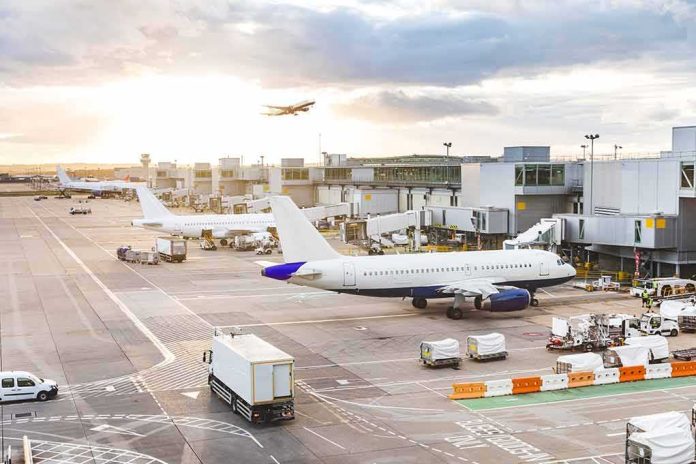
Missile strikes that Saudi officials say killed three people at Riyadh’s main airport exposed how civilian travel can become a battlefield in a regional war.
Story Highlights
- Saudi aviation officials reported three deaths and injuries after strikes hit Riyadh’s King Khalid International Airport.
- Houthi forces claimed responsibility and said missiles disrupted flights at Riyadh and Najran.
- A Saudia Airlines aircraft and airport facilities were damaged, prompting cancellations and delays.
- The attacks capped several days of strikes on Saudi airports as the Yemen conflict spilled across borders.
What Saudi officials and witnesses reported at the airport
Saudi Arabia’s General Authority of Civil Aviation said two strikes hit King Khalid International Airport on October 9. The first targeted airport facilities. The second struck a Saudia Airlines aircraft on the ground. The authority reported three Saudi citizens killed and injuries to people of different nationalities. Airlines canceled flights as smoke rose from the airport area, and operations slowed before service resumed later. Officials did not publicly name the attackers in their statement.
Witness accounts and airline actions aligned with the official report. Reporters described evacuations, damaged infrastructure, and disrupted schedules. Flight tracking showed cancellations followed by gradual restoration of service. Images and on-the-ground reports indicated a tense scene as emergency teams responded. The damage to the Saudia jet underscored risks to parked aircraft, not only runways and terminals. These steps matched standard safety protocols during attacks on civilian aviation sites in active conflict zones.
What the Houthis claimed and how it fits recent attacks
Houthi military spokesman Brigadier General Yahya Saree said the group fired ballistic and cruise missiles at Riyadh and Najran airports. He said the strikes disrupted air traffic. The claim followed days of similar Houthi-claimed attacks on Riyadh and Abha airports, which also caused casualties and airport disruption, according to major outlets tracking the escalation. The sequence shows a pattern of repeat targeting of Saudi aviation hubs within a short span of days.
Independent outlets connected the Riyadh incident to prior airport attacks in the same week. Reports described deaths and injuries at both Riyadh and Abha. Coverage made clear that more than one airport was hit across several days as fighting in Yemen bled into Saudi territory. This pattern matters because it strains emergency services, heightens public fear, and forces airlines to adjust routes and schedules on short notice, rippling through regional travel.
Why this matters for travelers, oil markets, and U.S. interests
Repeated strikes on a major Gulf hub threaten safe travel, global business trips, and cargo flows. Airlines weigh safety risks and insurance costs whenever missiles reach civilian airports. The Riyadh hub serves executives, migrant workers, and pilgrims, so closures can ripple through many countries. The attack came as airlines faced pressure to maintain service, even as flight cancellations mounted and restorations lagged while damage checks continued and authorities secured the airfield.
🇾🇪⚡️🇸🇦 The Saudi Civil Aviation Authority announced in a statement that as a result of the attack by the Houthi movement on King Khalid International Airport in Riyadh, 12 people were killed and 309 were injured, with some in critical condition.The victims includes 4 Saudis
— WarSaWitness (@WarSpectators1) October 11, 2026
U.S. readers should care because the Gulf is central to energy supply, regional security, and global shipping. When conflict spills onto airport tarmacs, crude prices can swing, insurance rates can rise, and military planners must reassess air defense gaps. The Yemen war has long featured cross-border missile and drone strikes. This week’s events show that civilian sites remain vulnerable. That reality collides with America’s stated goals of stable energy markets and safer skies for travelers and crews.
What we know and what remains limited
Published reports agree on key facts: the airport was hit, people died, a Saudia aircraft was damaged, and flights were disrupted. Houthi forces claimed responsibility. Saudi aviation officials confirmed the strikes and damage but did not publicly attribute blame in their statements. Outlets also cautioned that casualty figures varied across events that week, since several airports were targeted on different days. Readers should take care to keep the dates and locations distinct when discussing totals.
Sources:
feedpress.me, apnews.com, reuters.com