NORAD says an F-16 fired signal flares and escorted a small plane out of Camp David’s restricted airspace, and the skies stayed safe.
Story Snapshot
- NORAD reports an F-16 intercepted a civilian aircraft near Camp David at about 7:50 a.m.
- Flares signaled the pilot; the jet escorted the plane out without injuries or damage.
- President Trump was at Camp David; officials said there was no direct threat.
- FAA rules require strict no-fly compliance near the President or risk military interception.
What NORAD Says Happened Near Camp David
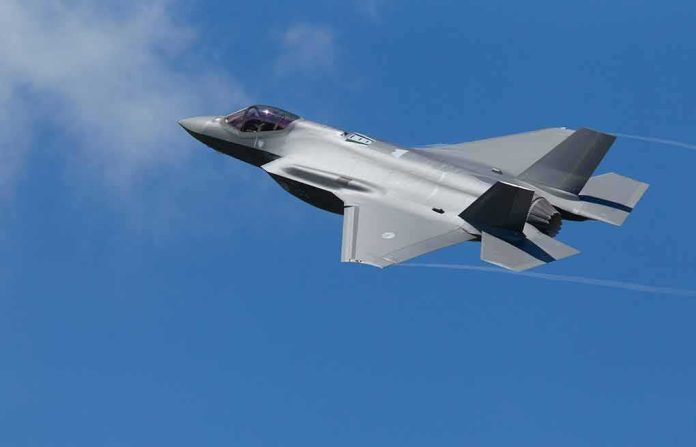
North American Aerospace Defense Command (NORAD) said an F-16 fighter jet intercepted a civilian aircraft near Camp David in Thurmont, Maryland, at about 7:50 a.m. on September 19. The jet deployed flares to get the pilot’s attention, then escorted the plane out of restricted airspace. NORAD described the response as routine and said the aircraft left the area safely. Officials said the flares were signals, not weapons, and there were no injuries or damage reported.
Local and regional outlets echoed the timeline and location. Reports said President Trump was staying at the presidential retreat that morning. First Air Force, which supports homeland defense, also pointed to a temporary flight restriction in place. Accounts were consistent on the use of flares and the safe outcome. Officials did not name the pilot, aircraft type, or any enforcement action at the time of reporting, which is common in early summaries of such events.
Why These Airspace Rules Are So Strict
The Federal Aviation Administration (FAA) posts temporary flight restrictions when the President travels. Federal rules ban flights in those zones unless specifically cleared. The FAA explains that breaking these rules can lead to military interception and, if needed, the use of force. The goal is to identify unknown aircraft fast and move them away from sensitive areas. That is why a fighter jet will launch even if the pilot made a mistake or missed a notice.
Presidential travel often creates layered protections. That can include a no-fly inner ring and a wider caution area, depending on the notice. General aviation pilots must check notices to air missions before takeoff and while en route. NORAD and air traffic controllers watch for any stray aircraft and coordinate quick intercepts. The system treats every unknown flight near the President as a possible risk until it is identified and escorted out. That approach explains the quick F-16 response here.
Pattern: Routine Intercepts, Real Stakes
Similar intercepts happen several times a year during presidential trips. Recent summers saw multiple general aviation violations near high-profile sites and events, which also drew fighter responses. Many incidents end just like this one, with quick signals, an escort, and a safe landing elsewhere. The repeat nature shows the system is built to react fast, not wait. It also shows how one pilot’s lapse can trigger a large security and public safety response.
🇺🇸 ⚡️ — An F-16 fighter jet was launched to intercept an aircraft that entered restricted airspace over Camp David while U.S. President Donald Trump was in the area, and the jet fired flares during the interception.
— The Global Observer (@TPObserver) September 19, 2026
For readers across the spectrum, two truths can sit together. First, the security state moves fast near power, and it needs clear limits and accountability. Second, some rules exist to protect life, not to hassle regular people. When a plane strays near the President, the stakes rise at once. The fix is not politics. It is better pilot awareness, clearer FAA alerts, and steady, transparent reporting when intercepts occur, so citizens know what happened and why.
Sources:
facebook.com, rmb.reuters.com, tfr.faa.gov, faa.gov