After nearly three days missing in the Bering Sea, a teenage boy was found alive atop an overturned skiff while his brother and cousin were recovered dead off Alaska’s St. Lawrence Island.
Story Snapshot
- The boat left Savoonga on Friday and was reported overdue Sunday night.
- A Coast Guard aircrew found the teen on the capsized skiff Monday, about 4 miles offshore.
- The fishing vessel Northwest Explorer pulled the survivor from the boat after Coast Guard coordination.
- The teen showed signs of hypothermia; two relatives were recovered deceased.
Rescue Timeline And Location
U.S. Coast Guard responders said the 18-foot skiff left Savoonga on Friday and was due back early Sunday. Family and local officials reported the group overdue Sunday night, which triggered a search. On Monday afternoon, a Coast Guard fixed-wing crew spotted the teen on the overturned skiff, roughly four miles from St. Lawrence Island. The sighting ended a days-long effort across harsh seas and low water temperatures common in the region.
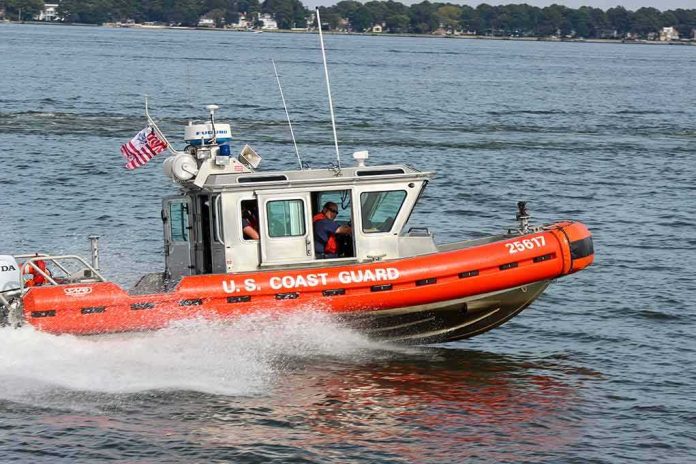
Coast Guard crews coordinated with a nearby commercial vessel to reach the teen. The fishing vessel Northwest Explorer closed the distance, launched gear, and lifted him off the capsized hull. Video from the scene shows crew members throwing lines and guiding the boy aboard. Rescuers then brought him to care. Officials said he showed signs of hypothermia, which is expected after extended cold exposure at sea.
Casualties And Condition
Authorities said two other people who were on the skiff were found dead in the water and later recovered. Reports identified them as the boy’s brother and cousin. The Coast Guard and partner responders transported the survivor for medical care in Nome. Initial updates described him as a teenager, about 14 to 15 years old. Outlets differed on the exact number of hours he endured on the hull, ranging from roughly two days to about 62 hours.
The Associated Press reported the aircrew found him Monday after “days” adrift, while other outlets framed the stretch as three days and two nights. What is not disputed is the cold and isolation he faced in the Bering Sea and how exposure likely drove the medical risks. Hypothermia can set in fast in near-freezing waters, even when a person avoids full immersion.
Why Alaska Rescues Are So Frequent
Alaska’s waters produce many emergency calls due to distance, weather, and limited shelter. The U.S. Coast Guard’s own tallies show thousands of search-and-rescue cases each year nationwide, with Alaska operations accounting for a heavy share because of hazardous seas and long travel times. Federal data for the last fiscal year reported 6,705 search-and-rescue cases across the service and more than two thousand lives saved, underscoring the demand on air and sea crews.
Cold-water incidents often end in hypothermia or drowning if help arrives late. Past investigations in the Bering Sea point to cold shock, gear limits, and time as the key threats. Safety steps like wearing flotation and immersion suits, carrying emergency beacons, and sharing float plans improve odds. Rural communities like Savoonga depend on small boats for food and work, which keeps risk high and makes fast Coast Guard response a lifeline when trips run into trouble.
Community Impact And Next Steps
Local families now face grief and recovery at the same time. The rescue offers a rare bright spot, but it came with loss that will weigh on a tight-knit island village. Investigators will review weather, gear, and boat condition to understand how the skiff capsized. Officials had not released formal identities at the time of reporting. That process, and any safety advisories that follow, can help other mariners prepare before the next sudden storm or engine snag.
Sources:
nypost.com, abcnews.com, theguardian.com, nu.cw, dco.uscg.mil