

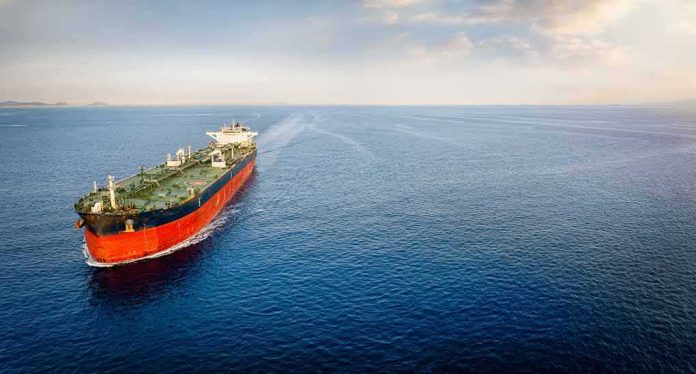
Six deaths in the Red Sea and a fresh slump in traffic through the Strait of Hormuz show how fast one regional crisis can hit two global shipping lanes at once.
Story Snapshot
- Reuters reported that Bab el-Mandeb traffic fell after Houthi attacks on Saudi oil facilities, while Hormuz traffic stayed unusually low.
- Kpler-based shipping data showed fewer than 10 commodity vessels a day crossing Hormuz over the weekend, with some ships moving with transponders off.
- Another Reuters report said Hormuz traffic dropped to just two vessels on August 6 after Houthis said they hit a Saudi tanker.
- The broader pattern fits a long-running security shock that pushes shipowners to reroute before any formal closure happens.
Two Chokepoints, One Escalating Risk
Shipping data showed pressure on both the Bab el-Mandeb Strait and the Strait of Hormuz after Houthi attacks on Saudi oil installations along the Red Sea coast. Reuters said 11 commodity vessels passed through Bab el-Mandeb on Sunday, the lowest level in months, while fewer than 10 commodity vessels a day crossed Hormuz over the same weekend. That is a major warning sign for global trade and oil flows.
The latest numbers matter because these waterways are not symbolic. They are key routes for oil, fuel, and other cargo moving between Asia, the Middle East, and Europe. When traffic drops, insurers react, charterers delay, and ship operators often choose safer routes even before any legal ban appears. Reuters said some vessels were tracked with their transponders switched off, which adds another layer of risk for crews and nearby shipping.
What The Traffic Drop Actually Shows
The clearest fact is the speed of the decline. Reuters reported that Hormuz traffic fell to six vessels on August 11, down from a 10-day average of about 11. It also reported that just two vessels crossed Hormuz on August 6, including one entering and one leaving the waterway. Earlier Reuters coverage said only three commodity vessels crossed on July 17, with most ships halting or making U-turns after attacks and renewed U.S.-Iran fighting.
That pattern supports a narrow conclusion: the region has become too risky for normal traffic. Lloyd’s List Intelligence said maritime traffic through Hormuz sharply declined in the week of July 13 to 19 because of escalating security tensions. Reuters and CNBC also described ships stopping, reversing course, or staying away as the danger grew. Those reports do not prove every drop came from one cause, but they do show a real market response to violence and threat.
Iran’s Denials Do Not Match The Market Reaction
Iran has publicly denied that the Strait of Hormuz is closed and has said commercial vessels can move safely under its terms. But those claims sit alongside repeated reports of weaker traffic, rerouting, and caution from shipowners. The gap is important. A waterway can remain technically open while still being functionally constrained by fear, higher costs, and armed pressure. That is what the shipping data and trade reporting suggest here.
Only eight vessels tracked in Strait of Hormuz as shipowners avoid waterway
——
The number of vessels tracked passing through the Strait of Hormuz dropped to a one-week low of eight on Tuesday, according to shipping data.Kpler data showed Tuesday’s total of eight vessels was… pic.twitter.com/VyFnYbqAwv
— The Cradle (@TheCradleMedia) August 12, 2026
For readers frustrated with distant elites, the story is familiar. A crisis near one of the world’s most important sea lanes can ripple through fuel prices, insurance costs, and supply chains far from the fighting. The public then gets two competing messages at once: official denials from Tehran and hard numbers showing fewer ships on the water. In that clash, the numbers are what keep forcing the issue back into view.
Sources:
cbsnews.com, iranintl.com, reuters.com, chanakyaforum.com