Iran’s president says he will reopen the Strait of Hormuz within seven days if the United States eases pressure and honors written terms — a move that could shift a grinding war and global energy flows.
Story Highlights
- Pezeshkian pairs tough talk with a concrete offer tied to written commitments.
- The proposal links reopening Hormuz to lifting a U.S. naval blockade on Iranian ports.
- Talks continue, but deep distrust and fresh sanctions still cloud any deal.
- Terms are only partly public, raising questions about timing and enforcement.
What Pezeshkian Offered, In His Own Words
Iranian President Masoud Pezeshkian told a U.S. television audience that Iran would start a process “from the very day” Washington accepts a proposal delivered by mediators. He said both sides must “abide by what we have written down,” and framed trust as the first hurdle to clear. In that interview, he tied action to a simple sequence: ease U.S. pressure, reopen the Strait of Hormuz in seven days, then begin talks to end the war and possibly address the nuclear file.
Reuters and other outlets reported the same basic line at the United Nations. Pezeshkian said Iran would not surrender, yet would engage in diplomacy. He pointed to shipping access and accused the United States of using force to set terms. He argued that all nations benefit from the Strait of Hormuz and said Iran should not be denied normal shipping through that waterway. This mix of resistance and negotiation is consistent across his late-September remarks.
The Deal’s Core Trade: Shipping Access For De-escalation
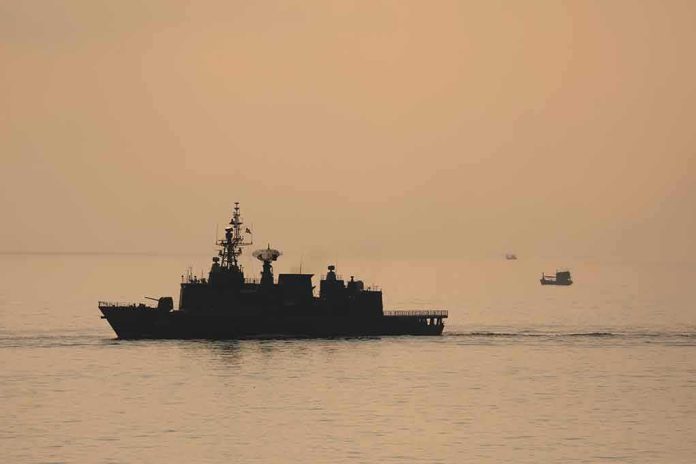
Contemporaneous reporting says Tehran’s peace ideas place two issues first: reopen the Strait and lift a U.S. naval blockade on Iranian ports. The reported plan is phased. If conditions are met, Iran would reopen Hormuz within seven days. After that, broader talks on ending the conflict and the nuclear question could begin. An Iranian official also relayed conditions via a Qatari channel, including an end to U.S. “acts of aggression” and the release of frozen assets, showing how sanctions relief and shipping are linked.
For many readers, the choke point is not abstract. The Strait of Hormuz carries a large share of the world’s traded oil and liquefied gas in normal times. Any disruption pushes up costs for fuel, shipping, and goods. That hits family budgets, small firms, and farms first. A credible seven-day reopening would reduce risk premiums and stabilize lanes. A failed pledge would extend pain. This is why both hawks and doves watch the shipping terms so closely.
Why Trust Is The Roadblock
Pezeshkian said straight out there is an “atmosphere of distrust.” He argued that as long as pressure continues, trust is hard. He also said Iran would “abide by” signed commitments, but he did not give details on inspections, snapback rules, or how compliance would be measured. That gap matters because each side wants proof, not promises, before moving assets and troops or easing sanctions. Fresh U.S. sanctions on oil networks during talks deepen the distrust cycle.
9 PM Top-of-the-Hour News
US and Iranian negotiators in New York are in talks about a phased path to ending the war.
It would involve Tehran reopening the Strait of Hormuz as well as Washington lifting an economic blockade of Iran.
Iran wants economic relief while the U.S. wants… pic.twitter.com/hsz8FUY3bm— Worldwide News Network (@WorldwideNNX) September 25, 2026
On the U.S. side, officials signal they want Iran to act first, stop attacks, and accept limits that can be verified. On the Iranian side, leaders say Washington must first end “aggression,” lift a naval blockade, and release funds. Each step has cost at home. Each leader faces critics who will call any concession weakness. This is the classic U.S.–Iran bind: coercion and diplomacy at the same time, with neither side eager to blink first.
What We Know, What We Don’t
We have several clear facts. Pezeshkian publicly tied a seven-day schedule to reopening Hormuz if conditions are met. He endorsed talks on ending the war and said nuclear issues could be discussed after shipping access is restored. Reuters reporting aligns, saying Iran is reviewing Washington’s response and prioritizes lifting the naval blockade and reopening the Strait. We do not have the full text of the Iranian proposal, annexes, or enforcement terms. That limits outside verification.
For Americans across the political spectrum, the stakes are simple. Safe, open shipping lowers energy costs and steadies markets. Prolonged conflict means higher prices, more risk to U.S. forces, and more room for elites and middlemen to profit while families pay. The proposal, as described, offers a testable path: seven days to reopen, in exchange for easing pressure and honoring written terms. If leaders are serious, they can put it in writing, verify it, and let ships move.
Sources:
cbsnews.com, reuters.com, cnbc.com, tbsnews.net