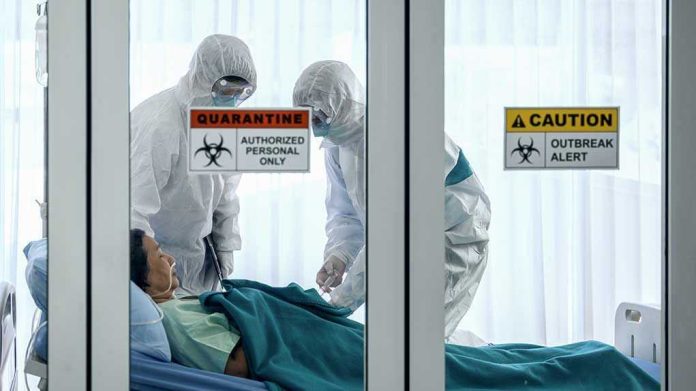
Americans exposed to a deadly hantavirus outbreak aboard an international cruise ship now face 45 days of monitoring as federal health authorities scramble to contain a pathogen that has already claimed three lives and left public health experts questioning how a rare rodent-borne virus spread in the confined quarters of a luxury vessel.
Story Highlights
- Seven cases confirmed on cruise ship with 147 passengers and crew; three deaths and one critical case as of early May 2026
- CDC directs exposed Americans to undergo immediate testing and physician consultation; 45-day symptom monitoring required for all contacts
- Andes virus strain enables rare person-to-person transmission, unlike typical hantavirus spread limited to rodent contact
- International agencies coordinate evacuations, lab testing, and enhanced sanitation protocols across multiple countries
Deadly Outbreak Forces Medical Evacuations
A cluster of hantavirus cases aboard an unnamed cruise ship carrying 147 passengers and crew has triggered an international public health response spanning six countries. The vessel, which departed from Argentina in early April 2026, became a floating quarantine zone after passengers developed severe respiratory symptoms progressing to pneumonia, acute respiratory distress syndrome, and shock. By May 4, seven cases had been identified, including two confirmed Andes virus infections through PCR testing. Three passengers died, one remains in intensive care in South Africa following emergency evacuation, and three others developed milder illness. The Centers for Disease Control and Prevention activated standard hantavirus exposure protocols for Americans aboard, directing immediate physician consultation and coordinated testing through state laboratories.
Argentina Exposure Suspected as Transmission Source
Health investigators trace the likely origin to pre-boarding rodent exposure in Argentina’s Patagonia region, where the Andes virus remains endemic in local rodent populations. Passengers who participated in eco-tourism activities before embarkation may have encountered contaminated rodent droppings or urine in rural areas. Unlike most hantavirus strains that spread exclusively through airborne particles from rodent waste, the Andes virus strain demonstrates documented person-to-person transmission through close, prolonged contact. This rare capability transforms the cruise ship’s confined environment into an amplification setting. Symptoms began appearing between April 6 and April 28, with illness progression following a pattern characteristic of hantavirus pulmonary syndrome: fever and gastrointestinal symptoms escalating rapidly to severe respiratory failure requiring mechanical ventilation and, in critical cases, extracorporeal membrane oxygenation.
Multi-Nation Response Coordinates Testing and Isolation
The World Health Organization and European Centre for Disease Prevention and Control issued coordinated guidance treating all 147 individuals aboard as close contacts requiring enhanced monitoring. International Health Regulation focal points in Argentina, Cabo Verde, Netherlands, South Africa, Spain, and the United Kingdom shared passenger manifests and coordinated medical evacuations. The European Centre dispatched its EU Health Task Force to provide onboard infection prevention support, while South Africa’s National Institute for Communicable Diseases and Institut Pasteur de Dakar conducted laboratory confirmations. Samples underwent PCR testing and serology, with sequencing ongoing to determine viral strain characteristics. The ship implemented stringent infection control measures: mandatory hand hygiene, physical distancing in common areas, cabin isolation for symptomatic individuals, and enhanced ventilation. Crew members received training on proper environmental cleaning techniques, avoiding dry sweeping that could aerosolize viral particles from contaminated surfaces.
CDC Protocols Demand Immediate Medical Attention
The CDC’s hantavirus exposure guidelines direct any American developing fever, muscle aches, or respiratory symptoms within 45 days of cruise disembarkation to seek immediate medical evaluation. Physicians must be informed of potential rodent exposure or hantavirus contact to ensure appropriate diagnostic testing. State health laboratories coordinate with CDC facilities to process samples, as standard respiratory pathogen panels initially returned negative results for affected passengers, masking the hantavirus diagnosis until specific testing occurred. The agency emphasizes supportive care as the primary treatment: intravenous fluids, oxygen therapy, and early ICU transfer for patients showing respiratory decline. No specific antiviral exists for hantavirus infections. The outbreak underscores limitations in current cruise ship health screening protocols, which failed to detect a vector-borne pathogen introduction despite rigorous norovirus and COVID-19 prevention measures industry-wide.
The incident raises troubling questions about regulatory oversight of cruise operations in disease-endemic regions. Americans booking adventure cruises to remote areas face exposure risks that standard travel advisories may inadequately address, leaving families to navigate complex international health systems during medical emergencies. The cruise industry’s focus on passenger volume and profitability appears to outpace investment in rodent-proofing vessels and training staff to recognize rare tropical diseases. For ordinary citizens seeking vacation experiences, this outbreak reveals how quickly a dream trip transforms into a nightmare when government health agencies and private corporations fail to implement common-sense precautions against known biological threats in the regions they profit from visiting.
Sources:
ECDC – Hantavirus-associated cluster of illness on cruise ship: ECDC assessment
WHO – Disease Outbreak News: Hantavirus cluster on cruise ship (DON599)