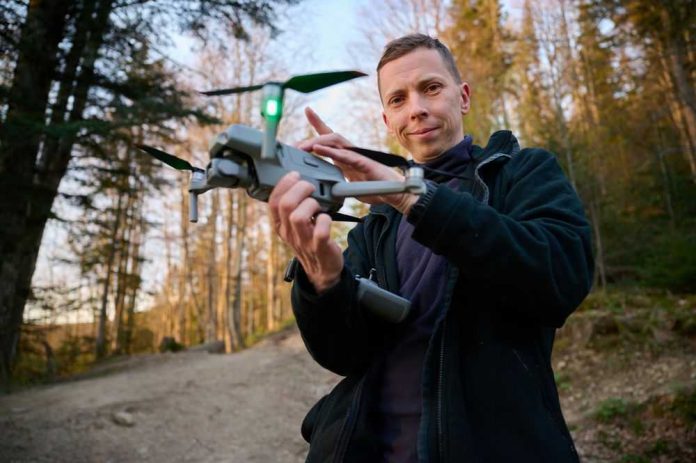
A single drone crash has now turned one of the world’s most contaminated landscapes into a live-fire zone where war debris, wind, and radiation fears collide.
Story Snapshot
- A forest fire in Ukraine’s Chernobyl Exclusion Zone spread to roughly 1,100–1,180 hectares after a military drone crash, according to multiple reports.
- Ukrainian officials say firefighting has been complicated by strong winds, dry conditions, landmines, unexploded ordnance, and continued drone activity.
- Authorities reported radiation levels as “normal,” but past Chernobyl-area fires have shown smoke can lift contaminated particles and move them downwind.
- Conflicting early details remain unresolved, including whether one drone or two crashed and the precise final burned area as updates lag.
Drone crash ignites a fast-moving fire inside the Exclusion Zone
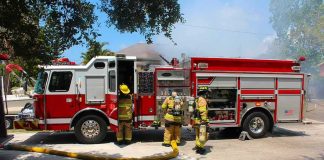
Ukrainian officials reported that a military drone crash sparked a large forest fire inside the Chernobyl Exclusion Zone on May 8, 2026, with estimates placing the burning area around 1,100 hectares by late morning and rising to roughly 1,180 hectares by mid-afternoon. Smoke plumes were visible as dry spring conditions and wind pushed flames through forested terrain. Reporting differed on whether one drone or two were involved, underscoring early uncertainty.
The location is uniquely dangerous even when no one lives there. The Exclusion Zone was created after the 1986 Reactor 4 catastrophe and still contains long-lived radioactive contaminants in soils and vegetation. Fires matter because they can convert ground contamination into airborne particles, putting responders and downwind areas on alert. For Americans watching from afar, the story is another reminder that modern conflicts don’t stay neatly on battlefields.
Why this blaze is harder to fight than a normal wildfire
Ukraine’s emergency services and local officials said efforts to contain the fire have been constrained by hazards that don’t exist in typical wildland firefighting. Landmines and unexploded ordnance left from earlier fighting reportedly limit where crews can safely move and where aircraft can operate. Officials also described the operational risk of ongoing drone activity in the area, a factor that can force pauses or rerouting even when the fire’s behavior demands speed.
Those limitations have practical consequences: when crews cannot cut lines, reach hotspots, or conduct direct attack in key sectors, fires can keep expanding along wind-driven fronts. Dry weather adds another layer of volatility by lowering fuel moisture, allowing surface fires to transition quickly and throw embers. The reports also reference nuclear waste infrastructure in the zone, raising the stakes for containment even if radiation readings remain stable in the near term.
Radiation readings are “normal,” but the smoke question lingers
Ukrainian authorities stated that radiation levels were normal as the fire spread, a crucial datapoint for nearby communities and for Europe more broadly. At the same time, historical experience in the region makes it reasonable to treat “normal” readings as a snapshot rather than a permanent all-clear. Previous major fires in and around Chernobyl have been associated with elevated radiation in smoke and ash, even if the increases were localized or temporary.
The biggest unknown is not a Hollywood-style “new meltdown,” but the less dramatic reality of contaminated dust and soot being lifted and redistributed. Wind direction, burn intensity, and which sections of forest and peat are involved all influence how much material becomes airborne. Because updates can be delayed by the same access and safety constraints confronting responders, independent verification typically depends on broader monitoring networks once plumes move beyond the immediate burn area.
War, “no-go zones,” and the price of governing failure
Some advocates are calling for stronger international protections—effectively “no war zones”—around nuclear sites, arguing that fighting near legacy radioactive areas can amplify environmental and health risks. Whether that proposal is enforceable is another matter, given the realities of modern drone warfare and contested territory. Still, the underlying theme resonates widely: when governments cannot prevent conflict from spilling into high-risk infrastructure zones, ordinary people inherit the danger and the cleanup bill.
Fire is spreading in the Chernobyl exclusion zone after drone crash https://t.co/qvXj8t467L in @newscientist pic.twitter.com/ZKhofqfZLW
— HealthIT Policy (@HITpol) May 8, 2026
For U.S. readers already skeptical of elite assurances, this story is a case study in why transparency matters. Officials may be correct that radiation is currently within normal ranges, but credibility comes from consistent data, timely updates, and clear acknowledgment of uncertainties—especially when war conditions restrict access. The fire’s cause, the precise burned area, and the longer-term contamination impact will ultimately be judged by what monitoring shows in the days ahead.
Sources:
Drone crash sparks massive forest fire near Chernobyl nuclear plant
Large forest fire burning in Chernobyl Exclusion Zone after drone crash, Kyiv says