A U.S. strike that Washington says killed Tren de Aragua’s leader now tests truth, law, and trust in government.
Story Snapshot
- President Trump says U.S. forces killed Héctor Rusthenford Guerrero Flores in a swift strike [3].
- Administration video shows a hit on a suspected drug boat tied to Tren de Aragua [4].
- Reports say 11 died; independent proof of identities has not been released [9].
- Legal experts question the authority and rules for targeting non-state actors at sea [3].
What The White House And Allies Say Happened
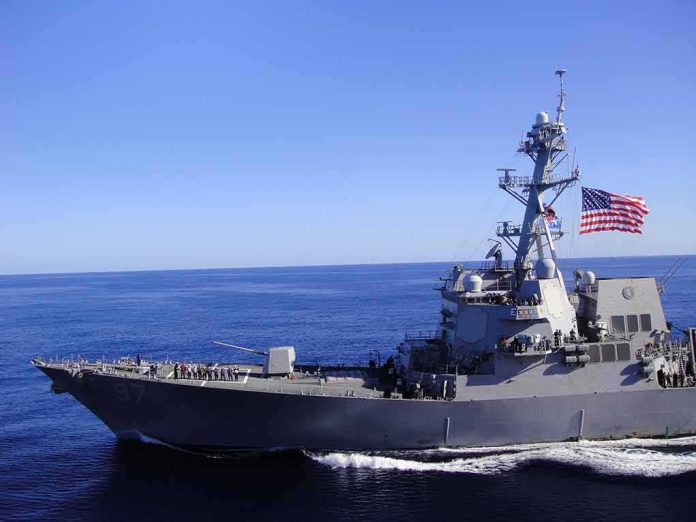
President Donald Trump stated that, on his orders, U.S. military forces carried out a “kinetic” strike within the U.S. Southern Command area, killing the leader of the Venezuelan gang Tren de Aragua, Héctor Rusthenford Guerrero Flores [3]. Fox News aired video the administration shared of a suspected gang vessel being struck at sea [4]. Supporters framed the operation as a counter to narcotics trafficking and cross-border crime. The claim includes a reported death toll of 11 alleged gang members aboard the vessel [9].
The administration’s public case leans on the President’s statement, allied remarks, and short strike footage rather than a full operational file [3][4]. Officials and surrogates describe the target as a narco-terror network that threatens Americans. The White House says the action was precise and fast. Questions remain about when and how Venezuelan authorities were notified or involved. The government has not released detailed identity records that would confirm who died on the vessel [9].
What We Can Verify And What We Cannot
We can verify that the President publicly claimed a U.S. military strike and shared video of a maritime hit that officials link to Tren de Aragua [3][4]. We cannot yet verify the identities of the dead or confirm that the man killed was Guerrero Flores. Open, independent proof—such as body recovery logs, DNA, or biometric matches—has not been released to the public [9]. Media reports repeat the 11 figure, but they do not provide independent casualty documentation beyond official claims [9].
Disputes over details have appeared before in fast-moving strikes. Government narratives often arrive first, while forensics, geolocation work, and maritime data take longer. That lag fuels doubt from both left and right. Many Americans say leaders rush to claim wins while keeping evidence sealed. That pattern lowers trust and deepens the belief that elites control the story and the facts follow later, if at all [3][9].
The Legal Stakes: Authority At Sea Against Criminal Groups
Legal analysts say the strike raises hard questions. They note that the administration cites the President’s Article Two powers, but targets were alleged criminals at sea, not a state military [3]. That matters under international law and the law of armed conflict. Analysts ask whether narcotics smugglers are lawful military targets, what threat standard applied, and whether the United States met self-defense or consent rules outside clear wartime settings [3].
Trump says US military strike killed leader of Tren de Aragua gang with help from Venezuela https://t.co/KulbluU8NQ
— KCRG-TV9 (@KCRG) June 13, 2026
Congressional oversight also hangs over the case. A prompt War Powers notice can check a box, but it does not answer evidence gaps or address due process concerns for non-state actors. If the United States coordinated with Venezuela, that could alter the legal frame. If not, the bar for self-defense proof is higher. Without public release of targeting packets, rules of engagement, or sensor logs, these issues stay unresolved for voters and allies [3][9].
Why This Matters To Americans Across The Aisle
Conservatives worry about cartels and gangs reaching U.S. streets and want firm action. Liberals worry about unchecked force and killings without transparent proof. Both groups share a core doubt: federal leaders claim victories but keep the evidence behind closed doors. That doubt grows when names, numbers, and locations shift across news cycles. Clear facts, not slogans, build trust. Releasing verified identities, timelines, and geolocation would answer fair questions from all sides [3][9].
What To Watch Next
Watch for release of raw strike video files, sensor data, and a fuller War Powers packet. Look for independent geolocation and maritime analysis that ties the footage to the time and place of the strike. Seek named confirmation of the dead, including DNA or fingerprints, to settle the leadership claim. Track whether Venezuela confirms any role or consent. These steps would move this story from political claim to proven record [3][9].
Sources:
[3] YouTube – Trump says US strike on vessel in Caribbean targeted …
[4] Web – Did the President’s Strike on Tren de Aragua Violate the Law?
[9] Web – Trump Announces US’ First Land Strike Targeting Venezuela’s Drug …