
President Trump said he will declare the Strait of Hormuz a United States territory even as legal experts say no country can claim it.
Story Snapshot
- Trump claimed “total control” of the strait and said he will declare it U.S. territory.
- Iran says it manages the waterway and rejects U.S. control claims.
- United Nations sea law protects non-stop transit through international straits.
- Talks with Iran and Oman hint at a deal to reopen shipping lanes soon.
What Trump Said And Why It Matters
President Trump told reporters the United States has “total control” of the Strait of Hormuz and added that he will soon declare it “a territory of the United States,” raising the stakes in a tense standoff after months of conflict with Iran. The statement plays to supporters who want clear victories and strong borders. It also alarms critics who see a break with international rules. Both sides worry about elites playing power games while workers face higher fuel and goods prices.
Reuters also reported dueling claims from Tehran. An Iranian paramilitary leader said the strait is under Iran’s “control and management,” signaling that Iran rejects any United States claim to own or run the waterway. These competing lines reveal a core risk. Words can move markets and raise tensions, even before ships move. When leaders talk about ownership, shippers, insurers, and families paying energy bills feel the hit first. That shared pain fuels public anger at distant decision-makers.
What The Law Says About The Strait
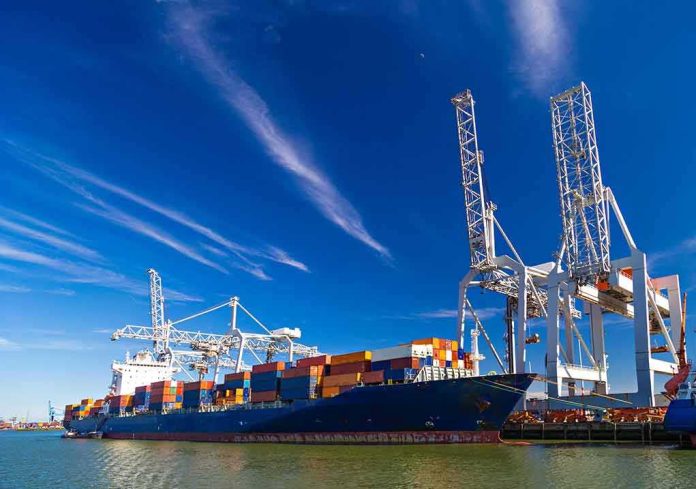
The United Nations Convention on the Law of the Sea sets rules for straits used for global shipping. It says ships and planes have a special right of “transit passage,” which coastal states cannot suspend for normal traffic. Legal scholars apply this to the Strait of Hormuz. That means no state may close it at will or claim exclusive control of passage in peacetime. The law allows some safety rules, but it does not support declaring the strait another nation’s territory.
This gap between tough talk and legal limits is key. Military power at sea can block or screen vessels for a time. But military reach does not equal legal ownership. That difference matters for allies, oil producers, and neutral shippers who rely on stable rules more than strong rhetoric. When the rules hold, commerce moves. When leaders hint at ownership, every tanker faces risk premiums, and every driver sees higher costs at the pump.
The Military And Economic Backdrop
United States and Iranian forces have traded strikes and seizures this year, and reporting has described a United States naval posture that has intercepted ships linked to Iran. One broadcast said a helicopter strike hit a vessel trying to break a blockade of Iranian ports, underscoring the conflict’s intensity. Such actions can shape events at sea day-to-day. But they do not resolve the bigger question of who sets the rules. That answer depends on law and deals, not only on firepower.
Oil markets respond fast to threats in the strait. Each public claim of control or closure can rattle shippers and energy traders. Price jumps flow through to diesel for trucks, jet fuel for flights, and fertilizer made from natural gas. Families and small businesses then pay more across the board. That is why people on the right and left both ask why leaders keep risking a choke point that moves much of the world’s oil. They see powerful players winning while regular people absorb the costs.
Talks And Possible Off-Ramps
A United States official told Reuters there was progress toward a deal with Iran and Oman to reopen the strait, suggesting that diplomacy may soon ease the crisis and restore shipping flow. Other Reuters reports said Iran tied reopening to specific United States steps, which shows both sides are using leverage while negotiating terms. Deals like this often trade narrow gains for predictability. They can lower risk premiums, steady prices, and give navies room to step back.
🌍 WORLD NEWS DIGEST — Aug 13, 2026
🛰️ Iran–Hormuz: Tehran says a deal with Oman to reopen the Strait of Hormuz is close, but insists the U.S. meet its commitments first. The waterway remains at the center of a fast-moving regional crisis.
🇨🇴 Colombia: A magnitude-7.4… pic.twitter.com/yGpcmbOxrf
— 0xzx • Crypto & AI News (@0xzxcom) August 13, 2026
Even if talks advance, the legal baseline stays the same. The waterway remains an international strait, and transit passage remains protected under United Nations rules. Leaders can shape conduct through patrols, inspections, and deconfliction lines. They cannot turn an international strait into national territory by statement alone. Clear rules and transparent deals would help shippers plan, cut costs for families, and reduce the sense that the system favors insiders over everyone else.
Sources:
qil-qdi.org, usatoday.com, reuters.com, aljazeera.com, opiniojuris.org, inss.org.il