When Washington claims a foreign gang “no longer has safe haven anywhere” after a secretive U.S. strike, both right and left hear the same alarm: powerful people using war powers in the dark while everyday Americans still feel unsafe and ignored.
Story Snapshot
- President Trump says U.S. Southern Command killed Tren de Aragua boss “Niño Guerrero” in Venezuela in a lethal airstrike.
- The White House calls it a joint operation with Venezuela and claims the gang has “no safe haven” left, but proof is thin so far.
- This strike fits a wider Trump-era pattern of quiet, ongoing military actions against alleged drug and terror targets.
- Limited transparency fuels fears on both right and left about unchecked war powers and a distant, unaccountable government.
Trump’s strike on Tren de Aragua: what happened and what we actually know
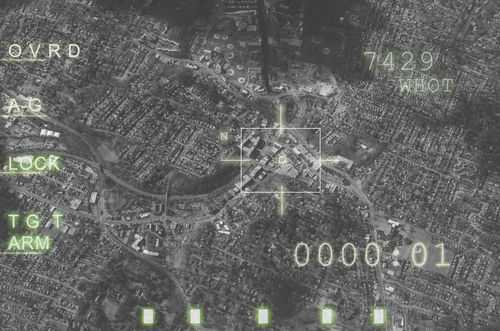
President Donald Trump announced that the United States military killed Héctor Rusthenford Guerrero Flores, known as “Niño Guerrero,” the alleged leader of the Venezuelan gang Tren de Aragua, in a strike inside Venezuela.[1] He said United States Southern Command carried out a “swift and lethal kinetic strike” that “successfully executed” Guerrero Flores at his direction.[1] Other outlets repeated that the leader of Tren de Aragua was killed in a United States military strike after Trump’s social media post.[2] The message was simple: America hunted down a top gang boss abroad and took him off the battlefield.
Trump’s announcement did more than name a target. He called Tren de Aragua “one of the most bloodthirsty terrorist organizations on planet Earth” and reminded supporters that his administration had already labeled it a foreign terrorist group.[1] That earlier label allowed the White House to argue it is in an “armed conflict” with such gangs, not just running police-style drug busts.[1] For many Americans, that sounds tough on crime. For others, it sounds like the government is quietly turning the drug war into a forever war, with almost no debate in Congress.
Claims of Venezuelan coordination and “no safe haven”: evidence and doubts
Trump said the mission was “closely coordinated” with the Venezuelan government, pointing to a new relationship after that country’s old leader was removed in an American military operation earlier this year.[1] Venezuela’s communications ministry later said Guerrero Flores was killed in a “combined operation” between United States forces and Venezuelan security services, backing the claim of joint action.[1] That is rare: Washington and Caracas have often been rivals, so many viewers on both sides will see this as a major shift in how American power operates in Latin America.
Trump also declared that “Tren de Aragua terrorists no longer have safe haven in Venezuela or anywhere else,” presenting the strike as a final blow.[1] Public reporting, though, offers no open evidence that every cell, route, or safe house linked to the gang has been wiped out. Tren de Aragua grew from a prison gang into a cross-border network across the Americas, including in the United States, according to federal prosecutors.[1] One successful hit on a leader can hurt a group, but it does not prove the whole network is gone. That gap between hard proof and bold promise fuels skepticism across the political spectrum.
A wider shadow campaign against “narco-terrorists”
This latest strike sits inside a larger Trump policy that treats some gangs and traffickers as terrorists and enemy fighters, not just criminals.[1] A detailed timeline of earlier boat attacks shows that, after labeling several Latin American gangs as foreign terrorist organizations, the administration used those labels to justify dozens of lethal strikes on alleged drug boats in the Caribbean and Pacific. Officials argued the United States is in an “armed conflict” with these groups and even cited an old wartime law, the Alien Enemies Act of 1798, to support their actions.[1] That framing gives the president far more room to act without Congress.
Critics in and out of Congress have already raised questions about past boat strikes, including who was targeted, what intelligence was used, and whether the White House had the legal authority it claimed.[2] Some of those earlier official stories shifted over time as new facts came out.[2] That history matters now. When this new strike is announced with strong language but limited public evidence, many Americans remember those earlier disputes. They wonder if they are again being asked to trust government claims they cannot verify while the same leaders dodge accountability on inflation, border chaos, and crime at home.
Shared worries about secrecy, power, and the “deep state”
Conservatives who back tough action on gangs may still worry about a pattern: more military power used overseas, more money spent, and more decisions made by unelected security officials, while the border remains leaky and communities struggle with drugs and violence. Liberals who fear abuse of “America First” policies see another example of force used without full public debate or clear limits. Both sides notice that details on target proof, strike video, and legal memos are slow to appear, if they appear at all.
#BREAKING President @realDonaldTrump announced that @Southcom executed a lethal strike killing Niño Guerrero, leader of terrorist gang Tren de Aragua, in close coordination with Venezuela. #Trump #TrenDeAragua #BreakingNews pic.twitter.com/ko2ZkkibJp
— jarvis ☠️ (@Vishii14) June 13, 2026
Across the country, many people now believe a small circle of elites decides when and where America goes to warlike actions, whether against foreign states, terror groups, or gangs. The Tren de Aragua strike may feel like a win against a brutal organization, but it also shows how much trust we are asked to place in leaders and agencies that often avoid tough questions. Until more records are released on how targets are chosen, how partners like Venezuela are used, and whether these campaigns make Americans safer, expect growing anger from citizens who see a government quick to pull the trigger abroad but slow to fix life at home.
Sources:
[1] Web – BREAKING: President Trump on Friday night announced the U.S. Southern …
[2] Web – Trump says ‘no problem’ releasing video of 2nd strike on alleged …