

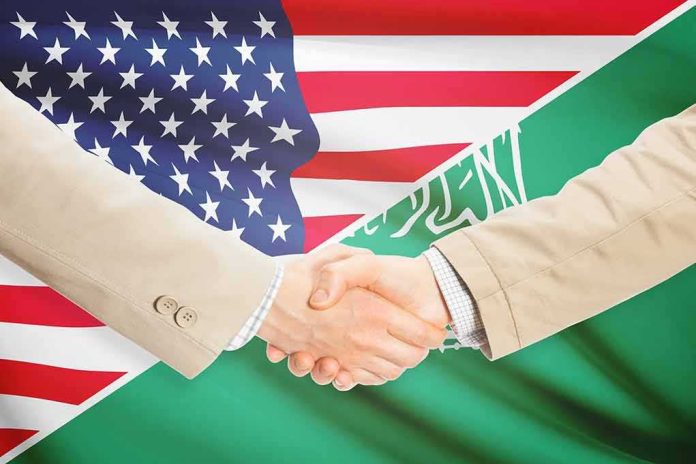
Washington approved a U.S.–Saudi civilian nuclear deal that could allow uranium enrichment inside the kingdom while relying on new safeguards to prevent misuse.
Story Snapshot
- The agreement opens Saudi Arabia’s path to U.S.-backed nuclear power and potential enrichment.
- The administration says added safeguards will protect the most sensitive nuclear activities.
- Key terms remain opaque, fueling concern across party lines about proliferation risks.
- Congressional oversight rules under Section 123 set the baseline for nonproliferation controls.
What Was Approved And Why It Matters
The United States and Saudi Arabia reached a civilian nuclear cooperation agreement that clears U.S. technology for use in the kingdom, subject to U.S. law. The deal, often called a Section 123 agreement, is the legal path for trade and technical work in nuclear energy. Officials and reports indicate the arrangement may allow uranium enrichment in Saudi Arabia, a sensitive step in the fuel cycle that can raise weapons concerns if not tightly controlled.
The administration frames the deal as a way to shape safety and standards from the start. A reviewed waiver report and briefings describe “additional safeguards and verification measures” aimed at enrichment, conversion, fuel fabrication, and reprocessing, which are the riskiest parts of a program. Supporters argue U.S. involvement sets a higher bar than if Saudi Arabia turned to other suppliers with looser rules. They say the approach ties the kingdom to American oversight and industry practices.
The Guardrails And The Gaps
Section 123 of the Atomic Energy Act lays out core nonproliferation terms. These include lifetime safeguards on U.S.-supplied items, a pledge not to use them for any explosive device, and consent rights before any enrichment or reprocessing of covered material. These standards shape every U.S. nuclear cooperation deal and give Congress a review role. They also set a baseline that can be strengthened in specific agreements when risks run higher.
Independent reporting says some past “gold standard” elements, like a clear no-enrichment pledge, are not in this package. Journalists and analysts describe loosened limits on enrichment and questions about fast inspections by international monitors. That mix alarms experts who track the Middle East arms balance and fear a new race in sensitive fuel work. The White House has argued added bilateral checks can close these gaps, but the public text remains limited.
Why Both Left And Right Are Watching
Energy planners see nuclear power as a way to meet rising demand, cut oil use at home, and free barrels for export. U.S. builders and fuel firms view the deal as a jobs and supply chain win. Yet critics across the spectrum worry about the risks of enrichment in a tense region. They also note years of uneven transparency in U.S.–Saudi talks and want clear, enforceable terms that match the stakes, not just promises and private assurances.
Lawmakers from both parties have pressed for assurances that the agreement will not trigger a regional race to match fuel-making steps. They point to earlier pacts, like the United Arab Emirates deal, that barred enrichment and reprocessing outright. They ask why this one appears softer. The administration responds that U.S. consent rights still apply and that extra verification will police any sensitive activity. Final judgment will rest on the binding text and how it is enforced.
Sources:
humanevents.com, abcnews.com, armscontrol.org, newsmax.com, reuters.com, energy.gov, docs.house.gov, fdd.org, lawfaremedia.org, thebulletin.org