

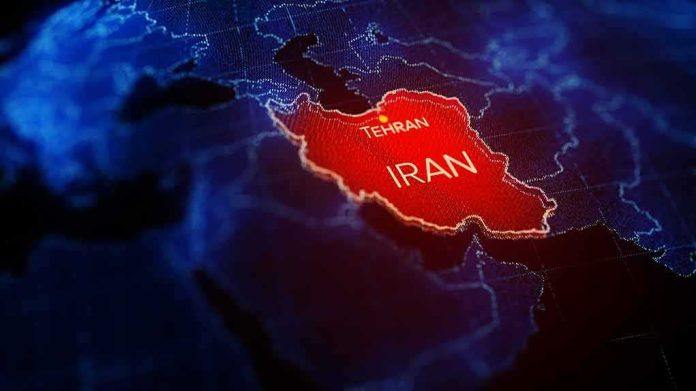
Iran’s missile tunnels just passed a live-fire stress test from the United States and Israel—and the real story is what that reveals about American power, deterrence, and the next war.
Story Snapshot
- Satellite imagery shows Iran has already reopened most entrances to 18 bombed underground missile complexes.
- United States intelligence reportedly says Iran “exceeded all timelines” for recovering tunnel access after the strikes.
- Engineers using bulldozers and trucks, not miracle technology, beat a high-tech Western air campaign.
- The restored tunnels raise hard questions about deterrence, vulnerability at home, and what comes next if missiles start flying again.
What The Satellites Now Show Under The Dust
Commercial satellite images, examined for Cable News Network (CNN) and echoed by multiple outlets, show Iran has restored access to most of the underground missile facilities that the United States and Israel tried to choke off earlier in the war.[1][2][4] Analysts counted 69 known tunnel entrances at 18 underground missile complexes; roughly 50 of those entrances now appear cleared and usable again.[1][2][4] Dirt berms are gone, debris piles pushed aside, and access roads that were deliberately cratered now look graded and drivable in fresh imagery.[1][4]
Reporting describes a surprisingly low-tech recovery. Iranian crews used basic engineering equipment—bulldozers, dump trucks, earth movers—to dig out buried portals and reopen blocked routes.[1][2][4] No expensive miracle machine, just time, manpower, and a clear priority from Tehran to get those tunnels back online. United States intelligence sources cited by CNN reportedly told journalists that Iran has “exceeded all timelines” Washington had modeled for reconstituting access to the missile network.[1] When the other side outperforms your planning assumptions, smart people in the Pentagon start revising their spreadsheets fast.
How Much Of Iran’s Missile Arsenal Really Survived?
Battle damage assessment in a tunnel war always creates fog. The strikes focused on entrances, roads, and surface support infrastructure, not on trying to pulverize the deepest galleries carved into hard rock.[1][5][6] Analysts quoted in Israeli and regional media say many missile launchers were damaged or trapped when tunnel mouths were buried, but the missiles stored farther inside likely remained intact.[2][5][6] One nonproliferation researcher bluntly assessed that as long as Iran still has functioning launchers and crews, it can reload from those underground stockpiles.[2]
Open sources suggest a mixed picture. One analysis cited by Israeli outlets estimated that roughly half of Iran’s launchers were destroyed, another large share was damaged yet repairable, and a significant number were untouched.[5][6] That is not the clean, surgical “mission accomplished” some television pundits like to sell. It looks more like a hard punch that hurt Iran’s tempo, not its basic ability to fire salvos. From an American conservative view, that is the worst place to be: you pay the political and military cost of striking, but the adversary keeps enough capability to threaten your allies and your bases anyway.
Missile Cities, Granite Mountains, And A Doctrine Of Survival
Iran did not improvise this network last month. For decades the Islamic Revolutionary Guard Corps has built what Israeli and American analysts call “missile cities”: deep tunnels, concrete depots, multiple exits, internal rail systems, and blast doors dug into granite mountains.[5][6] The entire design exists to ride out air campaigns by countries exactly like the United States and Israel.[6] Analysts describe facilities with many bends, trap doors, and massive walls engineered specifically to prevent a single bomb from creating a chain reaction kill.[6]
After the restoration of the internet in Iran, new footage has emerged of the entrance routes to those tunnels, which were targeted in the US/Israel attack and said to have concealed missile launching pads. pic.twitter.com/5YfvCoN84p
— Iran Updates🚨 (@IranUpdatesNow) June 5, 2026
Observers have long noted a telling detail: Iran, for all its propaganda, still has not shown convincing video of a missile launching directly from deep underground in combat.[6] Every time Tehran could have bragged about such a feat, it chose not to—or could not.[6] That suggests the tunnels are primarily hardened storage and movement corridors, not Hollywood-style “pop-up launch” shafts. From a common-sense American perspective, that nuance matters. Destroying some mobile launchers above ground is doable; killing hundreds of missiles hidden deep inside a mountain is another matter entirely.
What This Means For Deterrence, Strategy, And The Next Crisis
The restored tunnels expose a clear strategic problem: the United States and Israel can hit what they can see, but Iran’s core missile infrastructure is designed so that “what you see” is just the tip of the spear. When bombs fall, Tehran moves dirt, not doctrine. United States intelligence now reportedly believes Iran has regained access to roughly 90 percent of its underground missile storage and launch network.[3] That number might not be perfect, but the trend line is unmistakable—access lost, then access quickly regained.
For American policymakers and voters, the lesson cuts two ways. First, do not let anyone sell you airpower as a magic eraser for the Iranian threat. The tunnels are proof that determined adversaries can adapt faster than Washington’s talking points.[1][3][4] Second, this is exactly why missile defense, hardening of United States bases, and credible, overwhelming retaliation matter more than symbolic strikes. A half-measure attack that leaves the enemy’s main arsenal alive may satisfy cable news, but it does not impress a regime that just dug its way back into 50 buried tunnels in a matter of weeks.[1][2][4]
Sources:
[1] Web – Watch: More Evidence Iran Is Rapidly Restoring Its Missile Tunnels
[2] Web – Iran’s Restored Entry to 18 Missile Sites ‘Exceeded All Timelines’ for …
[3] YouTube – Iran Restores 90% of Underground Missile Network …
[4] YouTube – Iran BREAKING: IRGC Unlocks 50+ Underground Missiles Tunnels
[5] Web – Satellite Images Show Iran Reopening Access to Missile Tunnels
[6] Web – Satellite images reveal Iran restoring its ‘missile cities’ – Israel …