
Europe’s top official publicly invited Canada to become the European Union’s first “associate member,” but the plan now hinges on defining powers and limits that do not yet exist.
Story Highlights
- European Commission president urged “association without accession” for Canada, citing work on trade, tech, and security.
- Canada–EU trade rose sharply under CETA, but gains and future obligations remain uneven and unclear.
- Key EU capitals resisted the “associate member” label, pushing softer wording and a slower path.
- Sovereignty, dairy access, and U.S. pressure frame the biggest political risks on all sides.
What Europe Offered And Why It Matters
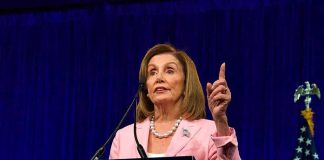
European Commission President Ursula von der Leyen told a Montreal audience that Canada cannot join the European Union as a full member because of geography. She instead backed “association without accession” and named joint work on artificial intelligence, climate, energy, and security as targets. Her remarks put a public face on a deeper plan. They also raised a core test: how to lock in closer ties without handing Brussels a direct say over Canadian rules.
The pitch builds on real cooperation. Canada and the European Union said goods trade rose more than seventy-five percent and services trade rose ninety-seven percent since the 2017 start of provisional application of the Comprehensive Economic and Trade Agreement. They also noted a February 14, 2026 deal for Canada to join the European Union’s Security Action for Europe program and an ongoing economic security dialogue. These steps show progress, but they do not define future duties or costs.
Why The Label Stalled Inside Europe
Reports from the summit say several major European Union members objected to the “associate member” term. They argued the status does not yet exist in European Union law and needs agreement among all twenty-seven states. Draft language was softened to “ever closer association,” which points to a path but defers hard choices. The split between the Commission’s push and member-state caution now shapes what is possible and how fast it can proceed.
That internal fight matters beyond labels. A title without rules invites backlash at home and abroad. Leaders in Europe want concrete terms before they pick names. Without a legal text, markets, farmers, and unions cannot judge gains and losses. The gap also feeds claims that elites will decide first and explain later. Clear rules on money, rules of origin, dispute panels, and exit rights will decide if this plan holds over time or fades like past slogans.
The Sovereignty Question Both Sides Now Ask
Supporters say a closer link diversifies risk as United States tariffs bite and supply chains shift. Critics warn that entering parts of the single market could force Canada to accept rules made in Brussels without a vote. An expert cited in coverage said the core trade-off is access versus control. That warning lands because many voters, left and right, already think unaccountable bureaucracies write rules that working people must follow without recourse.
Sector risks make the debate concrete. A member of the European Parliament from France argued that current Canada–European Union trade is already hurting European farms. Canadian voices flagged dairy as a flash point if highly subsidized products gain wider entry. These are not abstract fears. They shape prices at the store and incomes on the land. Any deal that skips plain safeguards could fail fast in parliaments and in the street.
Trade Gains Are Real, But Not A Silver Bullet
Trade between Canada and the European Union has grown a lot since the Comprehensive Economic and Trade Agreement took effect on a provisional basis. That offers a baseline for deeper work. But the same reporting says it does not prove Europe can replace Canada’s heavy reliance on the United States in the near term. Distance, transport, and rules all add friction. Big promises that ignore those limits will not pass a kitchen-table test.
Carney’s EU alignment pitch.
His logic is diversification as sovereignty. Canada sends about seventy percent of its exports south, Trump is openly using tariffs as leverage, and Carney’s read is that no single partner should hold that much power over you. Fair enough as a…— Corina Riesebos (@RiesebosC) October 31, 2026
Politics complicates the map. President Trump warned that if he views the initiative as hostile, he may restrict trade with Europe “on many things.” Opposition leader Pierre Poilievre called the summit a show and equated the plan with a loss of sovereignty. These lines will harden views on both sides of the border. They also press negotiators to show in writing where Canadian law stays supreme and what happens when rules clash.
What To Watch Next
Three proof points now matter most. First, a public draft that defines any “association” in plain terms, including money, market access, dispute rules, and a clean exit. Second, signals from Berlin, Paris, and Rome that they accept a path and a timeline. Third, sector scorecards on dairy, energy, digital, defense procurement, and student mobility. Without those, “associate membership” remains a headline without hardware and an easy target for both skeptics and spin.
Sources:
youtube.com, audiovisual.ec.europa.eu, thecanadianpressnews.ca, cbc.ca, reporter.mcgill.ca, apnews.com, cp24.com