

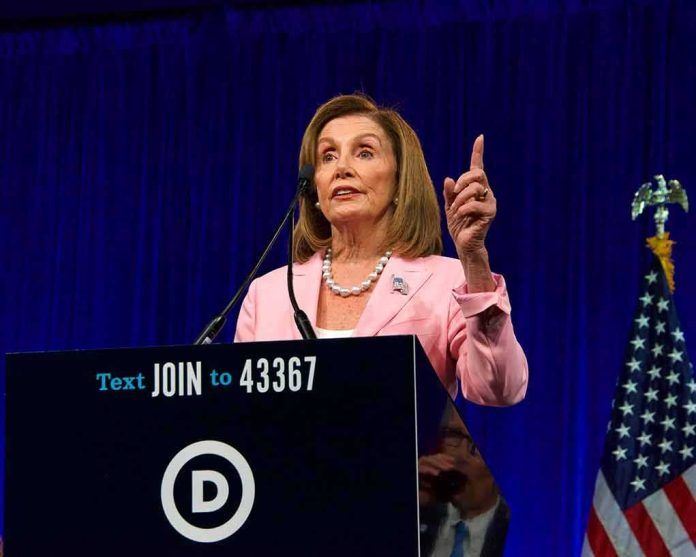
Nancy Pelosi drew a sharp line inside her own party by calling two Democrats’ Israel remarks “wrong” and not reflective of congressional Democrats.
Story Snapshot
- Pelosi said comments by Zohran Mamdani and Abdul El-Sayed on Israel were “wrong.”
- Mamdani has declined to endorse Israel as a Jewish state, citing equal rights for all.
- El-Sayed questioned whether Israel is a true U.S. ally and opposed U.S. military aid.
- The dispute highlights a widening Democratic divide over Israel policy.
Pelosi’s On-Record Rebuke And Why It Matters
On October 29, 2026, Nancy Pelosi said comments by Zohran Mamdani and Abdul El-Sayed about Israel were “wrong” and “not a reflection of the Democrats in the Congress of the United States.” She made the remarks during a podcast exchange about antisemitism and party identity. Her words signal a public boundary inside the Democratic Party. They also raise the stakes for candidates who challenge core language about Israel’s status and the U.S.-Israel relationship.
Pelosi’s statement carries weight because she is a long-time party leader. But the reports do not show a formal House Democratic Caucus vote or a policy resolution backing her claim. That limits how far her words can stand in for the entire caucus. Still, her stance will likely shape donor signals, media frames, and pressure on candidates in swing and safe seats alike this cycle.
What Mamdani And El-Sayed Have Said On Israel
Zohran Mamdani has said he supports Israel as a state with equal rights but does not support any state that privileges one religion over another. He has repeatedly declined to affirm Israel’s right to exist specifically as a Jewish state, while saying he supports Israel’s existence with equal rights for all citizens. Supporters frame this as a universal equality view; critics see it as denying Jewish self-determination at the state level.
Abdul El-Sayed has questioned calling Israel a U.S. ally. He argues an ally should not take American money and draw the United States into wars. He has backed ending U.S. military aid to Israel, linking it to a broader nonintervention message. These positions reject long-standing bipartisan habits on security assistance and alliance language. They also push Democrats to clarify where they stand on conditioning aid and on Israel’s conduct in war.
Why This Fight Resonates With Voters Beyond The Left
Voters across the spectrum see a pattern: politicians posture while failing to fix core problems. This clash is another example. Democrats argue over labels and litmus tests while many Americans worry about high prices, safety, and trust in government. When leaders focus on who is “inside” or “outside” the party line, citizens hear elitist gatekeeping. That feeds the belief that Washington protects its own status more than it solves real issues.
Nancy Pelosi has publicly drawn a line.
The former Speaker of the House criticized Michigan Senate candidate Abdul El-Sayed and NYC Mayor Zohran Mamdani over their positions on Israel, calling those views "wrong" and saying they do not represent Democrats in Congress.
This is…
— Chaya Eitan (@ChayaEitan) October 30, 2026
The debate also shows how short clips drive outrage. Quick quotes like “It’s wrong” or “not actually our friend” can eclipse full context. That helps partisan media on all sides, but it hurts careful policy work. Without full transcripts, the public gets fragments that confirm what they already believe. That cycle deepens divides inside the Democratic Party and across the country, while leaving key questions about aid, security, and human rights unsettled.
How The Policy Questions Could Be Settled
Clear standards could cool this fight. Leaders could lay out what it means to support Israel’s security while backing equal rights for Palestinians. Congress could define when aid is defensive, when it is offensive, and what conditions trigger pause or review. Candidates could publish full platforms on alliances, human rights, and war powers. These steps would shift focus from identity battles to measurable choices on aid, oversight, and U.S. interests.
Sources:
news.meaww.com, foxnews.com, thehill.com, mediaite.com