

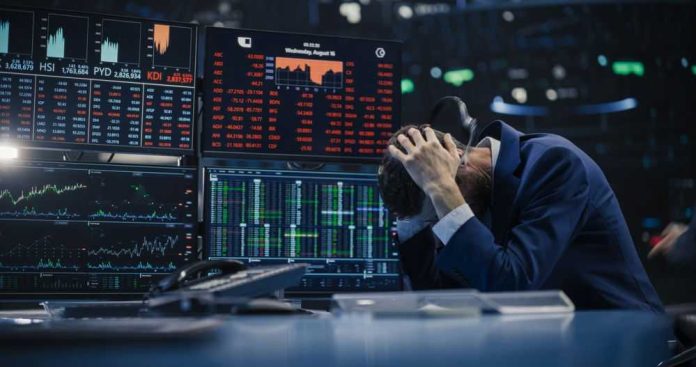
Elon Musk just lost more money on paper in a month than most nations produce in a year, and it is forcing hard questions about how much faith Americans should place in billionaire-led tech dreams and the markets that prop them up.
Story Snapshot
- Elon Musk’s net worth has fallen hundreds of billions of dollars as SpaceX and Tesla stocks tumble, erasing his brief run as the world’s first trillionaire.
- SpaceX shares have dropped as much as 40–50% from their frenzied post‑IPO peak, while Tesla is down double‑digits this year and over 20% from recent highs.
- Much of the loss is “on paper,” tied to market repricing of artificial intelligence and space stocks, not to clear proof that Musk’s companies have collapsed.
- The swings highlight how wealth trackers and Wall Street can make a volatile tech bet look like a national triumph one week and a disaster the next, deepening public distrust of financial and political elites.
Musk’s Trillionaire Peak Vanishes In Weeks
In early summer 2026, wealth indexes briefly crowned Elon Musk the world’s first trillionaire, thanks to a huge surge in SpaceX’s value after its stock market debut. SpaceX’s listing drove his fortune to around $1.45 trillion at the peak, fueled by investor excitement over space launches and artificial intelligence plans. Within weeks, that picture flipped. A sharp selloff in SpaceX and weakness in Tesla knocked Musk’s net worth back below $1 trillion, stripping away the “trillionaire” label and turning him into a case study in extreme market whiplash.
Major outlets such as Forbes and the British Broadcasting Corporation tied the drop directly to sliding share prices, not to Musk selling assets or reporting huge cash losses. Reports described how SpaceX’s valuation fell from roughly $3 trillion at its height to near $2 trillion as buyers stepped back and early investors took profits. Tesla’s stock, already down about 16% for the year by June, added further pressure as it slipped again during the same period. Together, those moves erased “hundreds of billions” from wealth estimates that are built almost entirely on volatile equity stakes.
SpaceX And Tesla: Price Crash Or Reality Check?
SpaceX stock has now fallen in multiple straight sessions, trading about 40% below the peak reached in the first rush after its initial public offering. Analysts told news organizations this drop reflects both profit‑taking and a wider reset in how markets value artificial intelligence and space businesses, which had carried sky‑high expectations. Tesla, meanwhile, has slipped more than 20% from a recent high near $500, hurt by weaker earnings, stiff electric‑vehicle competition, and doubts about costly robotics and artificial intelligence bets. These declines suggest investors are rethinking how much future growth they are willing to pay for right now.
Some coverage, however, shows that opinion on Musk’s empire is not all negative. One Wall Street firm, Raymond James, reportedly implied a SpaceX valuation above $10 trillion and projected much higher share prices even as the stock was falling. Other analysts said Tesla might still benefit from speculation about future products and software, keeping the stock “afloat” despite near‑term earnings disappointments. This split view means the recent slide is best seen as a tense tug‑of‑war: believers in Musk’s long‑term vision versus skeptics who think the “Musk premium” has simply gone too far.
Paper Losses, Real Frustration With Elites
For everyday Americans watching from the sidelines, the numbers are dizzying. Forbes has reported single‑day hits of $20–30 billion to Musk’s fortune when Tesla or SpaceX shares have a bad session, with one month this year wiping out roughly 40% of his net worth on paper. Yet Musk still sits at or near the top of global rich lists, even after losing $50–75 billion in prior years and more than $100 billion year‑to‑date in some estimates. These wild swings feed a sense that the system is rigged: the very rich can lose “more than anyone in history” and still remain untouchable.
Both conservatives and liberals frustrated with the “deep state” see this story as another sign that the big game is happening far above their heads. Reports note that Tesla’s troubles are linked not only to business competition but also to Musk’s political fights, tariffs, and culture‑war clashes that ripple through markets. At the same time, broader technology routs and changing views on artificial intelligence profits are dragging many high‑growth shares down together, suggesting that ordinary investors and workers are exposed to elite bets they never chose. The wealth headlines compress these complex dynamics into daily scoreboards, but the underlying frustration is about power, not just money.
What Musk’s Crash Says About The System
Media outlets repeatedly stress that Musk’s “losses” are mark‑to‑market changes, not audited proof that SpaceX rockets stopped flying or Tesla cars stopped selling. Shares in both companies remain worth hundreds of billions in total, and Musk has recovered from huge setbacks before while staying the richest person in the world. Still, the fact that one man’s fortune can gain or lose the size of a federal department’s annual budget in days raises hard questions. Many readers see it as proof that finance and technology have grown far beyond the reach of normal democratic checks.
Elon Musk’s Net Worth Drops Below $700 Billion After SpaceX Share Decline 🚀💰
A decline in SpaceX share value reportedly reduced Elon Musk’s net worth by more than $20 billion, bringing his estimated fortune below the $700 billion mark for the first time since December.
The… pic.twitter.com/87QL4Jm6UE
— Politicols 🗞️ (@politicosCrypt) July 28, 2026
Analysts warn that the same forces pushing Musk’s wealth around could hit pensions, index funds, and retirement accounts that track the broader technology market. When artificial intelligence and space stocks get repriced, it is not only billionaires who feel it; families relying on the S&P 500 and similar funds can see their savings drop too. That link fuels a common anger across left and right: the sense that markets treat ordinary Americans as collateral damage in elite experiments. Musk’s fall to earth, even if only on a screen, shows how fragile the dreams sold by Wall Street and Silicon Valley can be.
Sources:
feedpress.me, forbes.com, bbc.com, fortune.com, timesofindia.indiatimes.com, en.wikipedia.org, ynetnews.com, cbc.ca, newsweek.com, facebook.com