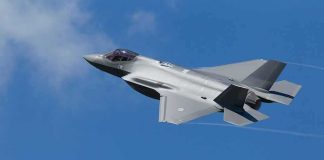

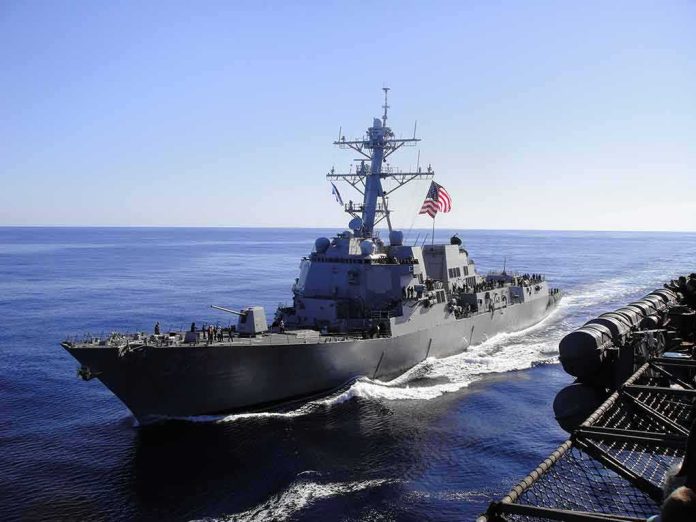
America’s ninth straight night of strikes on Iran comes as the confirmed U.S. death toll climbs to three, turning a shipping crisis into a widening war of attrition.
Quick Take
- U.S. forces struck Iran for a ninth consecutive night after another American death was confirmed.
- Central Command says the new wave targets Iran’s ability to hit ships in the Strait of Hormuz.
- The fighting now includes ship attacks, retaliatory airstrikes, and rising risk to global shipping.
- Iran and the United States still dispute who started key incidents, especially around commercial vessels.
Why the Strikes Are Continuing
U.S. Central Command said the latest strikes were meant to degrade Iran’s ability to attack commercial vessels in the Strait of Hormuz. The report from Reuters says the strikes came after another American was confirmed killed, raising the U.S. military death toll in the renewed fighting to three. That makes this campaign more than a warning shot. It has become a sustained effort to hit Iran’s military reach at sea.
The immediate trigger remains the same pattern seen all week: ship attacks, U.S. retaliation, then more attacks on the waterway that carries a large share of global oil traffic. Al Jazeera reported that Central Command said it had already hit 90 Iranian military targets in one earlier wave, including air defense systems, coastal surveillance assets, missile and drone storage sites, naval capabilities, and military logistics infrastructure. The scale suggests Washington is trying to wear down Iran’s options, not just answer one event.
A Strait With Global Stakes
The Strait of Hormuz matters because even small disruptions can shake energy markets and shipping routes far beyond the Gulf. Reuters says U.S. officials are now worried about shipping through the strait as the strikes continue. That concern fits the broader pattern described by analysts who say the conflict has centered on control of the waterway since the ceasefire broke down. For traders, crews, and Gulf states, the cost of delay is not abstract.
Iran’s side says the situation looks different. BBC reporting says the Islamic Revolutionary Guard Corps claimed it struck two oil tankers and said the strait was closed to all types of vessel, though there was no immediate confirmation of that attack. The same report says Central Command kept its own position that commercial ships were still moving through the area. That split shows the core problem: each side presents the same sea lane as proof of the other side’s aggression.
What Is Clear, and What Is Still Disputed
The strongest confirmed fact is that the United States is now into a ninth straight day of strikes, and the death count has risen again. The more disputed question is who bears full blame for the spiral. Washington Post reporting quoted Iranian claims that the M/V GFS Galaxy attack was only a warning shot because the vessel disabled its identification systems, while the U.S. called it a deliberate attack. That gap has not been closed by independent forensic proof.
Some reports also show how unstable the battlefield has become. ABC News reported that a U.S. military response followed after Iran said it had hit U.S. targets, while Reuters said Iran escalated by warning of more incidents in the strait and targeting ships and bases across the Gulf. This is the kind of conflict that creates its own logic. Each strike is used as evidence for the next one, while civilian mariners and nearby populations face the risk.
For readers frustrated by Washington’s long habit of escalation without clean exits, the deeper issue is now plain. The government says it is protecting shipping and American lives, yet the shooting keeps expanding and the facts remain contested in key places. That leaves both sides of the political aisle with the same hard question: how long can the United States keep fighting to restore order in a waterway that keeps sliding toward wider war?
Sources:
mediaite.com, cnbc.com, npr.org, reuters.com, nytimes.com, hormuzstraitmonitor.com, aljazeera.com