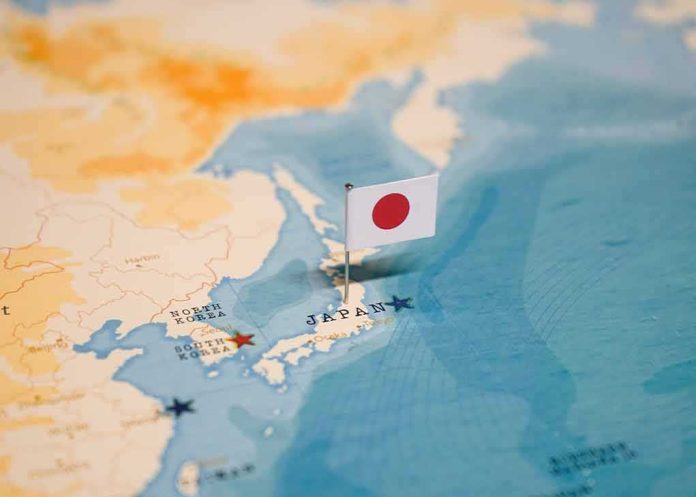
As tankers stall near the Strait of Hormuz and oil prices lurch higher, a new worry is creeping in: could “oil‑poor” Asia become the next epicenter of an emerging‑market crisis while global elites insist everything is under control?
Story Snapshot
- Asia’s net oil importers are first in line to be hit by a Hormuz-driven supply shock, with Thailand, the Philippines, South Korea, Japan, India and others already flagged as vulnerable.[1][2][5]
- The Strait of Hormuz now functions as a single point of failure for Asian energy security, with the overwhelming majority of its oil and gas flows headed to Asian markets.[2][3]
- Governments across the region are scrambling with fuel caps, rationing, and reserve plans, masking deeper stresses in trade balances, currencies, and public finances.[1][3][4]
- Analysts warn that even “moderate” price spikes could cut growth, widen deficits, and revive 1997‑style fears, yet official messaging still downplays systemic risk.[1][3][5]
Why Oil-Poor Asia Is on the Front Line of the Shock
Analysts across the political spectrum agree on one uncomfortable fact: Asia’s energy-poor economies are structurally exposed when the Strait of Hormuz is in trouble.[2][3] Roughly one-fifth of global oil and similar volumes of liquefied natural gas pass through this chokepoint, and close to ninety percent of those flows ultimately serve Asian markets, according to international energy agencies.[2][3] Countries from Pakistan to Japan depend heavily on imported fuel, so disruptions or threats there hit Asian consumers, factories, and power grids before the pain reaches Europe or America.[2][3]
Research from banks and think tanks singles out specific weak links rather than treating Asia as a single bloc.[1][2][5] ING’s work highlights Thailand, the Philippines, and South Korea as early pressure points because they import most of their fuel, pass higher prices quickly into domestic inflation, and lack large financial buffers.[1] Other studies point to Sri Lanka, Pakistan, India, and Vietnam as vulnerable to higher energy prices due to strained external balances and limited fiscal space.[5] These profiles echo older crises, when small deficits suddenly became unmanageable once markets lost confidence.
From Fuel Lines to Balance Sheets: How a Price Shock Turns Systemic
Early news coverage shows governments already using emergency tools to cushion voters from oil’s surge, a pattern that can hide deeper fragilities.[3][4] Al Jazeera and other outlets report steps such as fuel price caps, rationing, and planned releases of strategic reserves as traffic through Hormuz has slowed.[3][4] China has reportedly curtailed some fuel exports, South Korea has capped retail prices, and Japan has prepared reserve drawdowns, while poorer economies consider switching suppliers or cutting consumption.[3][4] These moves limit street anger but shift the burden onto state budgets and central banks.
Economists warn that even relatively modest price increases can hit growth hard in energy-dependent Asia.[5] Morgan Stanley estimates cited in regional coverage suggest a lasting ten-dollar-per-barrel rise could shave roughly 0.2 to 0.3 percentage points off regional gross domestic product, while other analysts say a ten percent oil price jump materially increases import bills.[5] The International Monetary Fund’s scenario work, summarized by Econbrowser, indicates an adverse oil shock could knock about one percent off expected growth for China, Japan, and emerging Asia overall. For citizens already struggling with inflation, slower growth and weaker currencies mean savings and wages buy even less.
Currency Stress, Public Finances, and the Shadow of 1997
Financial-market research shows how an oil shock can morph from an energy story into a broader currency and debt problem in emerging Asia. MUFG analysts note that during the early Russia–Ukraine shock, currencies such as the Korean won, Indian rupee, Philippine peso, and Thai baht weakened significantly as higher fuel costs worsened trade balances. A prolonged Middle East conflict and sustained price spike would again deteriorate terms of trade for net importers, forcing central banks to choose between defending currencies with reserves or tolerating faster inflation.
To claim the Indian economy is collapsing because the Rupee crossed 95 is to fundamentally misunderstand how a global energy shock works; when Brent crude flirts with $100 a barrel amid West Asia blowing up, any oil-dependent nation faces an immediate math problem, yet India’s…
— Amarjeet Kumar (@123AMARJEET) June 5, 2026
Work from European and American research houses underscores the strain on public finances when governments step in to shield households from global prices.[1][2] Subsidies and tax breaks can delay the pass-through of higher energy costs but risk ballooning deficits, particularly where debt is already high and a large share is held by foreign investors.[1] Analysts warn that Indonesia stands out because its domestic financial market may be too small to cover the government’s needs if foreign funding tightens, while India carries a heavy interest burden that leaves less room for shock absorption.[1] Those dynamics will sound familiar to Americans who watched bailouts and deficits soar after past crises while elites claimed everything was “contained.”
Resilience, Limits, and What Washington Often Misses
Some studies push back against outright doom, noting that not every Asian importer is equally fragile and that policy buffers exist.[1][2] ING argues that India and China can partially substitute oil with coal, and that Singapore and Taiwan benefit from stronger external positions and significant reserves.[1] Japan and South Korea have more room to absorb shocks through financial markets and savings, at least initially.[1][2] Yet Asia-Pacific’s overall dependence on imported oil and gas remains roughly double that of Europe, meaning the region still shoulders a disproportionate share of the global cost-push shock.
For Americans watching from afar, this emerging story touches familiar frustrations with a distant, unaccountable “system.” Decisions made in energy ministries, central banks, and corporate boardrooms—from the choice to rely on a fragile shipping chokepoint to the slow progress on diversifying power—have left ordinary workers and retirees in both Asia and the United States exposed when crises hit.[2][3] Analysts across outlets stress that a Hormuz disruption is a stress test for how much pain governments will load onto taxpayers, savers, and small businesses before challenging entrenched interests in the global energy order.[2][3] People on the left and right who believe elites refuse to tackle root problems will see this as one more warning shot.
Sources:
[1] Web – An Emerging Market Crisis In Oil-Poor Asia?
[2] Web – Oil shock for Asia: identifying the key pressure points – ING Think
[3] Web – Asian countries most at risk from oil and gas supply disruptions in …
[4] Web – Asia’s oil shock nightmare has only just begun – Asia Times
[5] YouTube – Oil Supply Shock: Asian economies rush to come up with …