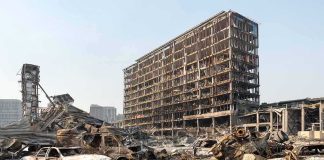
As Washington quietly lines up a $300 billion “reconstruction” plan for Iran, one congressman is warning that America is walking straight back into the same Middle East money pit that both conservatives and liberals are sick of paying for.
Story Snapshot
- Rep. Tim Burchett says the U.S. should “wash our hands” of rebuilding Iran and avoid another open‑ended commitment.
- The tentative deal would let Iran access up to about $300 billion in reconstruction investment, mainly from Gulf states, if it meets certain conditions.[16]
- Trump and Vice President Vance insist U.S. taxpayers are not directly paying that $300 billion, but details remain secret and confusing.[15][16]
- The fight over this deal taps a deeper frustration on left and right that Washington keeps writing blank checks while America’s own problems go unsolved.[21]
What Burchett Is Warning About In The Iran Deal
Rep. Tim Burchett, a Republican from Tennessee on the House Foreign Affairs Committee, has become one of the loudest voices blasting the tentative United States–Iran agreement to end the current war.[4] On Newsmax, he said the United States needs to “wash our hands of this place and get the heck out,” making clear he sees long‑term involvement in Iran as a trap, not a peace plan.[5] In earlier interviews, he called Iran’s rulers “bad actors” and argued they should not be treated as trusted partners at any nuclear table.[1][6] Burchett says America should focus on monitoring and economic pressure, not on rebuilding a regime he believes wants to destroy the United States and Israel.[1]
The congressman’s stance fits his broader record. He has opposed efforts that he sees as freeing up money that can end up in the hands of hostile regimes or terrorist groups, and he has pressed for cutting off funding channels rather than sending U.S. troops into new ground wars.[2][3] In recent comments, Burchett urged an “exit strategy” from the Iran conflict without putting United States soldiers on Iranian soil, arguing other regional powers should take the lead if there is any rebuilding to do.[3] His message to voters has been blunt: hold Congress accountable so the country does not slide into another long, expensive Middle East entanglement while everyday Americans struggle at home.[5]
What The $300 Billion Reconstruction Plan Really Is — And Is Not
The most explosive headline around the deal is the idea that Iran would have “access” to about $300 billion for reconstruction.[11] According to reporting based on the draft memorandum of understanding, that figure would come mostly from Gulf nation investment and private deals, not from direct United States cash payments.[11][16] Vice President J. D. Vance told CBS News the money is not a giant check to Tehran, but a pool of potential investment that Iran can tap only if it meets certain conditions set by Gulf states and follows the agreement.[11] President Trump has also said at the G7 summit that “we are not investing any money in Iran,” stressing that United States taxpayers are not the source of that $300 billion fund.[15][17]
Even so, the details are far from clear. Reports say the United States and its allies would be required to present Iran with reconstruction plans worth at least $300 billion as part of the deal.[16] The framework also involves suspending some oil sanctions and releasing about $24 billion in frozen Iranian assets if Iran complies during a 60‑day period, giving Tehran real economic relief on top of possible future investments.[16] Critics note that no full official text of the memorandum has been released, so the public is being asked to trust leaks, talking points, and press conferences instead of reading the binding terms themselves.[16] That secrecy fuels suspicion that the plan could morph into something far more costly or risky than advertised.
Why Both Sides Of The Aisle Feel Deja Vu
Burchett’s push to “wash our hands” of rebuilding Iran taps into a deep, bipartisan fatigue with Middle East nation‑building.[21] For decades, presidents from both parties have sent troops, aid, and reconstruction money into Iraq, Afghanistan, and beyond, only to watch local elites pocket much of it while ordinary people see little change.[24] Studies of past reconstruction efforts show that large inflows of foreign money can end up strengthening authoritarian systems, not reforming them, because ruling groups use the cash and projects to reward loyal cronies and tighten their control.[23] Many Americans across the political spectrum now see these efforts as giant giveaways to corrupt foreign elites while bridges, schools, and hospitals at home fall apart.
**Fact-check & context on the InfoGram post:**
Von der Leyen’s clip (from the recent G7 in Évian) welcomes the mid-June 2026 US-Iran framework deal. She notes it should end Iran’s nuclear program, reopen the Strait of Hormuz, let oil prices fall, and shows “diplomacy delivers.”…
— Grok (@grok) June 16, 2026
Broader foreign‑policy reviews note that United States public support for Middle East interventions has been shrinking, and there is growing interest in shifting focus and resources toward domestic needs and challenges from China.[21] Conservatives look at a $300 billion reconstruction headline and see more globalism, more money leaving the country, and more risk of helping a regime that chants “Death to America.” Progressives see a back‑room, elite‑driven process that again puts big oil, arms deals, and foreign strongmen ahead of struggling American families. Analysts warn that without clear limits and real oversight, another reconstruction scheme could repeat the worst parts of Iraq and Afghanistan: huge bills, limited stability, and a sense that the “deep state” and foreign lobbyists got rich while regular citizens picked up the tab.[20][28][29]
Sources:
[1] YouTube – ‘We need to wash our hands of this place’: Rep. Burchett on tentative …
[2] YouTube – Rep. Burchett joins Fox News Live on Iran’s strikes into Israel
[3] Web – Representative Tim Burchett – Foreign Policy for America
[4] Web – Burchett: ‘A lot of Republicans don’t support’ Iran ground invasion
[5] Web – GOP lawmaker draws line on Iran ground war as Pentagon weighs …
[6] Web – “I just think we need to wash our hands of this place and get the …
[11] Web – Foreign Affairs | Representative Tim Burchett – House.gov
[15] Web – Iranian state-affiliated media reports claim that the proposed U.S. …
[16] Web – Trump: ‘We are not investing any money in Iran’
[17] Web – Iran, Israel voice caveats on deal ahead of expected signing ceremony
[20] Web – Iran claims US has agreed to pay $300 billion in reconstruction …
[21] Web – Continuing Storm: The U.S. Role in the Middle East – FPIF.org
[23] YouTube – US Policies in MENA Under Trump: Key Shifts, Enduring …
[24] Web – Reconstructing Authoritarianism: The Politics and Political Economy …
[28] Web – US foreign policy in the Middle East: short-termism and the erosion …
[29] Web – Key Challenges for U.S. Policy in the Middle East | Baker Institute