Democrats are hyping “insider trading” claims again, but the public record still shows no proof that President Trump directed any trades or broke the law.
Story Snapshot
- Ethics filings show thousands of Q1 2026 stock trades tied to Trump’s trust, many in tech names [1][3].
- Critics point to trade timing near policy actions, then demand probes in the Senate [3][8].
- The White House and Trump Organization say independent managers, not Trump, make decisions [3][6].
- No regulator has issued a finding of insider trading based on the public record [3][6][8].
What the filings actually show about the Q1 trading surge
Public ethics disclosures for early 2026 report more than 3,600 trades in accounts tied to the president’s trust. Reported value ranges vary because the forms list brackets, not exact amounts. Some outlets calculated totals above two hundred million dollars and as high as seven hundred fifty million dollars. The holdings leaned toward large, policy‑sensitive tech names. These points come from press reviews of the raw filings, not from a regulator’s report or a court record [1][3].
The filing system tracks timing by day and value by wide ranges. It does not reveal who pressed the buy or sell button. It does not show execution prices or time stamps within each day. It also does not prove profits. These gaps matter. Without exact data, a chart can look suspicious but still fail a legal test. That is why even strong critics call for an investigation rather than cite established violations at this stage [1][3].
The claims about trade timing and why they remain unproven
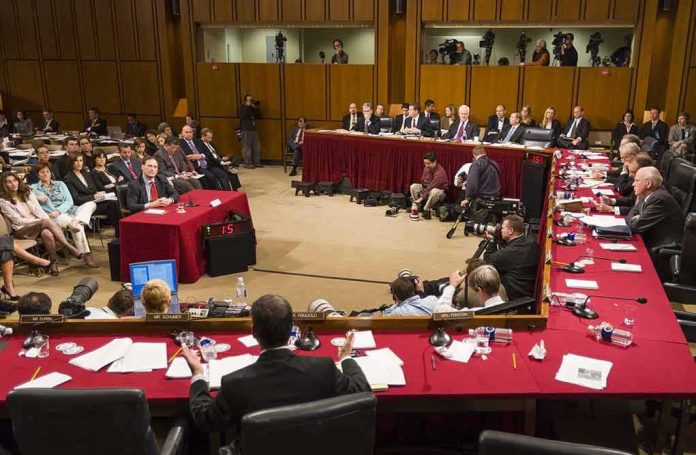
Opponents cite examples where purchases allegedly came before policy moves that helped the same companies. They point to chip makers, trading apps, and a major bank that later won federal work. They pressed this case in a June Senate hearing and asked for a securities probe. The Treasury Secretary replied that the president was not running a high‑speed trading strategy and said an outside manager handled the account, declining to endorse an investigation [3][8].
These claims hinge on sequence and appearance. Sequence can raise fair questions. But insider trading law usually turns on use of material nonpublic information. The reporting here does not show who made each decision or what they knew. The filings also use ranges, which limit precision on scale and gains. That is why the strongest statements in the media remain framed as “potential” conflicts and “appears” rather than findings by a judge or an agency [3][6].
The defense: independent managers, model portfolios, and legal gaps
The Trump Organization says independent third‑party managers control the investments with full discretion. They say trades follow automated, model‑based strategies and direct indexing, not instructions from the family. The White House describes the assets as held in a trust and rejects claims of conflicts. Ethics experts argue the setup can still create an appearance issue because the federal conflict‑of‑interest statute does not cover the president. That is an ethics debate, not proof of a crime [3][6].
🚨 Trump’s trading machine is in overdrive
NYT deep dive: His accounts executed over 3,600 stock trades in just the first 3 months of 2026.
Outsourced to brokers, but no blind trust — sparking fresh conflict-of-interest questions.https://t.co/gimXbY2Wao
Trader in Chief era… https://t.co/0OZwj8vOAx— PeteyMoney (@Petey_Money) June 19, 2026
Regulators have not filed a case in the materials reviewed. Senate critics want the Securities and Exchange Commission to look. Until an agency gathers trade tickets, manager emails, and meeting logs, the record will stay open. That matters for readers who care about due process. If independent managers used preset models, high trade counts in tech can reflect rebalancing during a fast market, not a scheme. Only primary records can settle that point [3][6][8].
How conservatives should read this story without taking the bait
Democrats and legacy media want a headline that says “corruption.” They do not have the receipts. They have bracketed ranges, overlapping timelines, and a hearing clip. Conservatives should demand facts, not vibes. If there is a real case, regulators can pull the order blotters and time stamps. If there is not, then this is more noise to distract from real fights on the border, inflation, and energy. Either way, sunlight and records beat talking points [3][8].
What accountability would actually look like
Serious oversight would focus on five items. First, the exact trade tickets with execution times. Second, the written portfolio mandates and model rules. Third, communications between the managers and any federal office tied to the cited policy moves. Fourth, a neutral event study testing whether trades systematically came before market‑moving actions. Fifth, a clear statement from the Securities and Exchange Commission or the Department of Justice on review status. That is the path to clarity [3][6][8].
Bottom line for readers
Ethics filings show a lot of trading in a volatile quarter. Critics linked some trades to policy news and asked for probes. The Trump side says outsiders ran the accounts, and no agency has alleged wrongdoing. The law gives wide room for a president’s holdings, which makes this an ethics and transparency debate until proven otherwise. Stay focused on facts, push for document‑level answers, and do not let political theater rewrite the rules of due process [3][6][8].
Sources:
[1] Web – Inside Stock Trading Surge…
[3] Web – What Did Trump Buy and Sell in the First Quarter … – TradingKey
[6] Web – President Trump’s alleged 3,700 stock trades in Q1 2026 raise …
[8] Web – A government ethics report reveals US President Donald Trump …