
A deadly spike on the Atlantic route shows thousands of West African youths still risk the ocean because work at home falls short, and too many never make it back.
Story Highlights
- Arrivals to Spain’s Canary Islands surged while shipwreck deaths mounted on the Atlantic route.
- Senegal and nearby West African coasts remain key launch points despite tougher patrols.
- Young Senegalese cite scarce jobs, rising costs, and weakened fishing livelihoods.
- Data track boats and fatalities, not each migrant’s motive, leaving gaps in the record.
Concrete Numbers Show a Risky Route Growing Deadlier
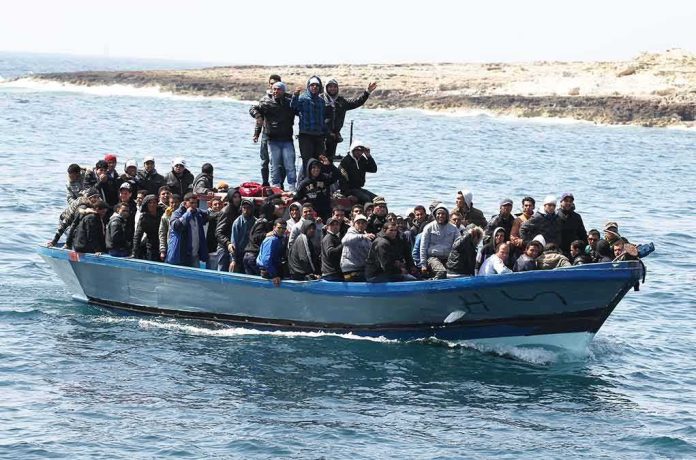
International Organization for Migration data show 19,257 people reached the Canary Islands by boat from January through June 2024, up 167 percent from the same period in 2023; twenty-five shipwrecks caused 324 deaths or disappearances in those six months. The West African Atlantic route stayed lethal into 2025, with reports of 54 shipwrecks causing 1,214 deaths or disappearances, and 17,788 arrivals to the islands that year. These counts confirm heavy traffic and high danger on boats built for short coastal runs, not long ocean crossings.
The numbers come with limits. Arrival and death figures tell us who reached shore and who was recorded as missing. They do not capture every failed launch or every boat lost without a trace. They also do not report each traveler’s reason for leaving. Still, the scale and mortality on this route are well documented across multiple months and years, and they point to sustained pressure pushing people to sea despite clear, known risks.
Departures Link to Senegal and Shifting Launch Points
The International Organization for Migration ties the Atlantic route to West African coasts, including Senegal, and says tighter controls in Morocco, Mauritania, and Senegal pushed more launches southward toward The Gambia, Guinea, and Guinea-Bissau. This shift means enforcement can move the problem without resolving root causes. Boats depart from smaller, less monitored beaches. Rescuers then face longer distances, and families wait longer for news. The pattern shows networks adapting faster than governments can coordinate.
Local reporting connects these launches to coastal towns where fishing once sustained families. Journalists found people in places like Joal selling gear to fund a seat on a boat, even as families struggle with food costs. This aligns with a broader view of regional mobility among fishers who, under stress, have turned an old coastal pattern into a far riskier ocean crossing. The shift does not make each person a fisherman, but it helps explain why departure points cluster along working coasts.
Youth Demographics and Economic Strain Raise the Stakes
Associated Press reporting notes about three in four people in Senegal are under 35, and many youths work informally or not at all, without reliable pay or benefits. When job markets are thin and prices rise, young adults see few doors open. Interviews cite debts, family needs, and the pull of relatives abroad who send money home. That mix can make a high-risk choice feel like the only path to a better life, even when the odds of a safe landfall are uncertain.
The Christian Science Monitor reported that poverty pressures and weaker local livelihoods feed these choices, especially where large industrial fleets crowd out small boats near shore. People describe days with empty nets and mounting costs. Some save for years to pay smugglers. Others join at the last minute when a space opens. None of that proves one single cause. It shows layered pressures, where money, family, and hope collide with a hard ocean and a long route.
What the Data Prove—and What They Do Not
Route statistics confirm more boats, more arrivals, and many preventable deaths. The International Organization for Migration’s figures are strongest on flows and shipwrecks, not on motives. They cannot rank poverty over politics, or fishing losses over family plans. That gap matters for policy. Leaders who focus only on patrols may miss why people leave. Leaders who focus only on jobs may miss how smugglers adapt to each new rule and coastline.
For readers in the United States, this story echoes familiar debates. Communities want borders that work and policies that reduce deadly trips. They also want governments that solve real problems upstream—jobs, food costs, and corruption—before despair drives people to gamble with their lives. The West African Atlantic route is a warning: when root causes meet weak governance, the sea becomes the judge. And the sea does not bargain.
Sources:
youtube.com, slguardian.org, iom.int, csmonitor.com, dtm.iom.int