

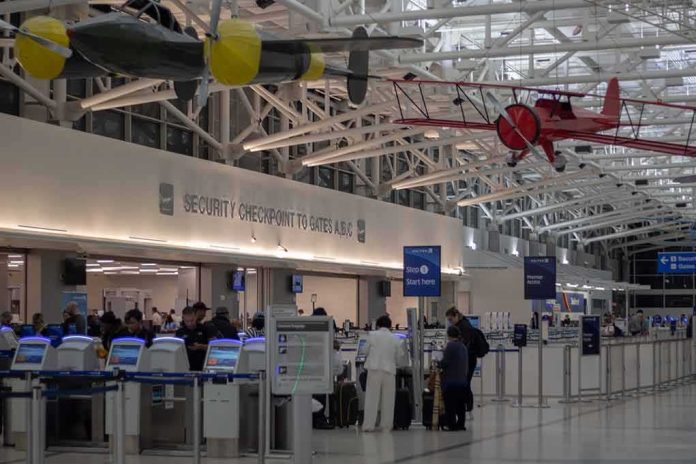
A deadly missile strike that killed travelers at Riyadh’s airport has turned Bahrain into the fastest backup route out of Saudi Arabia for thousands stuck on the ground.
Story Snapshot
- A Houthi missile hit Riyadh’s airport, killing 13 and injuring hundreds, disrupting flights.
- Travelers are driving about four hours to Bahrain to find flights out.
- Bahrain condemned ongoing Houthi missile and drone attacks aimed at Saudi cities.
- Manama tied Saudi security to Bahrain’s own and backed Saudi defense under the United Nations Charter.
Riyadh Airport Strike Creates Immediate Travel Shock
Reuters reported that a missile fired by Yemen’s Houthi movement struck a departure terminal at Riyadh’s main airport on October 14, killing 13 people and wounding about 300. The blast halted flights and stranded pilgrims, business travelers, tourists, and foreign workers. Airlines delayed or canceled departures while officials assessed damage and secured the site. Families waited for updates in crowded halls. Medical teams moved the injured to area hospitals. The attack turned a busy hub into a crisis scene.
With many flights disrupted, travelers looked for other exits. Reuters described people weighing the four-hour road trip to Bahrain as the most practical option, compared with longer routes to Qatar or the United Arab Emirates. Drivers lined up for fuel, and ride services surged. Airport displays showed growing delays. Some travelers booked new tickets from Manama the next day. Others formed carpools to split costs. The main goal was simple: reach an open airport and leave the region.
Bahrain Condemns Attacks And Signals Regional Stakes
Bahrain’s Ministry of Foreign Affairs condemned continued Houthi missile and drone launches toward Saudi cities, naming Riyadh, Dhahran, and Khamis Mushait among the targets. The statement said these attacks threaten civilians and regional stability. It called for the international community to stop strikes on civilian, economic, and vital sites. Bahrain framed the attacks as a clear danger to daily life and commerce. The message matched what travelers were living: normal routines were now risky.
Bahrain also said Saudi security and stability are tied to its own national security. Manama reaffirmed support for Saudi defensive steps under Article 51 of the United Nations Charter, which addresses the right of self-defense. That language signals both political backing and legal ground for intercepting threats. It also shows why Bahrain’s open airport matters. If Saudi hubs face fresh danger, Bahrain’s role as a pressure valve for travel and trade grows even more important.
Why Bahrain Became The Quickest Detour
Location and roads made Bahrain the fastest detour. The King Fahd Causeway links eastern Saudi Arabia to Bahrain in under one hour once travelers reach the coast. Drivers from Riyadh face a longer stretch, but the total trip is still about four hours. That beats the time and planning needed to fly or drive to Doha or Dubai during a fast-moving crisis. Travelers want certainty first, comfort second. An airport still operating is the key advantage when schedules collapse.
The shift also reflects a wider security pattern. Houthi forces have targeted Saudi sites before, drawing regional pushback. United Nations Security Council records on Yemen debates show member states tracking cross-border attacks and their effect on civilians and infrastructure. Those sessions tend to stress the need to protect noncombatants and keep vital routes open. When a strike hits a passenger terminal, these warnings become real for ordinary people trying to move, work, and worship.
Shared American Concerns: Safety, Cost, And Government Focus
American readers see echoes at home. People want safer travel, clear plans, and straight talk when danger spreads. Families worry about sudden costs when trips fall apart. Businesses face supply delays that raise prices. Many also feel that leaders often react late and protect their own status first. This story shows how fast plans can fail when power struggles ignore daily life. It also shows why secure borders, working airports, and honest risk updates matter to everyone.
The US is evacuating some diplomatic staff from Saudi Arabia following Houthi attacks that killed 3 in Dammam. Despite rumors regarding UAE, Qatar, and Bahrain, Washington clarified the order applies only to Riyadh. The move coincides with new military plans targeting Iran. pic.twitter.com/wVxl3N7Z2Q
— Mintel World (@mintelworld) October 22, 2026
Policy debates will continue over how to stop cross-border strikes and shield civilians. For now, the facts are plain: a deadly hit on a major airport set off a scramble, and Bahrain became the closest release valve for stuck travelers. Governments can help by sharing real-time data, speeding border processing, and coordinating flights to clear backlogs. These are basic steps that put people first when politics and war push daily life off track.
Sources:
youtube.com, spa.gov.sa, transcripts.un.org