

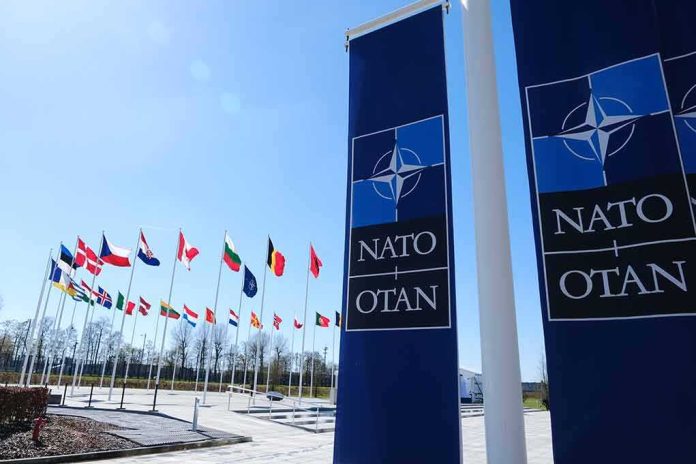
NATO has moved Ukraine aid from short bursts of weapons to a long-term plan that ties security, reform, and rebuilding into one project.
Story Snapshot
- NATO set a baseline of 40 billion euros in Ukraine security aid for 2024, with plans to sustain help beyond this year.
- NATO’s Comprehensive Assistance Package links military support to defense reform, recovery, and future NATO-level standards.
- A joint assessment estimates Ukraine’s recovery needs at 524 billion dollars over a decade, with a 2025 funding gap near 10 billion dollars.
- Analysts argue real “victory” will be a generational effort, not a single battlefield event.
NATO Shifts From Emergency Aid To A Long-Term Framework
NATO members agreed to support Ukraine with a multi-year approach that goes beyond urgent battlefield deliveries. At the 2024 summit in Washington, allies set a floor of 40 billion euros in security aid for 2024 and pledged to keep help at that level in later years. This move follows earlier steps at the 2023 summit in Vilnius to build a sustained, predictable program. The goal is to create consistent support instead of a cycle of crisis funding.
NATO’s Comprehensive Assistance Package ties daily needs to long-term strength. It covers training, logistics, and equipment today, and also defense and security-sector reform, institutional change, and steps toward NATO-level standards tomorrow. The package treats weapons as only one piece of a larger plan. It links aid to reforms that can make Ukraine’s forces more ready, its institutions cleaner, and its systems able to work with allied militaries over time.
Reconstruction Scale Underscores A Generational Horizon
A joint report by Ukraine’s government, the World Bank, the European Commission, and the United Nations estimates that recovery and reconstruction will cost 524 billion dollars over ten years. The same report lists a funding gap of about 9.96 billion dollars for 2025, showing pressure on near-term budgets while needs mount across energy, housing, transport, and demining. These numbers point to a long road. They also show why leaders now frame success as more than battlefield lines.
Writers who study the war argue that “victory” should be judged across decades, not weeks. They describe success as a generational project that depends on how Ukraine’s young people live, learn, and work in the years ahead. This view fits the new NATO approach that blends security with reform and recovery. But it also creates a test: leaders must link money, timelines, and goals so that people can see progress and hold programs to account.
What Long-Term Support Seeks To Build
NATO’s plan aims to build predictable support streams so Ukraine can plan force growth, training cycles, and maintenance. It also aims to raise standards in ministries and procurement to curb waste and corruption, which have hurt past recovery drives in other places. The package backs steps to make Ukraine’s systems work with NATO, from communications to logistics and doctrine. If carried through, these changes can improve deterrence and speed future support delivery.
The framework links military aid with civilian recovery so communities can function while the war continues and after it ends. Keeping power on, roads open, and schools and clinics working supports morale and economic revival. The World Bank-led estimate lists sector-by-sector needs and helps donors align projects to those needs. That structure can help reduce duplication and target gaps, which matters when total costs are so large and budgets are tight.
Political And Budget Realities Could Strain The Plan
Annual budgets and elections can undercut multi-year plans. NATO’s pledge sets a floor and a signal, but it does not force each country to deliver the same sums every year. Future governments may adjust levels or timing. That mismatch between long goals and short cycles is a known risk for any long effort that depends on many capitals. Clear targets and regular public reporting can help hold the line when attention moves on.
Another strain is the sheer cost of rebuilding. The 524 billion dollar estimate is large and easy to politicize, and the 2025 gap shows pressure is already here. Donors need milestones that show value and reduce waste. Programs that assign specific sectors to specific donors, publish audits, and tie cash to reforms have worked better in other recoveries. NATO’s focus on institutional change suggests space for that kind of discipline alongside security aid.
Why This Matters Now For Americans Across The Spectrum
For conservatives worried about open-ended spending, the shift to clear baselines, reform, and interoperability aims to turn emergency aid into planned investments with guardrails. For liberals focused on human costs and fair systems, tying support to cleaner institutions and service delivery can protect people and reduce abuse. For many who think elites protect their own first, public, verifiable goals and audits can help prove that funds build real security and real recovery, not insider deals.
Sources:
warontherocks.com, worldbank.org, nato.int