
Libya’s state oil company warned it may declare force majeure after security guards shut a key pipeline and halted production at multiple sites, risking tighter global supplies.
Story Highlights
- Petroleum Facilities Guard members closed the Hamada–Zawiya pipeline, shutting two oilfields and a pumping station.
- Libya’s National Oil Corporation said it may declare force majeure if closures spread or persist.
- Guards tied the shutdown to unpaid dues and benefits demands in recorded statements.
- Past disputes show a pattern: ultimatum, shutdown, negotiation, partial restart.
What Triggered Libya’s Latest Oil Disruption
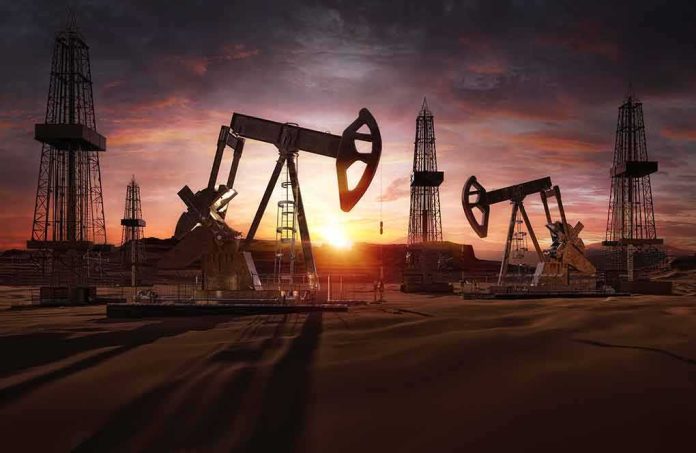
Libya’s National Oil Corporation said members of the Petroleum Facilities Guard closed a valve on the main Hamada–Zawiya crude pipeline. The move forced production to halt at the Hamada and Tahara fields and an NC5 pumping station in western Libya. The Zawiya refinery can process large volumes that support domestic fuel and export flows. The company warned the closures could widen if copycat actions spread, raising the odds of a broader halt.
Members of the Petroleum Facilities Guard said they acted over pay and benefits. Public statements and local reporting cited unpaid salary dues, settlements, and health insurance on par with National Oil Corporation staff. A video message warned they would close oil facilities if demands were not met, after giving authorities a deadline to respond. These claims align with prior labor disputes in the sector, which often begin with an ultimatum and end in talks.
Force Majeure Risk And Why It Matters
The National Oil Corporation said it may declare force majeure if the shutdown continues or spreads to other assets. A force majeure allows the company to suspend contracts due to events beyond its control. That step can ripple into global markets by tightening available barrels. Even short outages raise price risk when other suppliers also face limits. In prior episodes, closures at fields or ports lasted days to months, depending on politics and security.
Negotiations have ended some recent standoffs. Earlier this year, oil output at the Wafa field and gas flows to Italy resumed after talks between the Petroleum Facilities Guard and the internationally recognized government. That protest also centered on salary payments and followed a set ultimatum. The pattern suggests talks may unlock valves again. But each shutdown erodes trust in contracts and increases the “risk premium” buyers bake into deals.
A Recurring Cycle In Libya’s Fragmented Oil Economy
International and policy analyses describe Libya’s output as volatile. Conflicts, labor disputes, budgets, and maintenance often shut in barrels. The Energy Information Administration notes production is frequently interrupted for these reasons. Reuters has reported that localized stoppages can end quickly, while politically charged blockades can run much longer. This cycle leaves traders and allies guessing, and it punishes ordinary Libyans through lost revenue and fuel strain.
LIBYA'S OIL HALT: THREE FIELDS SHUT AS EUROPE LOSES ANOTHER CRUDE SOURCE
THE SHUTDOWN
Libya's National Oil Corporation (NOC) announced that output has been halted at three fields—Hamada, Al-Tahara, and NC5 (Station 5)—after a group from the Petroleum Facilities Guard forcibly… https://t.co/mHoMUlNfTp pic.twitter.com/zMFUfERkZK
— THE WORLD CORRESPONDENT (@TheWorldCorresp) September 15, 2026
For Americans, this story hits a nerve. Families know higher oil prices feed into gas, groceries, and home energy bills. They also see how fragile supply chains become when a few armed guards can choke a pipeline. Many on the right and left share a larger worry: global energy policy and opaque deals often serve elites, not workers or consumers. Libya’s recurring shutdowns fit that fear, where power struggles override steady work and fair pay, and regular people pay the price.
What To Watch Next
Watch for three signals. First, whether the National Oil Corporation formally declares force majeure, which would harden contract risk. Second, whether the Petroleum Facilities Guard and the government open talks on dues, health coverage, and rank status, which has resolved stoppages before. Third, whether copycat closures hit larger fields or export terminals, which would magnify global impact. If talks proceed, flows could restart fast; if not, expect more market volatility.
Sources:
zerohedge.com, english.aawsat.com, aa.com.tr, libyaherald.com, argusmedia.com