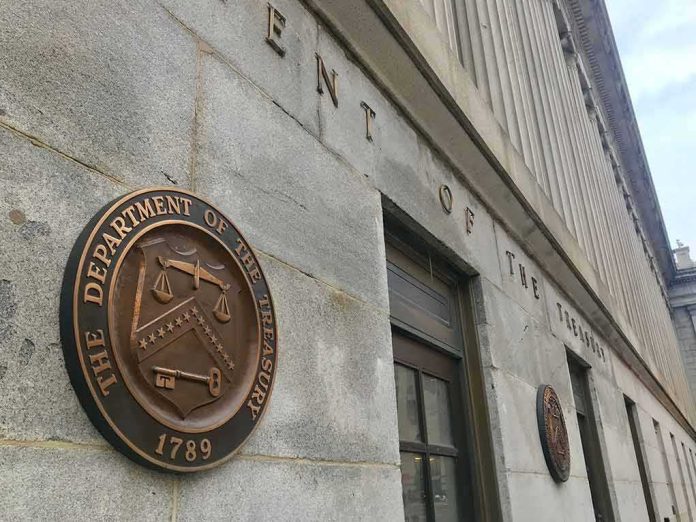
Washington just launched “Operation Economic Outcast,” a sweeping plan to choke off Iran’s money flow by hitting not only Tehran but also foreign banks, shippers, and middlemen that keep its oil cash moving.
Story Highlights
- Treasury is broadening secondary sanctions to pressure firms and countries that still trade with Iran.
- Officials say the goal is to cut Iran’s oil revenue and shut down covert shipping networks.
- Designations target dozens of people, companies, and vessels tied to Iranian petroleum sales.
- The move intensifies the long-running “maximum pressure” strategy on Iran’s economy.
What Treasury Announced And Why It Matters
The U.S. Treasury Department moved to expand secondary sanctions that reach foreign entities doing business with Iran. The action, branded “Operation Economic Outcast,” is designed to isolate Tehran from oil revenue and the global finance system. Treasury has a track record of targeting shippers, brokers, and vessels that move Iranian oil in secret. Officials say this step aims to close more of those loopholes and cut off funds used for destabilizing activities.
Treasury said recent designations hit networks that help sell and move Iranian petroleum, along with suppliers that back Iran’s weapons programs. These measures list over 30 individuals, companies, and vessels across several countries. The goal is to make it harder to insure, finance, or land those cargoes. That raises costs for anyone who touches the trade and warns banks and shippers that the risk of penalties is rising fast.
How Secondary Sanctions Turn Up The Heat
Secondary sanctions pressure non‑U.S. firms by threatening to cut off their access to the American market and dollar system. This creates a powerful choice: trade with Iran or keep ties to the United States. Past rounds focused on oil, shipping, and front companies that mask the cargo’s origin. Today’s escalation follows that playbook but widens the target set. Officials describe the campaign as “maximum pressure” on Iran’s remaining economic lifelines.
Public statements from Treasury leadership previewed tough steps and a broader scope. The department framed the effort as an “economic isolation” plan and a push to reduce Iranian oil exports near zero. Earlier actions mapped out “shadow fleets” and cutouts that move crude through complex routes. The latest designations build on that record and aim to push more trade partners to walk away from suspect deals.
What Changes For Banks, Shippers, And Energy Markets
Foreign banks now face higher compliance stakes. Handling payments for Iranian-linked oil sales could mean losing access to the dollar or U.S. correspondent accounts. Shipping firms and insurers also face greater exposure if they carry or cover Iranian cargoes. These risks tend to spur “de‑risking,” where firms drop business that seems even slightly connected to Iran to avoid being penalized. That ripple effect is part of how secondary sanctions bite.
The U.S. Treasury has launched Operation Economic Outcast, a sweeping new campaign aimed at cutting Iran off from international sources of money. For crypto, the message is clear: digital assets are now firmly inside the sanctions fight.
Treasury says the campaign expands… pic.twitter.com/W5qz40tZAv— DeFi Planet (@PlanetDefi) August 25, 2026
Energy markets may feel the strain if enforcement removes barrels from the market faster than others replace them. Sanctions have previously targeted fleets, ports, and brokers tied to Iran’s exports, which complicates routing and pricing. The near‑term impact depends on how strictly partners enforce the rules and how swiftly Iran’s networks find workarounds. Treasury’s recent actions signal it plans to chase those workarounds with fresh rounds and tighter screens.
The Bigger Pattern And The Public’s Concern
This campaign fits a long U.S. pattern of using finance tools to change behavior abroad. Supporters argue such pressure can force hard choices in Tehran. Critics point to costs, friction with allies, and broad chilling effects on lawful trade and humanitarian channels. Analysts remain split on how much these tools shift state behavior versus raising economic pain. What is clear is that Washington is doubling down on sanctions as its main lever at this stage.
What To Watch Next
Watch for more designations against shipping facilitators, front companies, and banks that process Iran‑linked deals. Expect advisories warning insurers and port authorities about deceptive shipping practices. Look for signals from major Asian buyers and global banks on how they will respond. The test for “Operation Economic Outcast” is simple: do oil exports fall, do money flows slow, and do foreign firms choose to exit Iran‑related business under the threat of U.S. penalties?
Sources:
nytimes.com, ofac.treasury.gov, home.treasury.gov, bloomberg.com