

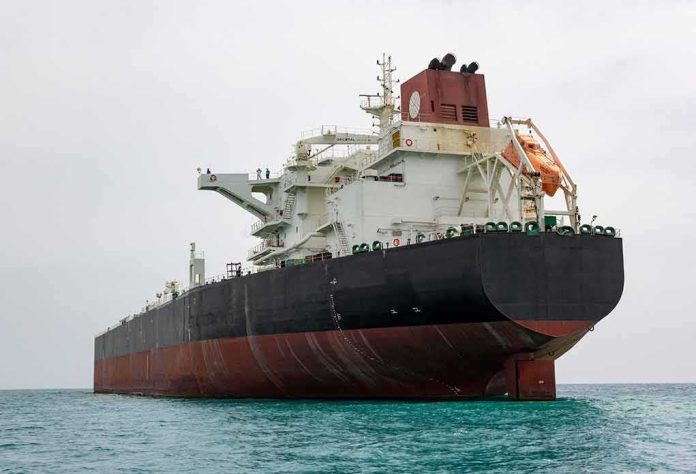
As Yemen’s Houthi movement turns the Red Sea into a second major oil chokepoint, Americans could soon feel the impact in higher prices at the gas pump.
Story Snapshot
- Houthis have declared a **maritime embargo** on Saudi Arabia, threatening vital Red Sea oil routes.
- Oil tankers are already changing course and avoiding waters near Yemen after the new warning.
- Red Sea shipping has been cut sharply since 2023 attacks, forcing longer, costlier trips around Africa.
- Combined with the Strait of Hormuz crisis, this second chokepoint could tighten oil markets and raise fuel prices worldwide.
Houthis Turn Red Sea Into a New Oil Pressure Point
On July 20, Iran-backed Houthi forces in Yemen announced a “maritime embargo” on Saudi Arabia, saying they would block Saudi shipping as punishment for years of Saudi restrictions on Houthi-held ports and airports. Their territory sits along the Bab el-Mandeb Strait, the narrow southern entry to the Red Sea, which links to the Suez Canal and handles a large share of global trade and oil shipments. This move expands a campaign of attacks on commercial ships that has been ongoing since late 2023.
Houthi military spokesman Yahya Saree declared the embargo “effective immediately” and warned shipowners against calling at any Saudi port. Experts note that the announcement is part of a pattern: the group issues new phases of maritime threats, then uses missiles, drones, or boardings to make companies fear the area and reroute ships. Even when enforcement details are vague, the risk alone can disrupt traffic as captains, insurers, and regulators choose the safer, longer path.
Shipping Companies Already Alter Routes and Slow Red Sea Traffic
Ship-tracking data show that at least seven oil tankers near Yemen changed course after the embargo warning, making sharp “U-turns” away from the zone. Over the past two years, this kind of response has become the norm. By March 2024, more than 2,000 ships had already diverted away from the Red Sea after earlier Houthi attacks, with many choosing to sail around the Cape of Good Hope at Africa’s southern tip. That route can add about ten days and roughly $1 million in extra fuel to each voyage.
Official and industry reports confirm that traffic through the Red Sea and Suez Canal fell steeply once attacks began in November 2023. One United States Defense Intelligence Agency analysis found container shipping through the Red Sea dropped by about 90% from December 2023 to February 2024. A later Reuters review estimated overall daily trade volumes through Red Sea chokepoints were still down about 60% compared with pre-crisis levels, even after some rebound. That means a corridor that once carried roughly 12% of global trade is still far from normal.
From Shipping Costs to Fuel Prices: How the Pain Reaches Drivers
When ships avoid the Red Sea, the impact is not just on travel time. Longer routes around Africa raise fuel use, crew costs, and insurance premiums. In the first phase of the crisis, container shipping rates from Shanghai to Europe jumped by about 256% on average, mostly due to the Red Sea disruptions. A United States Congress research brief estimated that if these higher costs lasted through 2024, they could add up to 0.7 percentage points to global inflation. Higher transport costs for oil and goods often show up later as higher prices for consumers.
Energy analysts and economic groups warn that sustained interference in the Red Sea can push up energy prices and slow supply chains just as families struggle with the cost of living. United Nations trade specialists found that the shock from the early phase of Houthi attacks caused a 1.3% drop in global trade and disrupted about $1 trillion worth of goods between late 2023 and mid-2024. Retailers and manufacturers faced container costs up to 300% higher and started passing those costs on to customers, worsening inflation. If the new embargo expands or lasts, the same pattern could repeat on a larger scale.
Double Chokepoint: Hormuz Crisis Makes Red Sea Risk More Serious
This new Red Sea threat lands at a bad time for world energy markets. Since joint United States and Israeli strikes on Iran in late February, the Strait of Hormuz has been effectively closed to most traffic, with insurance either unavailable or extremely expensive and crews unwilling to sail through. Hormuz normally carries a large share of Gulf oil exports, and Saudi Arabia moves more crude through Hormuz than any other country. With that route crippled, Saudi and other producers leaned more on the Red Sea to keep oil flowing.
🔴 HOUTHI ESCALATION TARGETS SAUDI OIL TANKERS IN RED SEA 🇸🇦🇾🇪
Houthi forces deployed MISSILES and DRONES against two SAUDI tankers. This maritime embargo signals a dangerous shift in regional stability near the RED SEA shipping lanes. ⚓💥#Houthi #OSINT
— OSN – Observer Security Network (@OSN_Reports) July 22, 2026
Analysts now warn that a second chokepoint crisis in the Red Sea could remove even more oil from global supply and push prices higher. Council on Foreign Relations experts say sustained disruption by the Houthis would trigger severe supply delays, drive up energy prices, and further destabilize the global economy. For American drivers, that risk is simple: if less oil moves or trips take longer and cost more, gasoline and diesel prices are likely to rise, at least until new routes or policies ease the strain.
Why This Feeds Broad Public Frustration With “Elites” and Policy Failure
Many Americans on both the right and left already feel the system is failing them, whether they blame “woke” agendas and globalism or corporate greed and shrinking safety nets. The Red Sea crisis fits that concern. A non-state group is choking a key trade route, and yet years of Western naval patrols have not fully restored safe shipping. Families see higher prices, but they rarely see clear plans from Washington, Riyadh, or big oil companies that put household budgets first.
Reports show that major shipping lines and energy firms respond quickly to protect their own assets, suspending Red Sea routes and hiking risk premiums. At the same time, governments debate rules of engagement, sanctions, and diplomacy while attacks and threats continue. For citizens who already doubt whether elites are serious about fixing supply chains, inflation, and energy costs, another far-away maritime crisis that hits prices at home can feel like more proof that global security and economic policy are not working for ordinary people.
Sources:
19fortyfive.com, en.wikipedia.org, news.az, bbc.com, lloydslist.com, documents1.worldbank.org, reuters.com, indiatoday.in, coface.com, news.usni.org, atlasinstitute.org, cfr.org, facebook.com, runi.ac.il