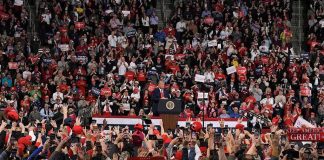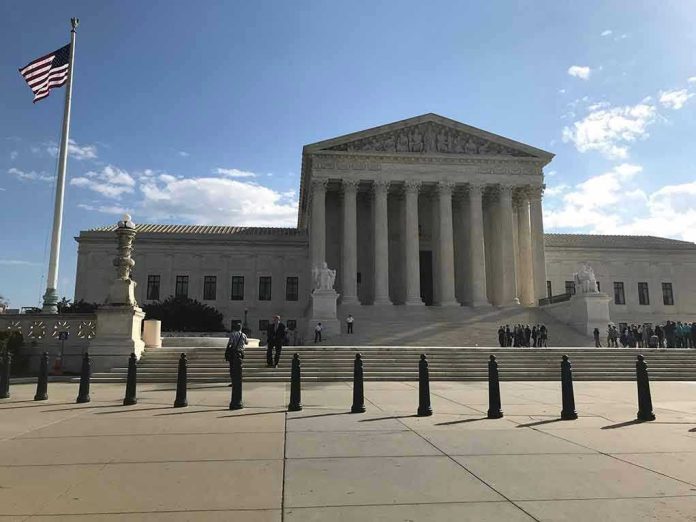
As crowds cheer outside the Supreme Court, a new birthright citizenship ruling exposes just how far Washington’s power games have drifted from the Constitution most Americans thought they understood.
Story Snapshot
- The Supreme Court has again put birthright citizenship at the center of America’s immigration and separation-of-powers fights.
- Trump’s executive order to limit citizenship for some U.S.-born children clashes with over a century of constitutional precedent.
- Advocates hail the Court’s move as a defense of basic rights; many conservatives see courts and elites ignoring border concerns.
- Both sides worry that unelected officials, not citizens, now decide who belongs in America and what the Constitution really means.
What the Supreme Court Just Did — And Did Not Do
The Supreme Court’s latest decision did not rewrite the Constitution’s rule on who is a citizen at birth, but it did change how fast presidents can force that rule to the breaking point. The justices ruled 6-3 that lower courts cannot use nationwide injunctions to block Trump’s order denying birthright citizenship to many children of undocumented immigrants and temporary visitors. Judges can still shield the specific families who sued, but the order now takes effect for everyone else within weeks.
This narrow ruling on court procedure has huge real-world impact. President Trump can start enforcing his policy while the deeper constitutional fight continues. For many families, that means a baby could be born in a U.S. hospital, yet leave with no clear country at all. Supporters of the order say this finally confronts “birth tourism” and illegal immigration. Critics warn it turns newborns into pawns in a long war between the branches of government.
Why Birthright Citizenship Is Supposed to Be Settled Law
After the Civil War, Congress wrote the Fourteenth Amendment to overturn the Dred Scott ruling and make clear that “all persons born or naturalized in the United States, and subject to the jurisdiction thereof” are citizens. In 1898, the Supreme Court’s United States v. Wong Kim Ark decision said this means citizenship by birth on U.S. soil, even when parents are noncitizens who live here. The Court recognized only narrow exceptions for children of foreign diplomats, hostile occupying armies, or sovereign Native American tribes.
For more than 120 years, that rule has shaped American life. The National Constitution Center notes that the Wong Kim Ark opinion “affirms the ancient and fundamental rule of citizenship by birth within the territory,” including “all children here born of resident aliens.” Modern summaries from groups like the Brennan Center say all three branches of government have long treated this broad grant of citizenship as settled. To many lawyers, Trump’s effort to carve out new categories of U.S.-born babies runs straight into that wall of precedent.
Trump’s Order and the Push to Redefine ‘Jurisdiction’
Trump’s 2025 executive order argues that the Fourteenth Amendment has “never been interpreted to grant universal citizenship” and targets children born to mothers who are here illegally or only on short-term visas. The order claims these families are not “subject to the jurisdiction” of the United States in the full constitutional sense. Allies like Senator Ted Cruz echo this view, saying the amendment was meant to cover only those lawfully in the country and “owing no allegiance to any alien power.”
This approach tries to reopen a long-closed debate. The Wong Kim Ark majority said people living here, even as foreign nationals, are under U.S. “allegiance and protection” and therefore subject to its jurisdiction. Advocates point out that courts have repeatedly rejected efforts to use “jurisdiction” as a loophole to strip citizenship from U.S.-born children. That is why many legal experts, including those at the American Immigration Council, call Trump’s order “patently unconstitutional” and expect it to fall once the Supreme Court finally reaches the merits.
Cheers, Anger, and a Shared Distrust of the ‘Elites’
Outside the Court, immigrant-rights advocates and many families celebrated the decision as a defense of a simple promise: if you are born here, you belong here. For them, nationwide injunctions were the only shield against a powerful executive branch willing to test constitutional limits. They see Trump’s order as one more example of Washington leaders using vulnerable people to score political points instead of fixing the broken immigration system.
"Deny entry to all female foreigners."
"Require sterilization of all foreign visitors prior to entry."
Sean Davis, Trump ally reaction to the Supreme Court ruling on birthright citizenship.
— JEH (@B2F1sh) July 1, 2026
Many conservatives see something different. They are angry that decades of “open border” policies and elite legal theories have tied the nation’s hands on immigration. To them, the Supreme Court has protected a reading of the Fourteenth Amendment that ignores the real costs of illegal immigration, birth tourism, and strained schools and hospitals. Yet even on the right, there is deep mistrust of unelected judges and career bureaucrats deciding what the Constitution means while ordinary Americans struggle to afford housing, health care, and energy.
What This Fight Reveals About Washington’s Priorities
This birthright citizenship clash shows how far the federal government has drifted from the basic idea of self-rule. Instead of Congress writing clear, durable laws, presidents issue sweeping orders. Instead of quick up-or-down answers, courts argue over technical tools like injunctions while families wait years to know their status. Both conservatives and liberals see a system that feels rigged, where “deep state” lawyers and judges treat everyday citizens as statistics in a policy experiment.
Whatever the final ruling, one truth cuts across party lines: Americans want a government that enforces borders, respects the Constitution’s plain words, and puts the common good over political games. The Fourteenth Amendment was written to end a cruel caste system and protect the basic right to belong. The real question now is not only what those words mean in law, but whether the people in power can be trusted to apply them fairly to everyone born under the American flag.
Sources:
bbc.com, constitutioncenter.org, brennancenter.org, supremecourt.gov, youtube.com, cbsnews.com, kevinmlevin.substack.com, pbs.org